
The U.S. and Iran crisis escalates into broader regional conflicts
Tensions rise as military leaders signal a potential prolonged conflict
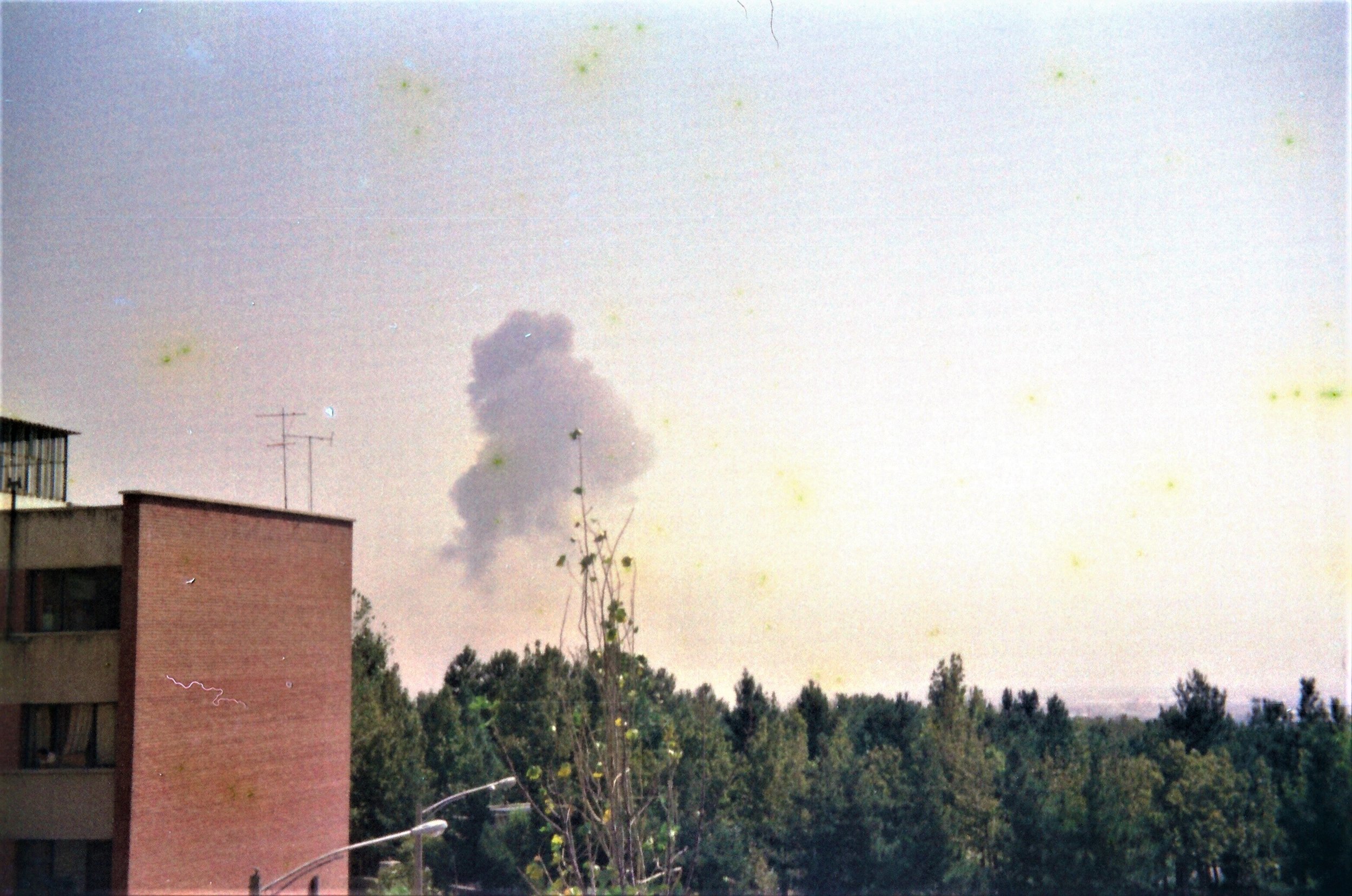
Photo courtesy of Mhsheikholeslami/Wikimedia Commons
The United States finds itself now deeply entwined in an intensifying conflict with Iran after a coordinated military campaign with Israel. The campaign is said to have targeted Iranian military infrastructure and political leadership, including the assassination of Iran’s Supreme Leader, Ayatollah Ali Khamenei, on Feb. 28, 2026.
The operation is cited by the Center for Strategic and International Studies (CSIS) as being referred to as Operation Epic Fury and Operation Lions Roar by the U.S. and Israeli governments, respectively. It involved joint U.S. and Israeli strikes on key military and command centers across Tehran and other Iranian cities, setting off escalation in an already volatile regional conflict, as reported by BBC.
In a Good Morning America (GMA) article, plans for the operation are laid out by Defense Secretary Pete Hegseth: “The mission of Operation Epic Fury is laser-focused…Destroy Iranian offensive missiles, destroy Iranian missile production, destroy their navy and other security infrastructure, and they will never have nuclear weapons. We're hitting them surgically, overwhelmingly and unapologetically.”
Secretary Hegseth spoke of this operation at a Pentagon briefing, and did not rule out deploying more forces if necessary. He is quoted as saying, “This is not Iraq. This is not endless,” while also declining to exclude further escalation, should operational conditions demand it. Secretary Hegseth himself said in this briefing that he “was there for both” stages in Iraq, as well as the beginning of this tension, and that “This operation is a clear, devastating, decisive mission: destroy the missile threat, destroy the navy, no nukes.”
In an address by President Donald Trump, cited by The Washington Post, the president seemingly signaled that the campaign would not be short-lived, declaring firmly that U.S. forces would continue operations “until all of our objectives are achieved.” According to the same article by The Washington Post, Trump seemed to frame this strike as part of a larger effort to weaken the political structure of Iran. In a message directed at the Iranian public, he announced “When we are finished, take over your government. It will be yours to take.”
In another article published by Good Morning America (GMA), President Trump doubled down on the administration’s position. According to GMA, “President Donald Trump on Monday claimed the U.S. was ‘very nearly under threat’ from Iran, contradicting U.S. intelligence assessments.” The President is quoted as saying “An Iranian regime armed with long-range missiles and nuclear weapons would be an intolerable threat to the Middle East, but also to the American people," in his first response since the military operation began.
While administration officials such as Secretary Hegseth have been projecting confidence, international and regional developments suggest the situation remains fluid and unpredictable.
In their Feb. 28, 2026 coverage, The New York Times detailed the threats of possible retaliatory missile and drone strikes launched by Iran and allied militias across parts of the Middle East. The New York Times reported, “Among the countries targeted on Saturday were the U.A.E., where the defense ministry said that it had successfully intercepted several missiles launched from Iran. But missile debris had landed in a residential neighborhood in Abu Dhabi, the ministry said, killing one person and damaging property.”
For now, the conflict remains in an early phase where it is still hard to fully tell what the possible outcome may be. At this point in the situation further escalation can depend not only on battlefield developments, but also on political developments in Washington, Tehran, and the allied capitals around the world.