
Sustainability Corner: Jonathan the giant tortoise is helping scientists
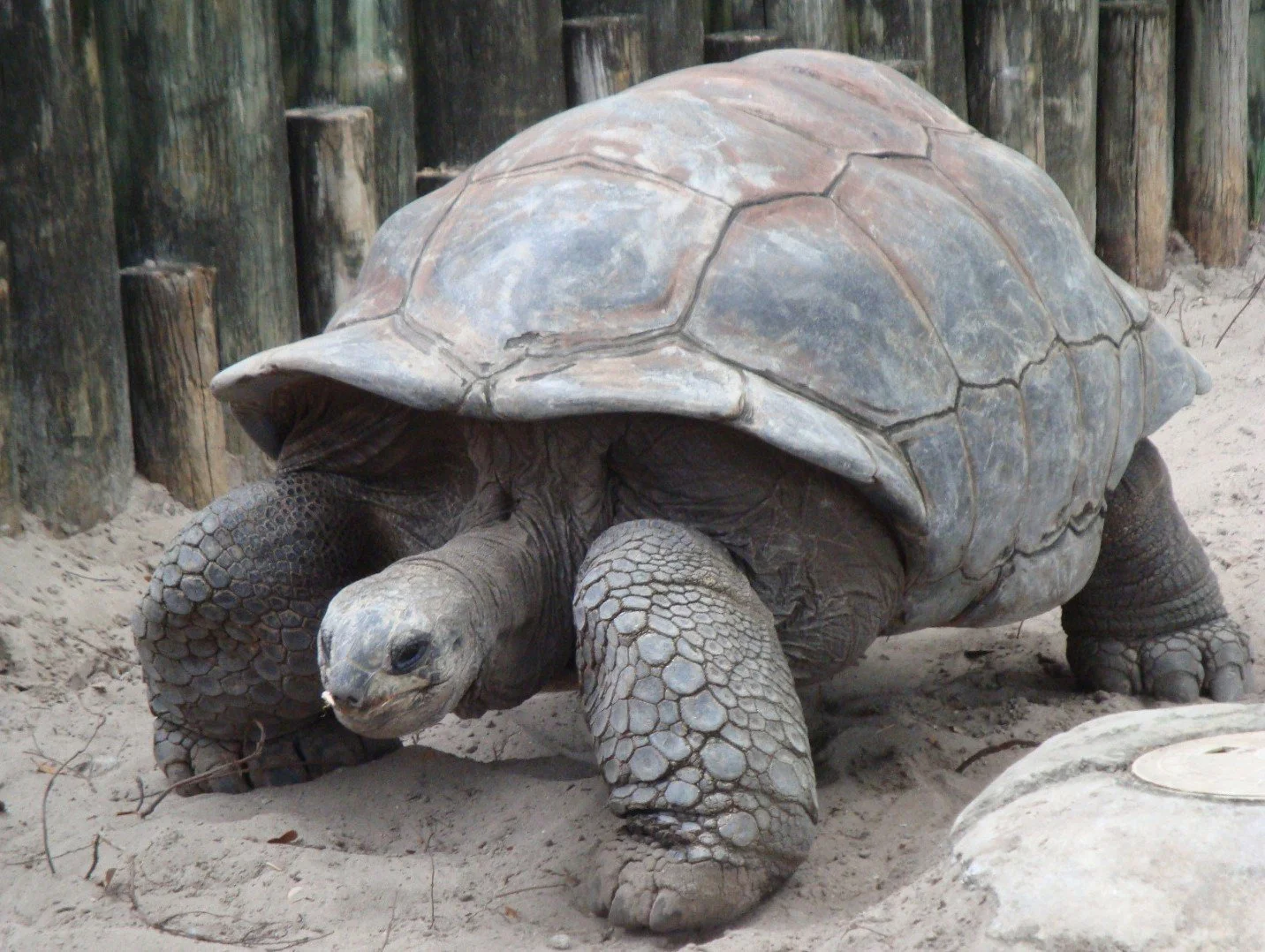
Photo Courtesy of Childzy- Wikimedia Commons
A giant tortoise named Jonathan at the suspected age of 194 years old, as per 404 Media, may be the key to longer life. Jonathan has lived on St. Helena Island since the late nineteenth century, with an estimated birth year of 1832, and is the oldest living turtle in the world.
According to Smithsonian Magazine, “The Aldabra giant tortoise is the oldest turtle in recorded history and the world’s oldest living land animal…He has already lived more than a century beyond his species’ 80-year average life expectancy—a feat that his safe environment, diet and medical care alone might not be able to explain.” Naturally, this long life has grabbed the attention of scientists who aim to understand longevity through DNA samples, with the hope of transferring that knowledge to humans.
Discover Magazine describes the process researchers used to retrieve the DNA sample, writing, “Early in the morning, to keep plant DNA out of the sample, the person collecting it pretended to feed him. When he started to snap at the air, that person propped his mouth open with one gloved hand and, with the other, scraped cells from inside his cheek.” This article also explained that a blood draw for DNA sampling was not permitted by the St. Helena officials due to potential issues around Jonathan’s health.
The official study of Jonathon’s DNA was posted on Science Advances on Oct. 7, 2026 by researchers from Kallel Labs, along with the in-depth analysis of their research. The goal was to study his DNA and better understand the genome structure that may have led to his longevity. “The results revealed that Jonathan has ‘unique gene variants in most aging pathways,’” reports 404 Media, an indicator that the tortoise may be useful to researchers who aim to increase human lifespans.
An article on Bioengineer.org discusses the findings further, stating that “[t]he team identified 287 unique gene variants in Jonathan that appear to blunt the usual effects of ageing. These variants are not scattered randomly across his genome; they cluster around biological processes that gerontologists regard as the pillars of longevity: the repair of DNA damage, the control of inflammation, the regulation of insulin signalling, and the suppression of cancer.” These variants may suggest that the tortoise has very specific DNA and molecular variants that significantly contribute to his longevity. Additionally, if the researchers are able to replicate these variants into a treatment for humans in the future, it may help to contribute to longer life, and potentially even increased health for patients.
In an article published by 404 Media, one of the researchers explained what they are working towards: “‘We’re interested in long-lived species like Jonathan because we can hopefully find other targets,’ [Stephen] Clark said of his team’s work at Kallel Labs. ‘The ultimate goal of the company is to affect human healthspan and lifespan.’” The article further describes that the researchers compared Jonathan’s genome to that of other, younger tortoises, including 36-year-old Tank, hoping to see if any of Jonathan’s genes were different than that of his younger counterparts.
While this research is by no means complete and not yet transferable to humans, there is the possibility of this research developing to aid humans in the future. If this research leads to aiding human health and longevity, we will have Jonathan the tortoise to thank.