
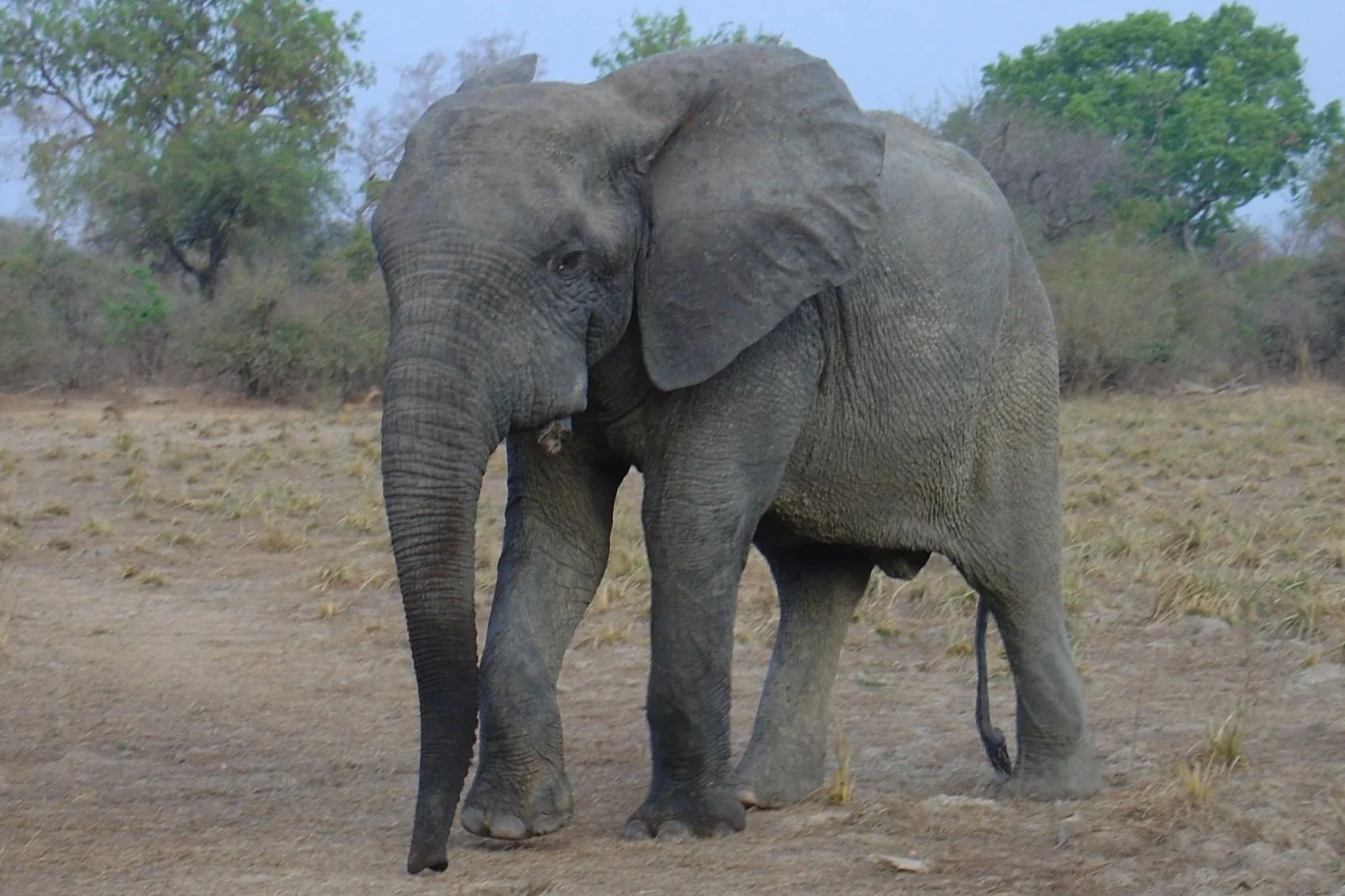
Photo Courtesy of Jean-Paul Boerekamps- Wikimedia Commons
Many animals are in danger of going extinct, such as the African forest elephant. Losing multiple species can create grave dangers for our environment, such as a lack of biodiversity. Bringing back endangered species becomes increasingly harder the longer we wait to intervene.
Across the world, various countries and government systems are frequently lowering protections set in place to protect endangered species. The world is changing at a rate so fast that species cannot adapt quick enough to survive. The critically endangered list is growing; let us take a look at some of the most-threatened species.
In 2017, the Sumatran orangutan was placed on the International Union Conservation for Nature’s (IUCN) “Red List” for critically endangered species. These orangutans are “the largest arboreal (tree dwelling) animal in the world,” according to the Center for Great Apes. The Sumatran orangutans’ largest threat against their survival is poaching for exotic pet trade and habitat loss. Between 2011 and 2023, the population of this species “declined by nearly 20 [percent],” according to Mongabay. Even with deforestation rates slowing, the threat of other factors, such as poaching, have led the size of the Sumatran orangutan population to continuously decrease.
Another animal that is facing extinction is the saola, which was first discovered in 1992. The IUCN has a “best estimate” of around 50 to 300 saolas remaining in the wild. The saola has received the nickname “Asian unicorn” because of its elusiveness and facial features. Saolas are targeted by deforestation, but they also get trapped in snares set out for other animals, as detailed by Conservation Frontlines. With so few left in the wild—and not a lot known about these animals—conservation efforts are crucial in reviving the population.
The African forest elephant was added to the IUCN critically endangered list this year after previously being on the largely depleted list. Due to their ivory tusks, they are often hunted and killed by poachers for illegal ivory trade. The African Wildlife Foundation states that “[a]bout 62 percent of all forest elephants have been killed for their ivory in the last decade.” Lack of knowledge on African forest elephants’ habits has also made it difficult to effectively protect their population.
The eastern lowland gorilla has been listed as critically endangered by the IUCN since 2018. These gorillas can weigh up to 440 pounds, and though their exact remaining population number is unknown, “scientists estimate that the population has declined by more than 50 [percent] since [the mid 1990’s],” according to the World Wildlife Fund. Gorillas are largely targeted by poaching and poachers have invaded conservation areas in order to harm the species, leading to an inability to restore the species’ population.
Many turtle species are at risk of extinction, and the Burmese roofed turtle is no exception. The IUCN reports that only around 10 mature turtles remain in the wild; the Turtle Survival Alliance estimates that there are “2-3 wild adult females remaining.” These turtles have faced a plethora of factors that led to their critically endangered status, including accidentally being caught in fishing nets, habitat destruction, and human consumption of their eggs. With so few left in the wild, it is doubtful that this species will be able to make a comeback.
Across the world, animal species are facing extreme extinction threats and suffering the costs of human actions. Animals provide necessary biodiversity to ecosystems and without their influence, the impacts are unclear and could be disastrous. It is clear that actions need to be taken on a global scale immediately in order to preserve as many species as possible.