
The Court agreed to hear oral arguments in December
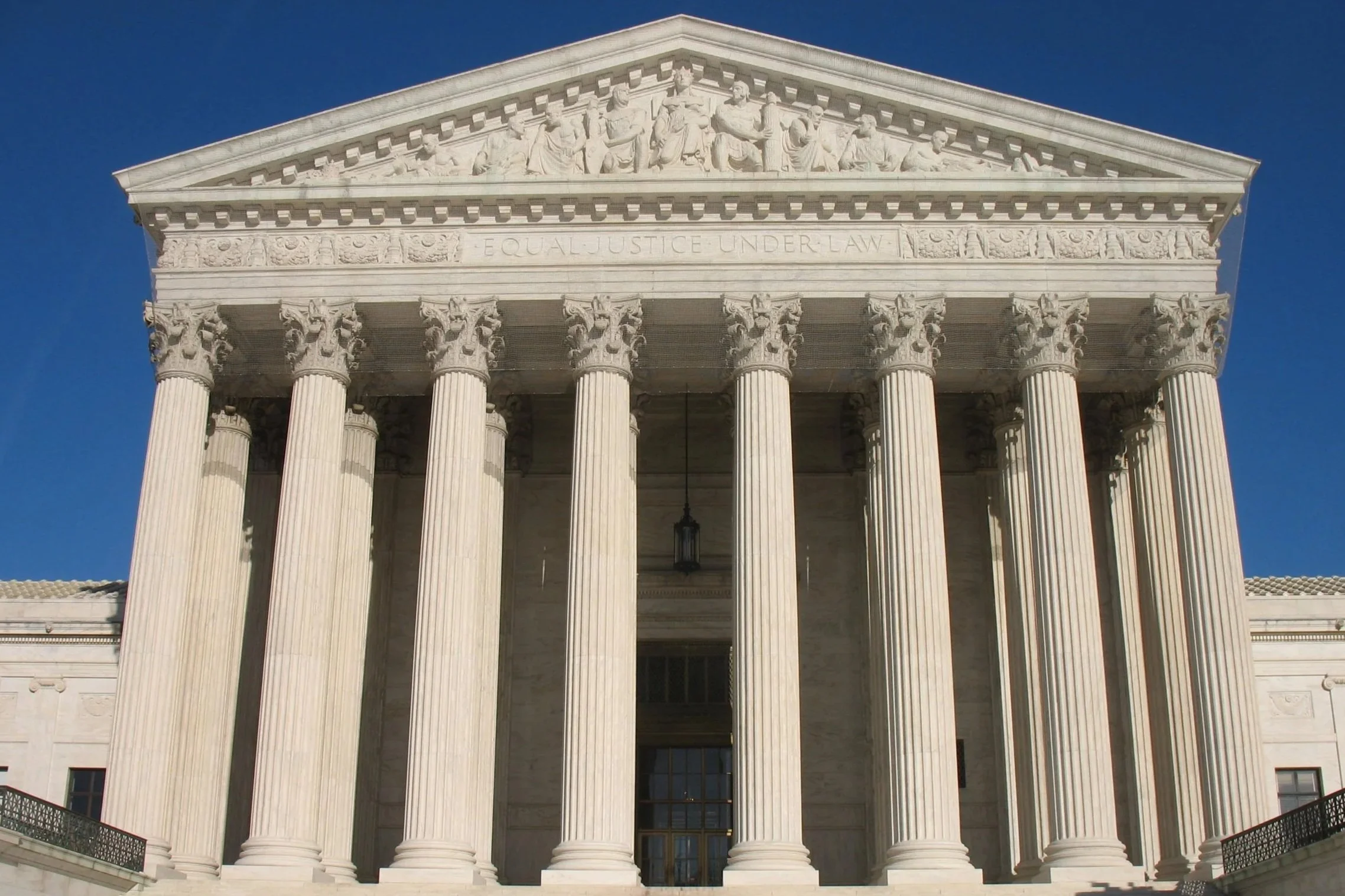
Photo Courtesy of Mr. Kjetil Ree- Wikimedia Commons
On Jan. 20, 2025, President Trump issued an executive order entitled “Protecting the American People Against Invasion.” The order, among other things, asserted that “[m]any of these aliens unlawfully within the United States present significant threats to national security and public safety, committing vile and heinous acts against innocent Americans.” It claimed that many have engaged in “hostile activities” and “have abused the generosity of the American people.”
Subsequently, the order called for executive departments and agencies to “employ all lawful means to ensure the faithful execution of the immigration laws of the United States against all inadmissible and removable aliens.”
This order, and the Trump administration’s overarching immigration policy, has meant a drastic increase in third-party removals—Third Country Deportation Watch estimates over 25,000 people have been sent to 30 different countries since the implementation of the policy in January. Third-party removals, as explained by the American Immigration Council, “are terms used to refer to any case in which the government sends someone to a country that is not the country in which they lived prior to arriving in the United States, nor to a country of which they are a citizen or national.”
On Feb. 18, 2025, according to the Immigration Policy Tracking Project, United States Immigration and Customs Enforcement (ICE) “sent an email directive to Enforcement and Removal Operations (ERO) officers directing them to ‘carefully review for removal all cases reporting on the non-detained docket.’” The email specifically instructed officers to consider whether “noncitizens granted withholding from removal or protection under the Convention Against Torture should be redetained and removed to a third country.” Additionally, noncitizens “previously released because there was no significant likelihood of removal in the reasonably foreseeable future (SLRRF)” would be “redetained and processed for removal to a previously recalcitrant country or to a third country.”
On March 30, 2025, according to ScotusBlog, the Department of Homeland Security (DHS) issued additional guidance regarding deportation of undocumented immigrants to third-party countries that failed to assure the United States the immigrants would not face torture upon arrival. In these cases, the DHS was to “notify the immigrants of the planned removal, give them a chance to ‘affirmatively express’ fear that they will face torture, and—if needed—conduct a screening to determine the likelihood that they will indeed be tortured.”
The policy has resulted in a back-and-forth litigation dispute between the Trump administration, the District Court in Massachusetts, and the Supreme Court in D.C.
Not a month after the guidelines were outlined by the DHS, on April 18, 2025, U.S. District Judge Brian Murphy issued a preliminary injunction against the policy. He had reviewed a class action case filed by a group of noncitizens in Massachusetts, which challenged “the policy or practice of…deporting, or seeking to deport, them to a third country…without first providing them with notice or opportunity to contest removal on the basis that they have a fear of persecution, torture, and even death if deported to that third country.” In his injunction, District Judge Murphy sided with the plaintiffs and stated that “[a]ll nine sitting justices of the Supreme Court of the United States, the Assistant Solicitor General of the United States, Congress, common sense, basic decency, and this Court all disagree” with the defendants.
According to the Center for Immigration Studies, the injunction required that the DHS “give written notice to any alien under a final order facing removal to a third country; provide those aliens an opportunity to raise a claim they would be tortured in that third country; move to reopen an alien’s immigration court case if the alien had shown a ‘reasonable fear’ of harm in that third country; and give those aliens 15 days prior to removal to move to reopen their cases if DHS [did not] find they had a reasonable fear.” Judge Murphy also “certified a class of aliens” facing third-country removal “who could take advantage of the foregoing requirements”—possibly going against section 242 of the Immigration and Nationality Act, which “suggests only the Supreme Court can issue injunctive relief.”
On April 22, 2025, the Department of Justice (DOJ) filed an “Emergency Motion for Stay Pending Appeal and Immediate Administrative Stay,” which would temporarily pause the enforcement of the injunction until further legal review. The DOJ argued that “[t]he district court lacked jurisdiction to enter that relief under multiple independent statutory bars” and “even if the district court’s injunction were not jurisdictionally barred multiple times over, it would fail on the merits too.”
The First Circuit denied the stay, stating in an Order of Court that the government did not meet “the standard for the relief sought.” The DOJ then filed an application for a stay of the injunction to the Supreme Court; the Supreme Court granted the stay on June 23, 2025, “pending the disposition of the appeal in the United States Court of Appeals for the First Circuit and disposition of a petition for a writ of certiorari.”
Justices Sotomayor, Kagan, and Jackson were the only dissenters; Justice Sotomayor wrote the dissenting opinion, stating, “Rather than allowing our lower court colleagues to manage this high-stakes litigation with the care and attention it plainly requires, this Court now intervenes to grant the Government emergency relief from an order it has repeatedly defied. I cannot join so gross an abuse of the Court’s equitable discretion.”
Judge Murphy has not backed down from his initial stance against the DHS policy. After continual back-and-forth, on Feb. 25, 2026, he issued a final decision declaring that class members have “the right to meaningful notice before removal to any third country” and the “right to a meaningful opportunity to raise a country-specific claim against removal before removal to any third country.” The decision asserted that the March 30 DHS Memorandum was unlawful, as was ICE’s Memorandum on July 9, 2025, following the Supreme Court’s June decision.
The issue has since been sent back to the Supreme Court, which will hear the case on Wednesday, Dec. 9, 2026.