
Giant tortoises reintroduced to Floreana Island
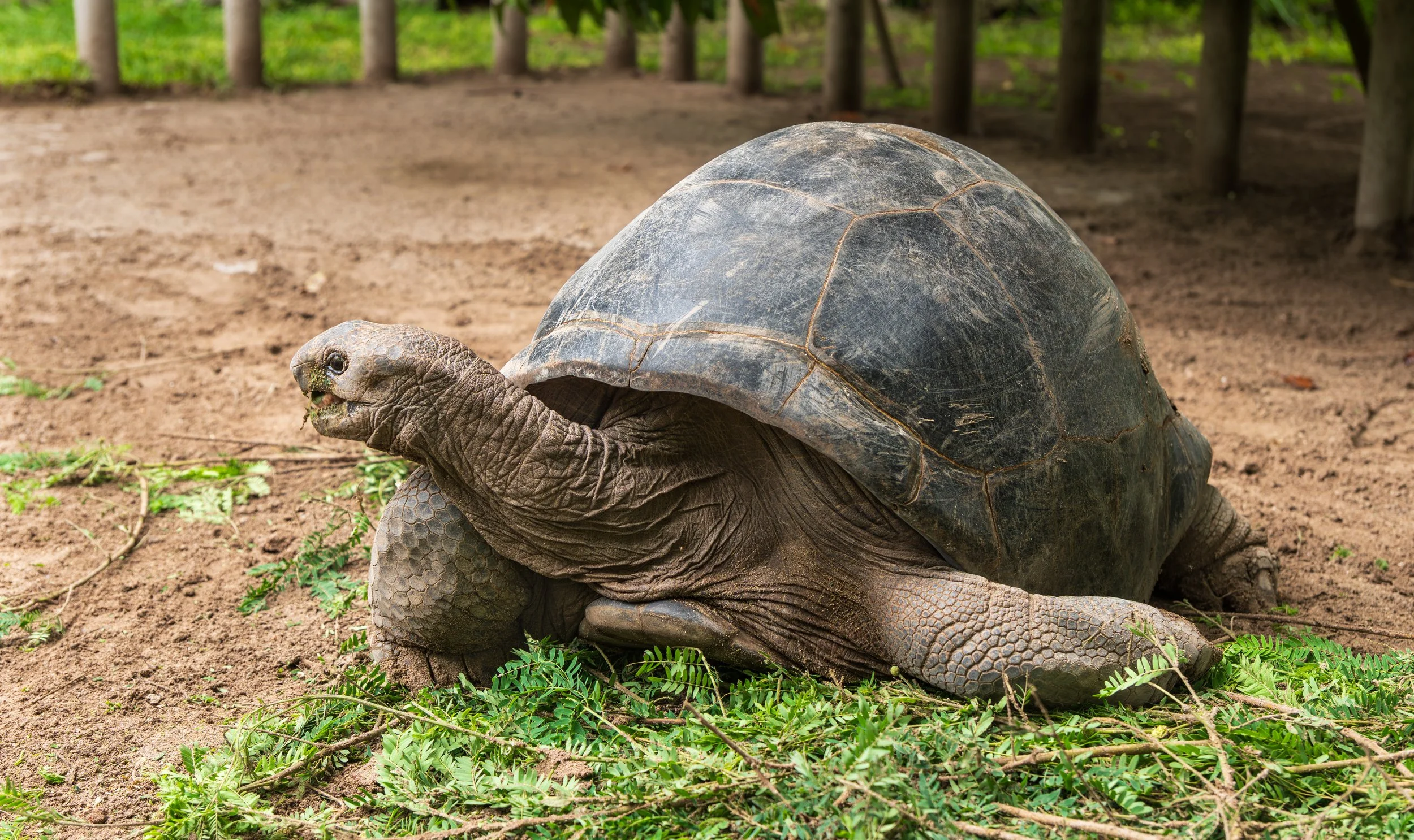
Photo courtesy of Norbert Nagel/Wikimedia Commons
In the mid-1800s, the Floreana giant tortoise was believed to have gone extinct, according to the Galapagos Conservation Trust. Floreana Island was colonized in 1832 by Ecuador and with that came disruptions to the ecosystem of Floreana. Smithsonian Magazine details that many of the animals brought over by the colonizers posed a threat to the native species of the island, eventually outcompeting many of them. Scientific American reports that in the 2000s, however, it was revealed that a tortoise population found on Isabela Island were genetic descendents of the giant tortoises from Floreana.
The Floreana Ecological Restoration Project was founded “to restore the ecological health of Floreana Island through a holistic approach,” as reported by the Charles Darwin Foundation. Upon deciding to attempt to reintroduce tortoises to the island, 23 tortoises with the closest genetic makeup to the extinct Floreana Island tortoises were chosen from Isabela Island to breed, as detailed by BBC. By 2025, around 600 tortoises were bred from the genetically similar tortoises from Isabela Island.
According to the Galápagos Conservancy, 158 giant tortoises were released onto Floreana Island on Feb. 20, 2026, and more will continue to be released. Experts decided to release the tortoises onto Floreana Island during the rainy season when the vegetation is most prominent and their chances of survival are the highest. James Gibbs, the vice president of science and conservation for the nonprofit Galápagos Conservancy, said in a statement to Scientific American, “Watching the tortoises step onto Floreana and start exploring was incredibly moving…It felt like the end of a 26-year effort but at the same time, a beginning.”
Speaking on the rehabilitation efforts, the Galápagos Conservation Trust said, "The restoration of Floreana has reached a hugely significant milestone, with 158 captive-bred giant tortoises released into the wild this week…This long-anticipated moment gives hope, not just for the future of Floreana, but for the future restoration of islands around the world.”
Each tortoise was fitted with a tracker that will operate for approximately 10 years. Gibbs elaborated on the trackers, saying, "We’ve been looking at them every hour and seeing they’re all heading out together in pairs and trios…if any of them stop moving, we’ll go out and check on them … but we’re just kind of monitoring them quietly and seeing that they’re settling in quite nicely into their new home — or old home.”
Scientific American explained that the tortoises are considered a keystone species for the island, and their reintroduction will most likely prove beneficial for the ecosystem. Gibbs also commented, “The island’s ecosystems and evolutionary lineage is restarting, and the biological processes that shaped Floreana are coming back again…It’s a powerful reminder that sometimes what seems lost forever is simply awaiting the chance to return.”
The reintroduction of giant tortoises onto Floreana Island is part of a larger community-based recovery mission for the island's ecosystem. According to the Good News Network, the community's involvement has already led to the Galápagos Rail, a bird native to the island, being successfully reintroduced. A representative from the Floreana community, Verónica Mora, said, “For generations, Floreana existed without its giant tortoises…Their return shows what is possible when a community leads and many partners come together with a shared purpose. Our livelihoods, from tourism to agriculture and fishing, depend on the health of this island.”