
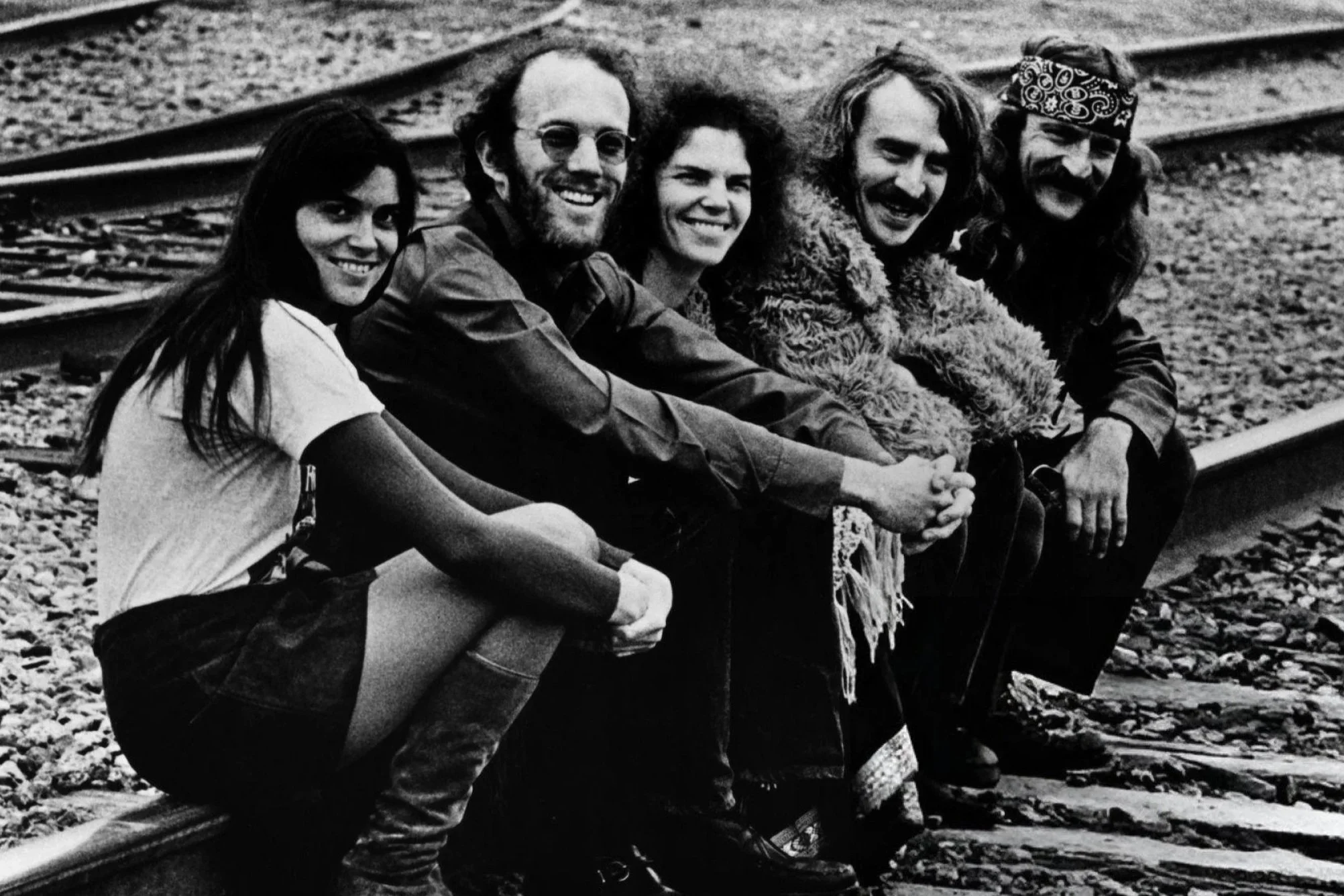
Photo Courtesy of Capitol Records- Wikimedia Commons
“You Can’t Always Get What You Want” by the Rolling Stones, in collaboration with the London Bach Choir, has one of the most unique outros I have ever heard in music. At one minute and 36 seconds, this outro combines the heavenly chorus of 120 voices (the 60 voices of the choir were double tracked, according to CultureSonar, to create an even fuller sound) with the classic sounds of 1960s rock: Mick Jagger’s iconic voice,; producer Jimmy Miller’s persistent, energetic percussion; Bill Wyman’s rolling bassline; and Keith Richard’s grooving guitar.
Joy of Cooking’s “Only Time Will Tell Me” is yet again an example of a meandering outro. Toni Brown’s rasp and the groovy instrumentals improvise as they fade out, something that is present in many of the band’s songs.
Lynyrd Skynyrd's “Free Bird” ends in a flaming outro that clocks in at over four minutes long, characterized by Allen Collin’s infamous guitar solo.
While these three songs differ in energy levels, rhythmic elements, and musical techniques, both songs delve into a sort of structured chaos, laced with enthusiasm, passion, fun, and a love for the art form.
This sound, which I like to refer to as “hootin’ and hollerin’,” was a staple of 1960s and 1970s classic rock and blues, and we need more of it. Hootin’ and hollerin’ has sadly fallen out of fashion in mainstream music as the years go on. While it still exists in smaller spaces, like in bands Greta Van Fleet and The Third Mind, it has significantly decreased in popularity.
The popularity it once had could be attributed to concert culture and the prevalence of music festivals during the era, where an extended outro was necessary to change instruments, communicate with the crew, and transition between songs. But more than that, long, chaotic, energetic music during these festivals created a sort of collective effervescence:—the intensified, unified emotions felt by a group of people when participating in a shared ritual or experience, as explained by the National Library of Medicine.
According to sociologist Émile Durkheim in page 348 of his 1912 book, The Elementary forms of the Religious Life, displayed on the Internet Archive, “their [collective gatherings] first effect is to bring individuals together, to multiply the relations between them, and to make them more intimate with one another. By this very fact, the contents of their consciousnesses is changed.”
The long, hootin’ outro created a space for collective effervescence to manifest itself and swell, which is partly what made festivals like Woodstock and Isle of Wight so groundbreaking. This particular musical technique created a community and social scene that is typically not replicated today in modern music concerts, which is partly because of their styles.
Modern music has a certain curation to it, a control that stems from attempting to appeal to the broadest audience, toxic fanbases or tabloids that exploit any misstep, and the pervasive and permanent nature of the internet. To “go wild” onstage or in recorded track, or to be impassioned about the art form, would mean running the risk of not appealing to the widest audience possible or having unflattering footage of yourself spread around the world. Autotune, heavily choreographed dance numbers, and even pre-planned moments of “improvisation” limit what the artist can and cannot do, and creates a calculated environment for expression, which limits the reaction that can be achieved from the audience.
Modern artists (or their labels) tend to utilize “singing over playback” in concerts, a technique where the artist sings over a prerecorded backing track, a middle ground between live sound and lipsyncing, as covered in an article by Good Morning America. While singing over playback was occasionally used during the 70s, it was primarily used during television shows, such as The Ed Sullivan Show (1948-1971) according to Far Out Magazine; it was rarely used live in concert. The freedom that artists once had is no longer there.
Modern music is not bad. It simply lacks the particular type of enthusiasm that comes with the energy and freedom found in classic rock. I think there needs to be an even distribution of both within the music scene.
Bring back unabashedly going wild on stage. Bring back long, meandering, chaotic outros. Bring back passion. Bring back hootin’ and hollerin’.