
Punctuation, ranked!
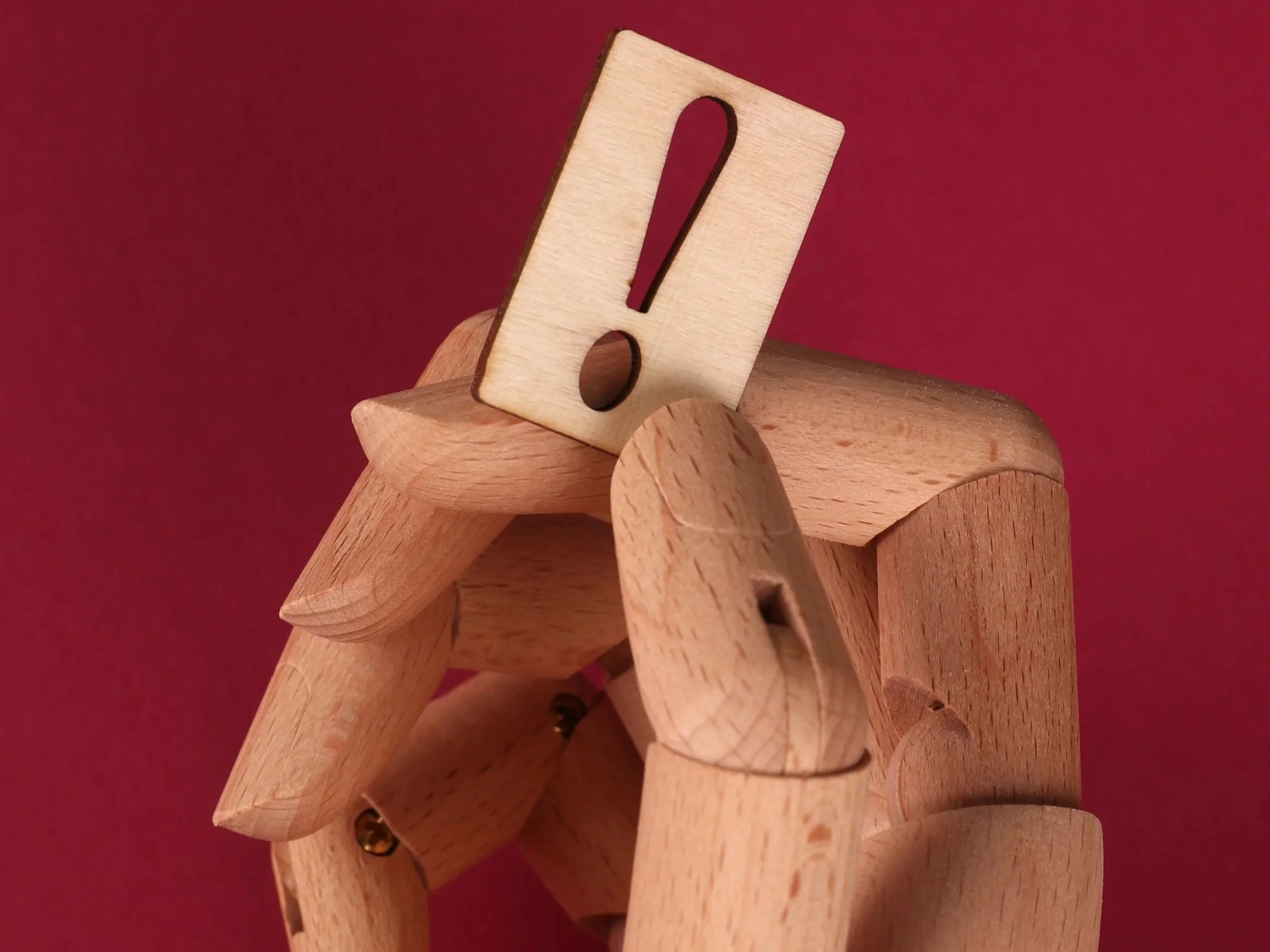
Photo Courtesy of Ann H- Pexels
Punctuation is used every single day. What’s your favorite punctuation?
Punctuation is an underappreciated aspect of romantic languages. It is often used incorrectly or left out altogether, especially in the cases of informal messages or hasty emails.
Punctuation can vastly alter writing. Exclamation marks, question marks, and periods indicate tone and intention, which is undoubtedly integral to the English language. It alters the meaning of a claim, such as in the classic example of “let’s eat, Grandma!” and “let’s eat Grandma!” The first implies they’re serving Grandma dinner, and the latter implies that they’re serving Grandma for dinner. Without proper punctuation, communication in a creative, academic, and interpersonal sense fails.
That being said, not all punctuation is created equal. Some are far better than others. So, this is my ranking of punctuation, from worst to best.
On the bottom of the pecking order is the period. The period is basic. Simple. The classic punctuation piece. It lacks a certain creativity that the other punctuation pieces possess.
The apostrophe is close to the period. It’s used too often with “not” to negate a verb like “can,” “to do,” or “to be.” It’s too negative, and when it’s not negative, it’s lazy. Additionally, conjunctions can be an indicator of informal writing, which means it isn’t useful in every context.
Exclamation points are entirely in the middle ground for punctuation marks! Often accompanied by all capital letters, the exclamation mark is misconstrued too often by the reader. It could indicate vastly different emotions like excitement, anger, frustration, or fear, which makes it a generic and useless punctuation mark! However, it ranks higher than the apostrophe because of its usefulness in music, in cases like “Man! I Feel Like a Woman!” by Shania Twain, “Too Late!” by Boyish, and, of course, the musical artist Panic! At the Disco.
Merriam-Webster defines quotation marks as punctuation “used chiefly to indicate the beginning and the end of a quotation in which the exact phraseology of another or of a text is directly cited.” Often paired with parentheses to add citations, they offer collaboration with a variety of other marks, and add ‘reliability’ to the argument. However, they lack original thought, and without a specific citation, the innocuous use of quotation marks could quickly tip into plagiarism.
The ellipses are good…not great. They’re used when leaving something out for brevity, or trailing off in thought, or…gosh, I can’t remember. While useful in certain contexts, they are at risk for overuse, especially in fiction.
The comma is another beloved piece of punctuation, frequently used by classic authors like Dostoevsky, Dickens, and Dumas, and it continues to be well-loved today, but, however, overuse of commas can result in lengthy, run-on sentences, which can confuse or disorient the reader, and yet, they remain an integral part of the world of punctuation, and it has my full approval when used sparingly.
Parentheses claim bronze in this ranking of punctuation. (Keep in mind, this ranking is based on personal preference alone, and not based on anything concrete.) Parentheses are a versatile (not to mention aesthetically pleasing) form of punctuation that can be used for a number of purposes, such as (1) interjecting a thought, (2) citing a source, and (3) introducing a list.
The semicolon, while tricky, can be one of the most satisfying punctuations out there; indeed, it creates a flow to writing that cannot be replicated by mere commas or periods. It’s used to separate two independent clauses that are related in meaning, and has a certain sophistication to its usage; in my opinion, it is the second best punctuation out there.
The em dash—which can be used like a colon, comma, or parentheses—is one of the most useful and versatile punctuations on the market and takes first place in this ranking. It can be used to add tidbits of information, interject a thought, or generally improve sentence variation—that is, when used correctly. It is a tragedy that the em dash is commonly associated with AI-generated regurgitation, because it is such a beautiful and useful form of punctuation—both visually on the page and in the eloquence of writing—and improves the quality of creative and academic writing alike.
The Oxford comma receives honorable mention in this ranking, because I lump it in with the plain comma. The sole purpose of the oxford comma is to avoid confusion. An example of a confusing sentence that could be improved by the oxford comma is as follows: “I love my parents, Zendaya and Tom Holland.” This implies that my parents are Zendaya and Tom Holland. With the Oxford comma, the sentence would be amended to “I love my parents, Zendaya, and Tom Holland.” Because the Oxford comma works so hard to avoid miscommunication, it gets honorable mention.
You’ll see that the en dash, hyphen, brackets, colon, or question marks did not make it into this ranking. That is because I have no opinion about these marks whatsoever. They are the linguistic equivalent of white bread: a staple, but generally boring when compared to rye bread, pumpernickel, sourdough, or even Amish bread.
There are plenty of punctuation marks to choose from, but some are undoubtedly better than others. It is a choice best made wisely.