
Our past is not a peaceful one
Harkening back to a mythical past gets us nowhere
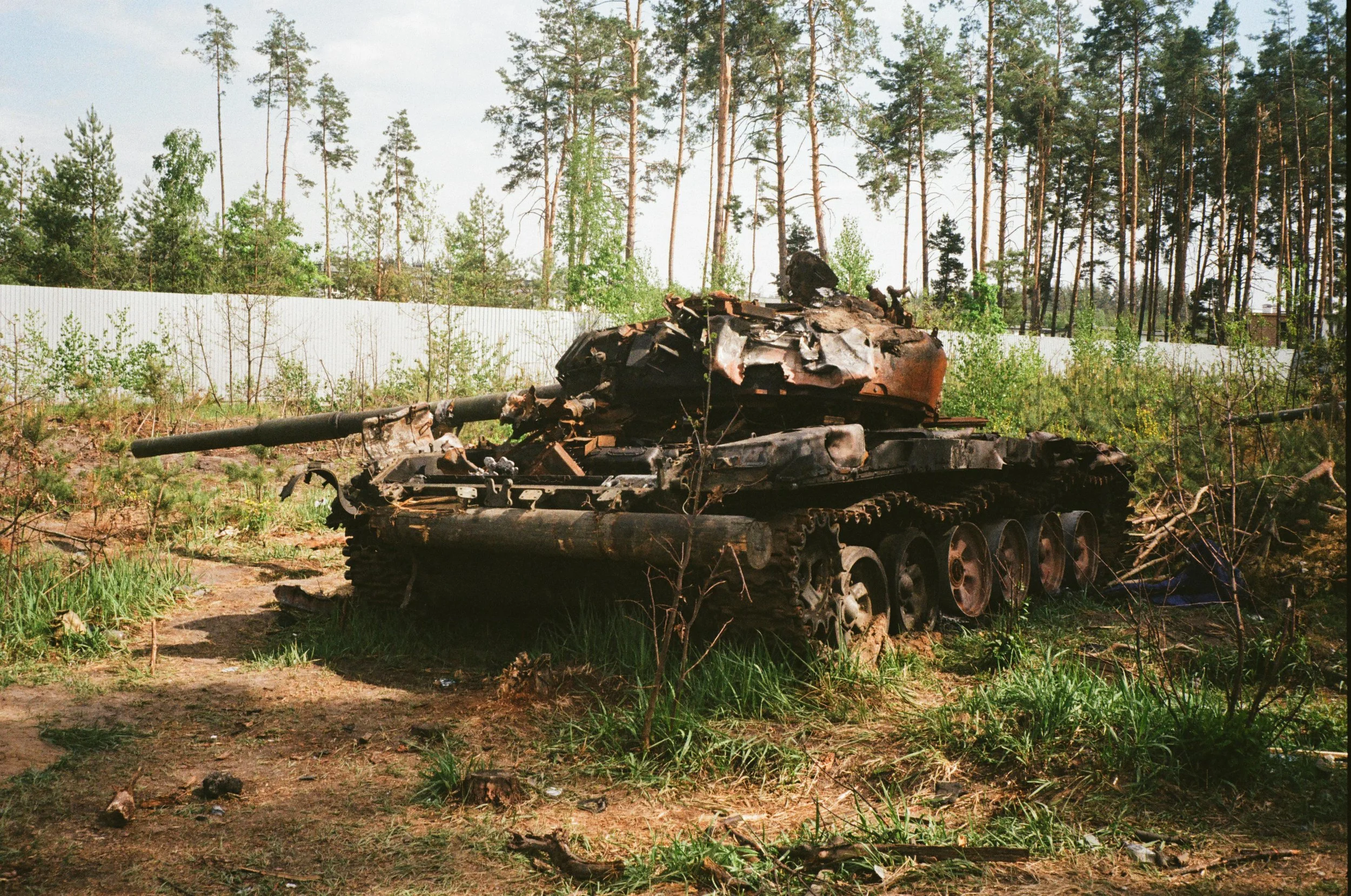
Photo courtesy of Mykhalio Volkov/Pexels
On Mar. 2, 2026, in a speech published by C-SPAN, President Trump announced that the United States military would continue to “carry out large scale combat operations in Iran to eliminate the great threats posed to America by this terrible terrorist regime.” He notified the public that Iran had “ignored” warnings given not to rebuild their nuclear program, and that soon, Iran would have missiles “capable of reaching our beautiful America.” He stated that this was “our last best chance to strike” and “eliminate the intolerable threats posed by this sick and sinister regime.”
This speech—and Trump’s current military campaign against Iran as a whole—has not been received well by many, particularly those who remember his campaign vow of “no new wars.” Adding fuel to the fire of this discontent, according to NPR, Secretary of State Marco Rubio told reporters that, “We knew that there was going to be an Israeli action…We knew that that would precipitate an attack against American forces. And we knew that if we didn't preemptively go after them before they launched those attacks, we would suffer higher casualties.” Many concerned citizens—including those who have supported Trump thus far—are not satisfied with his justifications, and are speculating that our intervention is entirely motivated by our close military and economic ties to Israel.
For a president supposedly dead set on an “America First” isolationist policy, he has certainly demonstrated a confusingly high level of inconsistency, as he has already, as reported by NPR, “greenlit a military operation to capture Venezuelan leader Nicolás Maduro earlier this year, authorized strikes in Syria, Nigeria, Somalia and other countries and threatened to ‘take back’ the Panama Canal, among other things.” An article from The Guardian, noting the stark contrast between Trump’s campaign rhetoric and his recent policy pursuits, sardonically commented, “ever since Trump was overlooked for the Nobel peace prize, the US president has rather turned his back on his peace mission. Now he is hellbent on winning the Nobel prize for war.”
I am not really surprised by any of this. Trump’s rhetoric and attitude has, from the very beginning, demonstrated that he does not particularly care who his actions might harm, and he does not concern himself with restraint. I am also not surprised by this because this is exactly what the United States does and has been doing since its inception; we are a nation built on imperialism, exploitation, and frequent international interventions—and neither are these exclusive to our distant past. They are not limited to what you might be remembering from your high school history classes about the Monroe Doctrine, “banana republics,” spheres of influence in China, or somewhat more recent post-Cold War policies abroad (with endless other unmentioned examples). I am talking about very recent history—about in our lifetimes—and if you remember political and international affairs as “peaceful” before Trump, it is because you were not and have not been paying attention.
If, when you talk about former president Obama, you reminisce about a calm and peaceful world—a mythical past of harmony—you reveal your blatant selective ignorance. Obama certainly did not demonstrate the same loud and obnoxious disregard for human life and dignity that Trump proudly exhibits, but nonetheless, his administration cannot be characterized as one that consistently upheld human rights. As reported by The Bureau of Investigative Journalism, “Obama embraced the US drone programme,” and “overs[aw] more strikes in his first year than Bush carried out during his entire presidency.” Under his administration, “A total of 563 strikes, largely by drones, targeted Pakistan, Somalia and Yemen” and “[b]etween 384 and 807 civilians were killed in those countries, according to reports logged by the Bureau.”
Obama was, arguably, a war criminal. He did not demonstrate particular concern for civilian lives abroad—or, at least, they were certainly secondary under his overarching banner of counterterrorism. Trump, despite his promises, is continuing that legacy; as noted by The Guardian, “here we are again. A war in the Middle East with no real plan other than to inflict damage and regime change.”
It can be tempting, as someone who is frustrated more broadly by current injustices against and inhumane treatment of immigrants, women, queer individuals, civilians abroad, etc., to harken back to an idealized past in which these human rights violations did not happen. But to do so is to ignore a brutal history that we must recognize if we are to move forward; to do so is to ignore those people who suffered then just as they are suffering now. To act as though recent incidents are unprecedented—even if we are attempting to refer only to our very recent past—does not actually afford them more weight, but does a disservice to all those harmed by the actions that make what is happening now, in actuality, precedented.