
How wildlife crossings protect both humans and wildlife alike
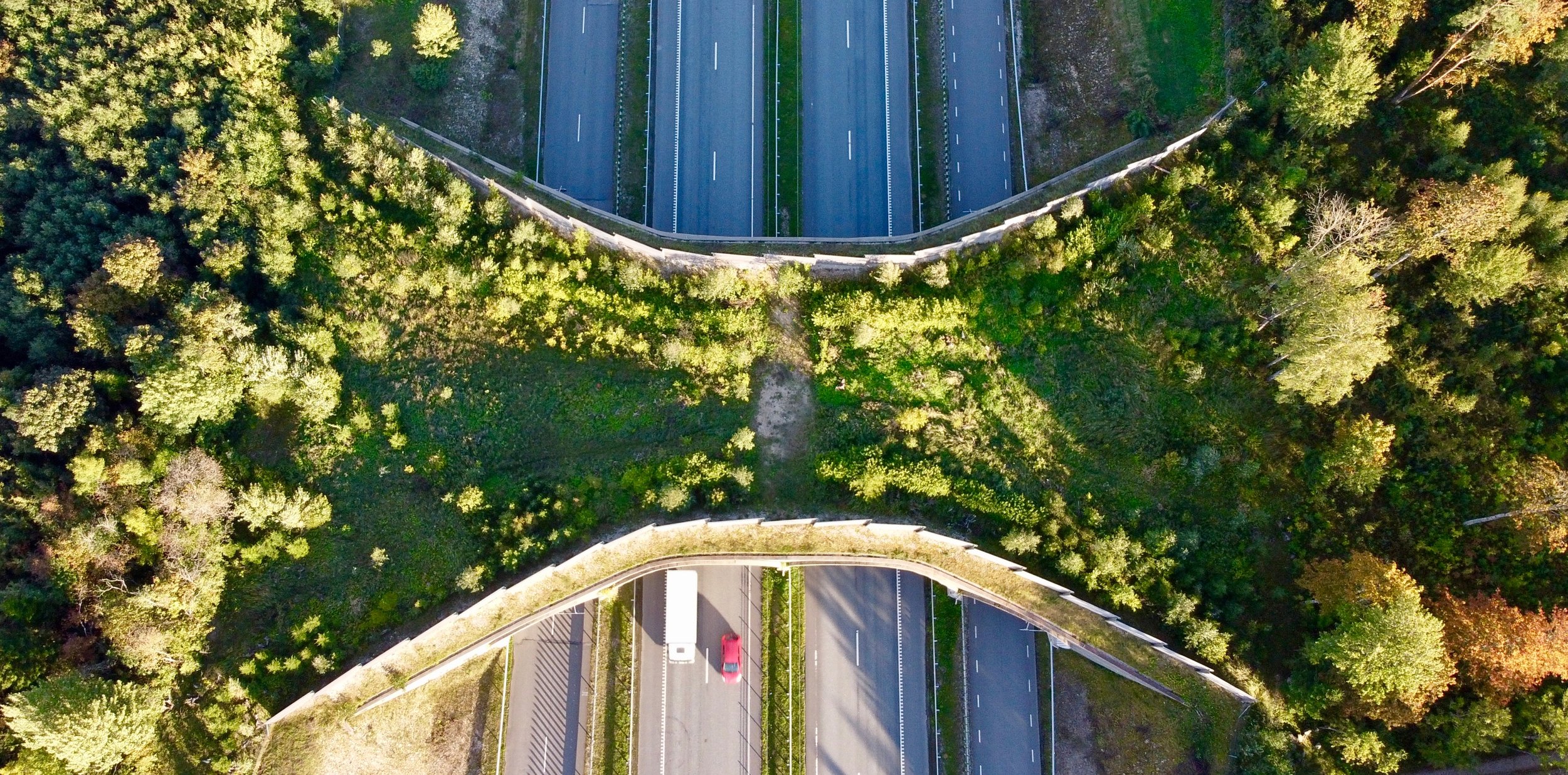
Photo Courtesy of Sillerkiil- Wikimedia Commons
As the world is becoming increasingly industrialized, animal habitats have frequently been destroyed for human convenience. Major roadways commonly take over what used to be the homes of wildlife, causing serious motor vehicle accidents to occur every year. To solve this issue, wildlife crossings, sometimes called wildlife bridges or green bridges, have steadily been implemented above or below roadways to preserve the wildlife’s homes as well as protect drivers from accidents, according to Yellowstone to Yukon.
The idea for wildlife crossings originated in 1950s France when people began building “game bridges,” or “passages à faune sauvage.” According to Atmos, the French started this project to allow animals to cross over or under any roads that may be in the way. “[N]eighbors including Germany and Switzerland” adopted the crossings shortly after and developed the idea into “toad tunnels,” which “escort migrating amphibians beneath traffic,”according to Mongabay. Crossings found their way to America around the 1960s with the quick development of interstate highways cutting through forests and severing natural paths for wildlife.
While wildlife crossings started out as above-road bridges, advancements have led to other interventions. The World Wildlife Fund lists the different types of crossings, which include overpasses, small animal covers, fencing, underpasses, floodplains, and canopy crossings. These varied structures allow not just large animals to pass over roadways, but small animals, aquatic species, and native plant species as well. Unfortunately, roadways are not the only man-made structure that prevents the movement of animals, as dams, canals, fences, and more can block their way. Still, roadways are the largest inconvenience to a variety of wildlife and prevent most from moving freely from one side to the other.
The concept of wildlife bridges is not new, but newer studies have shown their success. Yellowstone to Yukon states that along the 82 km of the Trans-Canada Highway in Banff National Park alone, there are “38 underpasses and six overpasses and fencing” that protect the wildlife from wandering out into the way of cars. These specific crossings have been monitored since 1996; the park’s extensive program is the longest-running continuous “research and monitoring program in the world,” according to the Government of Canada.
Many animals are known to use existing crossings, but most are hesitant to use new ones. According to Yellowstone to Yukon, bears and wolves have made it known that “it may take up to five years before they feel secure using newly built crossings.” Animals also have a preference of what types of crossings they prefer. High, wide, and short crossings like overpasses are preferred by elk, deer, grizzly bears, and moose whereas long, low, and narrow crossings are preferred by cougars and black bears. The different variations of crossings are meant to accommodate all wildlife, so they all feel secure when crossing from one side of the road to the other.
In 2021, the U.S. Department of Transportation established the Wildlife Crossing Program in the Infrastructure Investment and Jobs Act. The Act includes “several provisions to reduce WVCs [wildlife vehicle collisions] and improve habitat connectivity,” according to the Federal Highway Administration website. Program activities to “advance the state of the practice for wildlife crossings” include items such as Statewide Transportation and Wildlife Action Plans, Collision and Carcass Data Methodology, and Wildlife Crossing Design Standards.
The Wildlife Crossing Pilot Program is a competitive grant program where state departments, organizations, local governments, etc. can apply for a grant to be used towards “the goal of reducing Wildlife Vehicle Collisions (WVCs) while improving habitat connectivity for terrestrial and aquatic species,” according to the Federal Highway Administration website. The U.S. Department of Transportation was awarded “350 million [dollars] total in Federal-aid contract authority funding for Federal Fiscal Years (FY) 2022 through 2026” for the program. The application deadline for this year is Nov. 16, so state and local governments, as well as regional organizations and Federal Land Management Agencies (FLMAs), will have applied for large sums of money to improve their crossings and continue research.
While wildlife crossings do not completely prevent motor vehicle collisions with wildlife, they prevent many major accidents, saving both humans and wildlife. Humans are continuing to construct obstacles daily, such as roads and buildings, that cut into the wildlife’s natural habitat. Wildlife crossings are the future of the ecosystem and will preserve several species assuming new construction of the crossings continue.