
The vaquita porpoise population is hovering near extinction
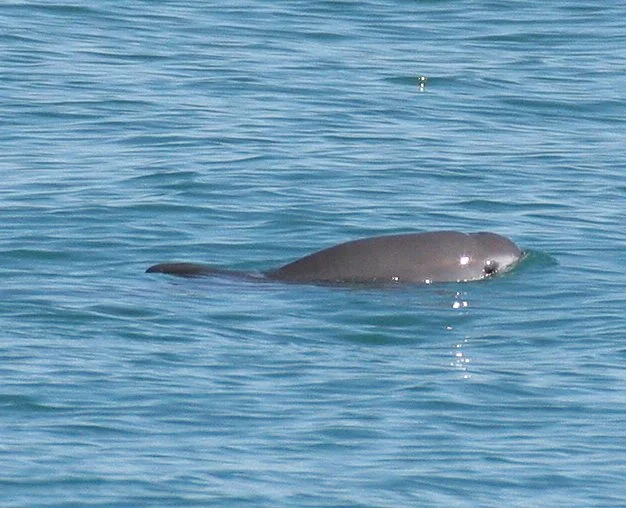
Photo courtesy of Paula Olson/Wikimedia Commons
The vaquita porpoise is known as “the world’s smallest cetacean,” according to the Save the Vaquita website. At around five feet long, and only found in the Gulf of California, Mexico, according to the Marine Mammal Center. They are characterized by their dark gray color and unique dorsal fin. Currently, fewer than 20 vaquita porpoises remain in this world.
They primarily feed on fish, shrimp, octopus, and squid. Vaquitas are very shy and usually travel by themselves or in pairs. They often remain in shallow waters, which avoid boats and other objects in the water.
Unfortunately, the vaquita population has reached dangerously low numbers—with less than 20 of the porpoises in the wild, as detailed by VaquitaCPR. The World Wildlife Fund estimates that there may be only 10 vaquitas left and they have been declared critically endangered. The species was expected to be extinct by 2021, but they have survived the odds, as reported by Sea Shepherd Conservation Society.
One of the main factors contributing to their critically endangered status is fishing. Vaquitas are often trapped in gillnets—a fishing net that captures fish by their gills, causing them to drown. They are often caught as a bycatch in the gillnets because the illegal fishing companies are often targeting other fish species, as the World Wildlife Fund reported.
Although the Mexican government has put in place protective measures for vaquitas, such as banning gillnets, the Marine Mammal Center reports the vaquita population has not grown. Most of the gillnets are installed by illegal fishing companies, which have added to the damage on the vaquita population. Dr. Anna Hall from the Porpoise Conservation Society said, “There is nothing else we need to worry about other than gillnets. If we remove the gillnets, we will likely save the vaquita.”
The Smithsonian National Museum of Natural History details that gillnets are primarily targeting totoabas, which are another rare marine species. Totoabas are illegally sought after for sale in markets in Asia for their swim bladders, which are known to be used in traditional Chinese medicines. The demand has only risen, and the fish have continued to be sold for high prices on the black market. Both vaquitas and totoabas, which are only found in the Gulf of California, are facing extinction if further action is not taken.
Clare Perry, an Ocean Campaigns Advisor for the Environmental Investigation Agency, explained, “The future survival of the vaquita rests in the hands of a relatively small number of Chinese consumers of totoaba maw. While this lucrative market continues, vaquita will inevitably die in illegal fishing nets and dwindle to extinction.”
Vaquitas are integral to the Gulf of California’s marine ecosystem, and it is unclear what effect their potential extinction will have; but what is known is that their extinction has been caused by human interference. With so few numbers remaining, experts are unclear on whether there is a chance to revive the vaquita population, but organizers like those of Save the Vaquita are persistent in supporting their conservation.
In order to help the vaquitas, Defenders of Wildlife suggest that consumers exercise their power as a customer when purchasing seafood by ensuring that seafood is sustainably sourced before purchasing. Alongside this, many conservation organizations encourage everyone to reach out to Mexican government officials and demand that further efforts be made to save the vaquitas.