
Recognizing Suicide Prevention Month in September
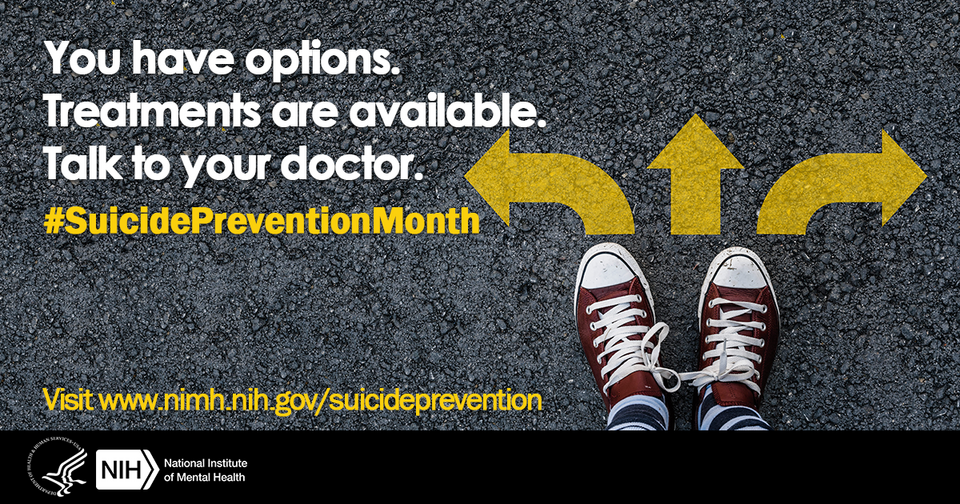
Photo Courtesy of Wikimedia Commons
Reaching out to professional resources, such as hotlines, is an important step in getting help if you or someone you know is struggling with suicidal thoughts. Asking for help should never be stigmatized, as it can be a key factor to getting access to mental health treatments to reduce suicide rates.
Trigger Warning: Talk of Suicide
September is Suicide Prevention Month. According to the Center for Disease Control and Prevention (CDC),, “Suicide was responsible for 48,824 deaths in 2024,” with the number of people who have suicidal ideation—thinking about suicide—or attempting suicide being even higher. As per the National Institute of Mental Health (NIMH), “[s]uicide was the eleventh leading cause of death overall in the United States” and the “second leading cause of death among individuals between the ages of 10 and 34” in 2023.
This month reminds us to talk about mental health issues and the fact that so many people live with mental health issues daily. According to the National Alliance on Mental Illness (NAMI), “23.4% of U.S. adults experienced mental illness in 2024 (61.5 million people)” with “more than 1 in 20 U.S. adults (5.5%) hav[ing] serious thoughts of suicide each year.” Still, there is a strong stigma around suicide and mental health issues, which could be one of the many reasons that understanding the warning signs of suicide, as well as the resources available for those who deal with suicidal ideation and mental health issues as a whole, is limited today.
The Lehigh Center for Clinical Research explains that seeking treatment for mental illness can “help to improve your quality of life” as well as “positively [affect] physical health by improving sleeping habits, the immune system and lower pain levels.” Mental health treatment includes steps that can be taken to help reduce symptoms of mental illnesses, as poor mental health is a commonly seen risk factor, increasing “the likelihood of a person experiencing suicidal thoughts or attempting or dying by suicide,” as per the Pew Research Center.
According to AOL, there are many signs of potential suicidal ideation, including talking about feeling hopeless or like a burden, withdrawing from family, friends, and social activities, increasingly using drugs and/or alcohol, engaging in self-harming behaviors, and more. It is imperative to remember that not all warning signs of suicide are visible, so checking in on others is just as important as understanding the signs.
There are many resources for those who deal with suicidal ideation. The CDC lists several sources for those struggling with suicidality, including the 988 lifeline, a “24-hour, toll-free, confidential suicide prevention hotline available to anyone in suicidal crisis or emotional distress,” available via call or text. The Trevor Project , “the leading suicide prevention and crisis intervention nonprofit organization for LGBTQ+ young people,” as per their website, also has “trained counselors [that] understand the challenges LGBTQ+ young people face and are available for support 24/7.”
These sources for short-term care and aid can be vital, but it must be remembered that long-term support and care is just as important as short-term care. Whether it be therapy, medication, or another form of support, taking care of one’s mental health can be helpful with or without suicidal ideation.
According to the American Foundation for Suicide Prevention (AFSP), in support of long-term mental health care, “there are treatments that focus on broad life, psychological and behavioral changes, that include managing suicidal thoughts and reducing behavior as a component.” Some of these treatments, as also cited on the AFSP website, can include, but are not limited to, “Cognitive Behavioral Therapy-Suicide Prevention (CBT-SP), Dialectical Behavior Therapy (DBT), [and] Attachment Based Family Therapy (ABFT).”
As September comes to an end, remember that talking about mental health is not something to be afraid of; it is imperative to understand the signs and symptoms of—and resources for—suicide and suicidal ideation. If you are struggling with suicidal ideation, remember to reach out to someone you trust and seek help.