
Arctic sailor forced to abandon solo voyage after route is closed
Matt Rutherford’s attempt to become the first person to circumnavigate the Arctic Ocean alone ends early
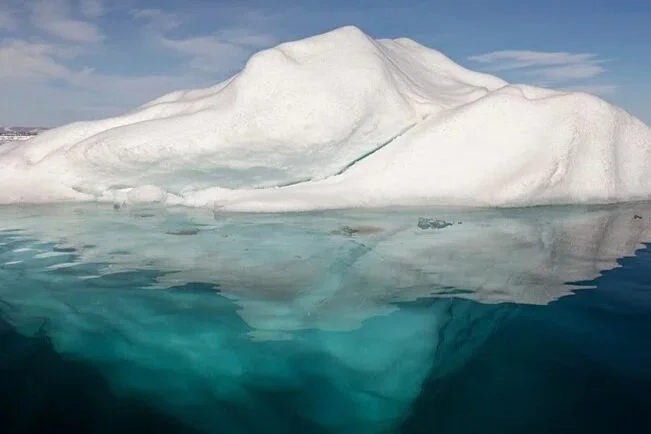
Photo Courtesy of Wikimedia Commons
The Arctic Ocean is known for its dangerous ice floats and icy gales which can make traversing the ocean harrowing.
Matt Rutherford—an American sailor— had his attempt to become the first person to sail solo around the entire Arctic Ocean come to an abrupt end after Russian authorities closed off the waterway he needed to complete the route last month, as reported by NPR. The 45-year-old from Maryland was making the voyage in hopes of fundraising for his climate science nonprofit, the Ocean Research Project.
Rutherford is no stranger to solo sailing, as according to NPR, he stated, “Normally, I’m running a research schooner and we’re studying glaciers in Greenland. And this year, because there’s no funding … I’m doing a little side trip.” As further noted by NPR and Rutherford, climate science has been facing funding cuts in recent years; this urged Rutherford to decide to attempt the journey around the Arctic Ocean, as a way to draw new donors to the cause.
Rutherford’s route was incredibly ambitious. NPR detailed that he would be traveling “across the North Atlantic, along the Russian Arctic coast and eventually through the Northwest Passage in Canada.” The Northwest Passage, as noted by the Arctic Institute, is roughly 5,000 miles on its own; Rutherford’s route also contained the Northern Sea Route, approximately 3,500 miles spanning the North Atlantic to Russian Arctic Coast, as noted by Poisedian Expeditions.
Rutherford’s voyage began June 25 on the western coast of Greenland, as noted in Arctic Today. Rutherford recounted constant dangers, describing how sleep itself became a hazard on the icy route. He stated, “[I]t just becomes extremely difficult to get any sleep because if you hit the ice, you essentially die,” as quoted by NPR. If Rutherford sailed too slowly, causing summer to end in the arctic while he was still traveling, the autumn climate would pose harsh threats to his trip. According to the National Snow and Ice Data Center, “Two events often collide in the autumn in the Arctic: the strongest storms and lowest sea ice extent. After a summer of sea ice melt, with large areas of open water, large storms can do considerable damage and contribute to shoreline erosion and terrestrial habitat loss.”
However, it was not the icy conditions that seemed to stop Rutherford. After 50 days at sea, Rutherford said “he was force[d] to abandon the journey after the Russian government turned him around,” as he noted in a follow up article with NPR,
Rutherford posted on social media that he had been boarded by the Russian Coast Guard roughly 24 hours after entering the Northern Sea Route. In an archived voice transmission by VPM, he spoke plainly, stating, “Well, I was boarded by the Russian Coast Guard today. Oh, only about 24 hours into the Northern Sea route, and I already got boarded.”
In that same transmission, Scott Detrow, journalist with NPR noted that “the Russian government informed him it was closing the sea route for pleasure craft like his.”
Rutherford spoke to NPR of the situation: “I don’t feel like going back to land. I’ve been at sea for nearly 50 days at this point. Obviously, I’m very disappointed. But what am I going to do? What, am I going to cry about it? You know, what am I supposed to do over here?” He also claimed that he is “too stubborn to quit,” and plans to attempt the circumnavigation again next year.
Rutherford’s setback is a reminder of how rare and difficult a completed circumnavigation is. Organizations such as the International Association of Cape Horners maintain official registers tracking sailors who have completed the rounding of Cape Horn while completing a “non stop passage of more than 3000 miles,” either solo or with crew. They log routes, times and records set by circumnavigators going back decades and being added to that list remains one of sailing’s most exclusive honors.