
New medical treatments emerge for cancer and Parkinson’s disease patients
These new treatments may represent great advancements for the future of medicine
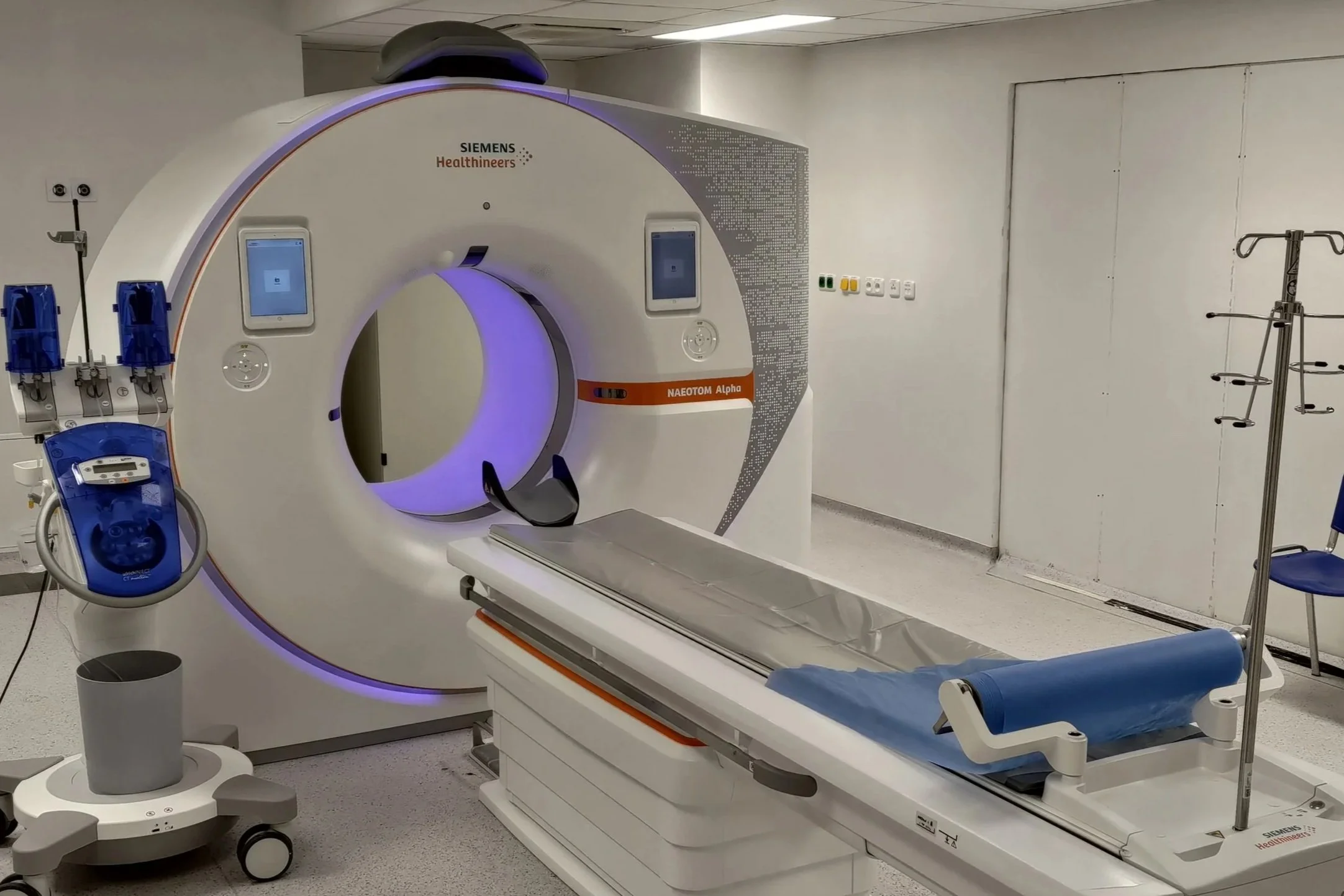
Photo Courtesy of Tomáš Vendiš- Wikimedia Commons
This year has already proven to be notable for medical advancements. A new way to detect multiple types of cancer, as well as a new treatment for Parkinson's disease, have both been proven to be effective in recent studies.
Nature Medicine published an article last month on the “[p]erformance and safety of a multi-cancer early detection test.” The abstract of the study of this new cancer-screening test explains, “Early cancer detection improves survival; however, most cancer types do not have guideline-recommended screening.” This new multi-cancer early detection (MCED) test examines DNA “fragments from peripheral blood samples to detect a shared cancer signal and predict” when a patient may have cancer in order to help “guide diagnostic evaluations.”
Mayo Clinic reported on the study’s findings, clarifying, “Among participants with a true-positive result, the test correctly predicted one of the two most likely cancer signal origins in 91.3% of cases.” Doctor Karthik Giridhar, one of the study’s researchers and a Mayo Clinic oncologist, elaborated, saying, “This study helps us better understand how a multicancer blood test might complement existing screening approaches by identifying cancer signals that otherwise may not be detected through routine screening."
On Wednesday, Sept. 23, a Food and Drug Administration (FDA) committee reviewed the MCED “blood test for people 50 and over,” as documented last month by NPR. Although “[t]here was no indication in the meeting when the FDA could make a decision on approving the test,” the discussions seemed to be hopeful. FDA officials “heard from patients and doctors who say the test caught asymptomatic cancers and saved lives.” One oncologist, Doctor Tom Beer, was referenced in NPR’s coverage, saying he often “sees patients in his clinical practice in Oregon” who suffer from cancer diagnoses which do not have recommended screenings. He noted that “70% of cancer diagnoses and deaths are from diseases like pancreatic cancer, for which no screening exists.” Furthermore, “Cristian Tomasetti, director of City of Hope cancer center’s early detection and monitoring division” told NPR that it is “a new era for cancer detection.”
Cancer research was not the only field to recently see major advancements. Lei Sun, the director of the Research Center for Non-Invasive Brain Computer Interface at The Hong Kong Polytechnic University, along with a team of researchers, recently conducted a study in search of a more precise and less invasive treatment for Parkinson’s disease, as documented by Phys.org. Parkinson’s disease “is a disorder of the nervous system that affects movement and gets worse over time,” as explained by the National Institute of Neurological Disorders and Stroke; current treatments involve invasive surgeries or treatments that may decrease in effectiveness over time, as further explained on Physics.org. The National Institute of Neurological Disorders and Stroke also explains that Parkinson’s disease “causes nerve cells in parts of the brain to weaken, become damaged, and die. This can lead to symptoms that include…[poor] balance [and] shaking of the hands or fingers,” otherwise known as tremors.
The non-invasive ultrasound technology used by Lei Sun, as published in Nature Communications, “revolutionized the study of information flow in the nervous system and the treatment of neurological disorders…In preclinical experiments, ultrasound has shown promise in addressing neurological diseases such as Parkinson’s disease” and other neurological disorders.
The Hong Kong Polytechnic University further detailed that this research by Lei Sun may prove to be another effective option for Parkinson’s disease patients, due to it being less invasive than the most common treatment called deep brain stimulation. Sun’s technology, in early studies, also proved to be even more long-lasting than other non-invasive treatment options, lasting “for more than nine weeks” in mice used in the study.
As research continues and new treatments for various diseases and disorders are discovered, the future of medicine seems extremely hopeful.