
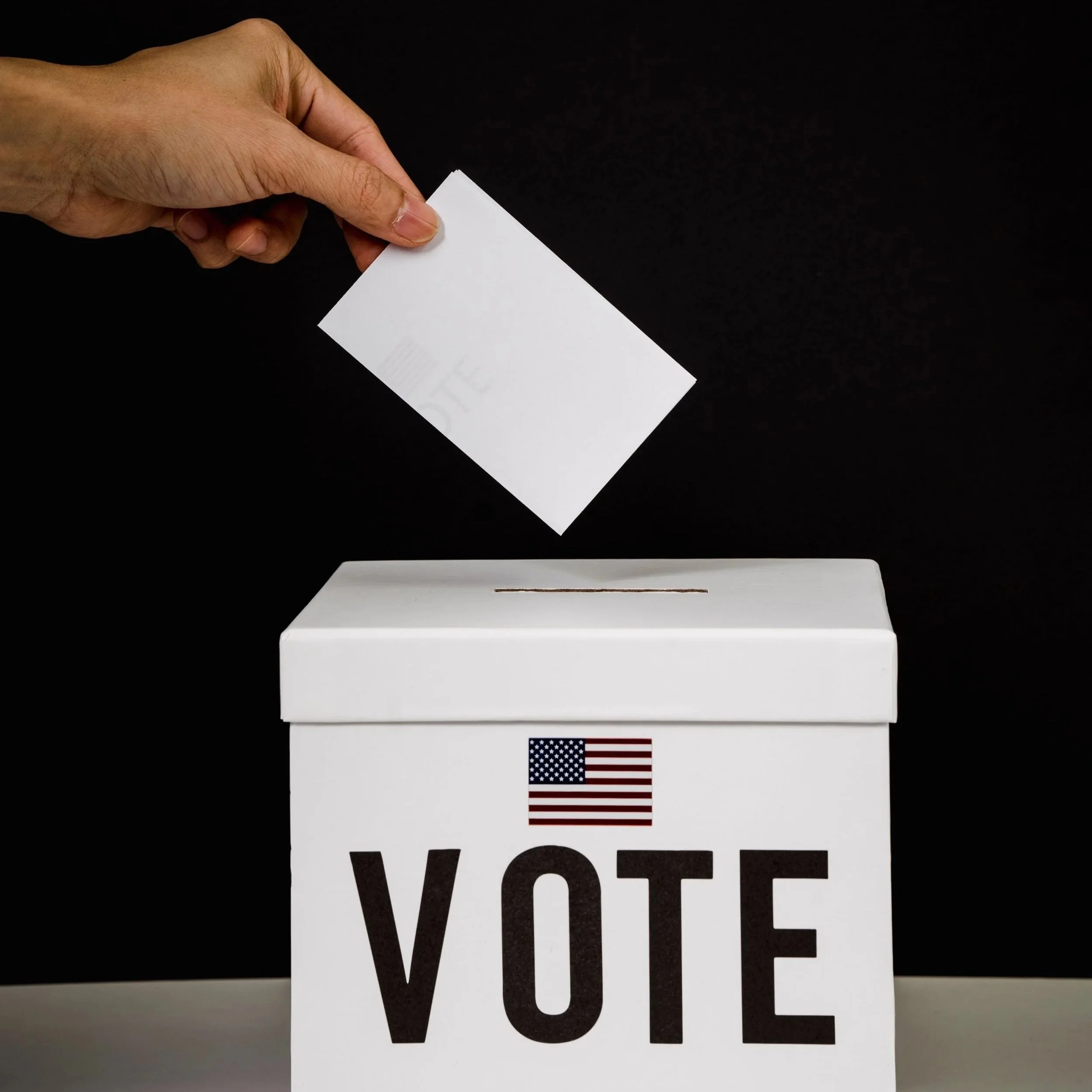
Photo Courtesy of Sora Shimazaki- Pexels
Voting in elections is a great accomplishment. One vote can make a huge impact on elections, and voting is a great way to become involved in our communities and government.
Election Day 2026 is Nov. 3, and it is approaching fast. Even though SUNY Geneseo held a voter registration event on Oct. 2, 2026, it does not guarantee student voter participation. This year is a midterm election rather than a presidential one, which has historically led to lower voter turnout, with 46.2 percent of eligible voters casting ballots in 2022 compared to 63.9 percent of eligible voters casting ballots in 2024. Additionally, younger voters aged 18-24 tend to be less likely to vote than older populations, with only about 646,000 votes in New York State being cast in 2024 in this age group compared to over one million votes in the next age group of 25-35-year-old voters.
Midterm elections matter for several reasons, one being that they can help reflect how voters feel about the current administration, as well as because of the state and local elections that occur during this election cycle. Additionally, the people who are voted into office, no matter at what level, “will make decisions that affect your daily life, from education and affordable housing policy to transportation investments and your local government’s level of cooperation with federal law enforcement,” as per League of Women Voters.
There are many reasons why people don’t vote, as detailed by The Climate Reality Project. Many feel that elections do not change anything or that one vote is not enough to have an impact. Some simply do not care about politics. But to refute the first opinion—that one vote does not have an impact—the Center for American Progress cites that in 2016 “more than 340 state office elections were decided by fewer than 500 votes; of those, more than 85 were determined by fewer than 100 votes,” which highlights how tight a single election can be, and how a very low number of votes can help determine who wins an election.
In New York State, there are several voting options, including in-person voting, absentee voting, and mail-in voting. For mail-in voting, New York State dictates that “[b]allots must be postmarked by election day and received within seven days of the election. A ballot without a dated postmark is counted if it is received by the day after the election” and that if the ballot is turned in at a polling site, it must be received by the time the polls close, as per Ballotpedia. As of Oct. 26 in New York State, “[six percent] of 13.6 [million] registered voters have cast an early ballot so far,” as per NBC News.
If a voter is able to vote in-person, they may cast their ballot by voting early from Oct. 24 to Nov. 1, with location and hours varying by county. These hours and locations can be found on the website for the New York State Board of Elections. On election day, if voting in person, the polls are open from 6 a.m. until 9 p.m. EST on Tuesday, Nov. 3 in New York State.
In New York, there will be quite a few state and local elections on the ballot. The offices up for election include, but are not limited to, State Governor, Attorney General, State Senators, U.S. House Representatives, and State Supreme Court Justice. Regardless of party affiliation, every New Yorker—and anyone who resides in New York for any part of the year—will be affected in some way by these elections.