
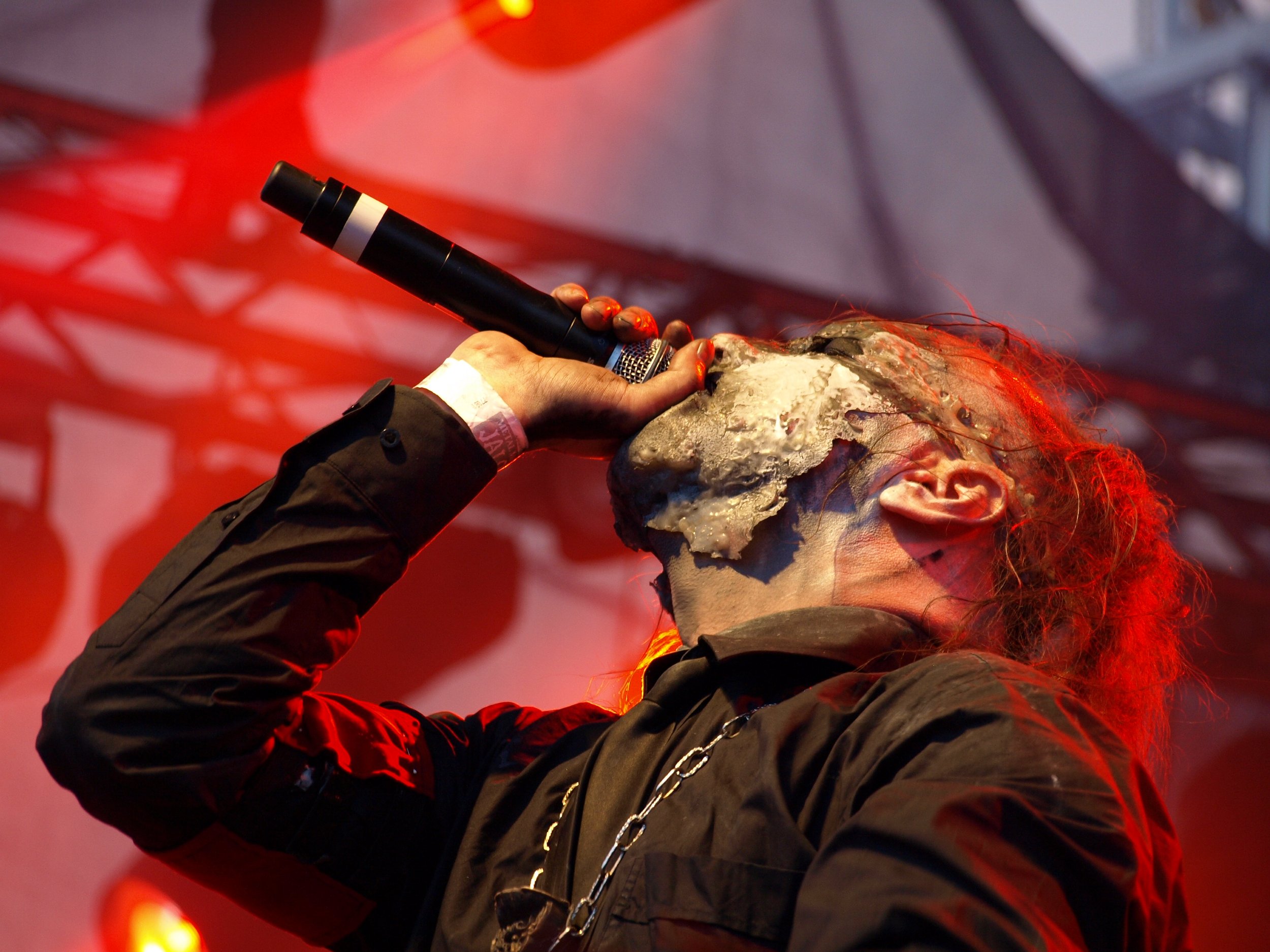
Photo Courtesy of Cecil- Wikimedia Commons
Jørn Stubberud, better known as Necrobutcher, was one of the founding members of Mayhem, and later, he would write a memoir of the band’s experiences.
TW: Suicide/Self Harm
The connotation of the word “extreme” is subjective, particularly in music. Merriam-Webster defines the word as “exceeding the ordinary” and “existing in a very high degree.” By that definition, The Beatles may be the most extreme band in music history. But not many would point to The Beatles as the epitome of extreme music. So, who takes the title? Which band ascends the textbook definition of extreme, harnessing the culture’s vocabulary to crown themselves as the most extreme band in music history? The answer will always be Mayhem.
Part of the first wave of black metal, Mayhem took that movement’s sound and forced it to succumb to the climate of a Norwegian winter. Mayhem contorted the unmarketability of the music of the era into worship, confining the music to those deemed worthy. They ripped their country’s pagan roots out of the soil, turning organized religion into their enemy.
This was no longer an exploration of darkness, but a collective submission of will to the forces of evil.
Øystein Aarseth (Euronymous–guitar) and Jørn Stubberud (Necrobutcher–bass) formed Mayhem in 1984. The band drew influence from the first wave of black metal bands , even taking their name from a Venom song, according to the Internet Archive. They mostly played covers until their first EP, Deathcrush (1987). The result was a mess, but the intensity was enough to catch the attention of the Oslo metal scene.
However, the band lacked a proper drummer and vocalist. They started to put out feelers in the underground. Euronymous was notoriously anal about those he would surround himself with—he wanted to gatekeep a “trve” black metal community, according to the Black Metal Documentary, Until the Light Takes Us (2008). Joining Mayhem was a cult.
Pelle Ohlin, a Swedish vocalist, sent the band a small package containing a demo tape, a note regarding his ideas for the band, and a crucified mouse, according to page 138 of Necrobutcher’s memoir, The Death Archives: Mayhem 1984-94. This was the ritual devotion Euronymous had been looking for. Ohlin was invited into Mayhem in early 1988.
Ohlin’s vocals were inhuman. They came from the part of Ohlin that belonged to the beyond. It had been consuming more of him since childhood. According to page 48 of Blood, Fire, Death: The Swedish Metal Story, a bullying incident at ten years old left Ohlin with a ruptured spleen and an emergency visit to the hospital. He was pronounced clinically dead before resuscitation.
This event led to severe undiagnosed depression and delusion. He joined Mayhem under the pseudonym “Dead.” His bandmate Necrobutcher later commented in Until the Light Takes Us (2008) that “ever since that moment, he felt like he had already crossed over. He was obsessed with the feeling of what it was like to be on the other side.”
The final nail in the coffin was Jan Axel Blomberg (Hellhammer), a local drummer. His percussion brought something unique to Mayhem: skill. He could hold unusual rhythm with spine-crushing speed and tight footwork. His jazz background elevated the band from a pit of incomprehensible noise. His technical fills supported the distorted tremolo guitar riffs which finally birthed the soundscape everyone had been waiting for since Bathory’s self-titled album in 1984.
The band had begun to garner local attention for their atmospheric live performances. Dead would prop severed pig heads on stage, even throwing other animal carcasses into the crowd to deter posers from watching the shows, seen in footage from Until the Light Takes Us (2008). He would cut himself while performing, his face painted white with dark circles around his eyes like a corpse, a style that became synonymous with Norwegian black metal.
When the band went to record their first album, they moved to a secluded house just outside of Oslo. During this period, Dead’s mental health was rapidly declining.
Euronymous taunted Dead, instigating the destructive behavior and delusions that had been shaping the band’s image. On April 8, 1991, Dead committed suicide while left alone in the house. His suicide note, which is detailed on page 110 of A History of Heavy Metal, reads, “I’m not a human, this is just a dream and soon I will wake.”
As detailed in pages 80 to 100 of Necrobutcher’s memoir , Euronymous was the first to return to the cabin and find the body. Instead of seeking help, he went back to the store, bought a disposable camera, adjusted his body, and took several photos. He eventually sent the photos to Warmaster Records, who produced a bootleg with Dead’s corpse as the cover art.
This all occurred before the band released their first studio album. Mayhem replaced Dead and continued their controversial career, which includes association with various Norwegian church burnings and Euronymous’ murder by Varg Vikernes, a fellow Norwegian black metal musician, detailed in an article by Miss Mephistopheles. But I believe Mayhem died with Pelle Ohlin.
Live in Leipzig (1993) is the only Mayhem release that features Dead in listenable audio quality. It is a live show that manages to capture the genre better than any studio work afterward. Dead’s vocals are terrifying. His pain slashes through his throat as it forces its way out of his mouth. The distorted tremolo riffs cut like a blinding windchill. The raw recording turns the treble into snowfall. Dead’s lyrical contributions transcend the band’s earlier work of shocking violence and gore, taking us into his mind: a devastating tug-of-war between this life and the next. It is the memory of true musical darkness captured, forever shrouded in myth, untouched by worldly definition.