
The reality of the U.S.’s women’s Olympic dominance
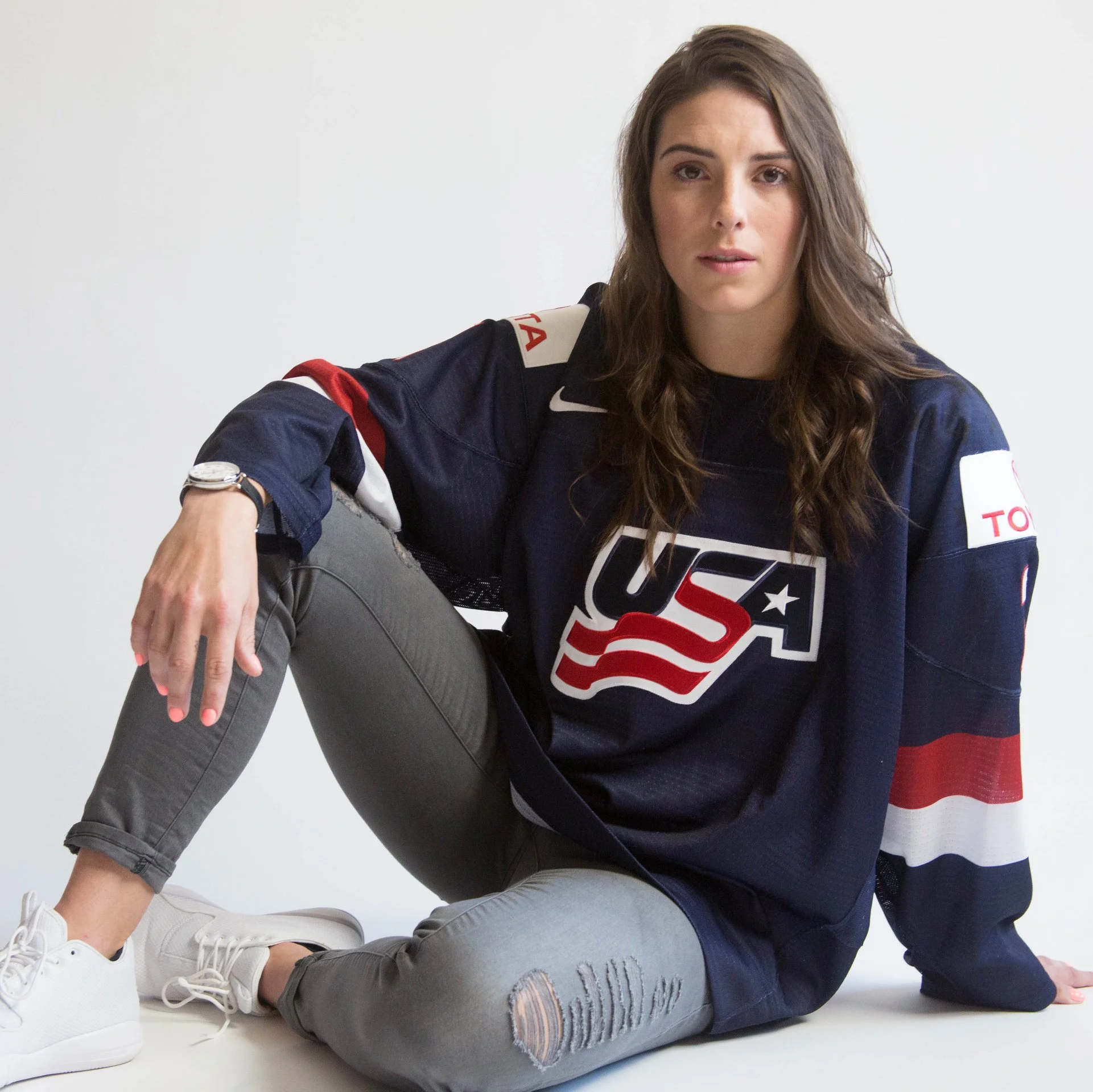
After captaining Team USA to another golden chapter at the 2026 Winter Olympics, Hilary Knight reinforced the growing impact of women’s sports on the global stage, as American women delivered a record-setting performance.
Photo courtesy of U.S. Embassy Seoul/Wikimedia Commons
For years, women's sports have fought for both the recognition and respect they deserve. The 2026 Winter Olympics in Milan completely flipped the script, delivering one of the most memorable and record-setting Winter Olympics.
American women led the charge, taking home six gold medals and 17 medals overall for a total of 21 medals, including mixed events. These numbers mirror what is happening in the Summer Olympics, in which U.S. women have won more golds and more medals than the men for the past four consecutive Summer Games. Beyond the medal count, these Games marked one of the most gender balanced Winter Olympics in history. The ratio of female to male competitors was as close to 50-50 as it has ever historically been, with 47 percent female athletes and 53 percent male athletes.
Distinguished professor John H. Stembler Jr. at the University of North Carolina Hussman school of Journalism and Media, C.A. Tuggle has been researching gender-based primetime Olympics coverage for the past 25 years. Through his work, he has found that the nations garnering the most success at the Olympics are not necessarily the wealthiest or historically dominant ones, rather those that send more female athletes to compete.
None of the United States’ Olympic success would be possible without its female athletes—but those women might never have had the same opportunities, visibility, or support without Title IX. The legislation, signed by President Richard Nixon in 1972, served as a catalyst for the rapid expansion of opportunities for women and girls to participate in youth, high school, and college sports, fundamentally reshaping the women’s sports landscape.
Just think of how different the Olympics would look without Title IX. Over the past five decades, we have seen high schools and colleges add girls’ and women’s sports to their athletic programs. Without those National Collegiate Athletic Association (NCAA) programs acting as direct feeder systems for the U.S. Olympic team, there would be far fewer medals in both the Summer and Winter Games.
Women’s sports legend and supporter of the Professional Women’s Hockey League (PWHL) Billie Jean King spoke on the success of Title IX, saying, “These Olympics have showcased the global impact of Title IX more than 50 years after its passing…One of the biggest indicators of the power of the legislation is the establishment of professional sports leagues, like the Professional Women’s Hockey League, which provides women athletes opportunities to continue to compete after the Olympics and make a living playing the sport they love. These opportunities in the future are why it is important we continue to protect the legislation and intent of Title IX for all.”
Speaking of the PWHL, 61 players from the league competed in the 2026 Winter Olympics and 39 played in the gold medal game, where the U.S. won in overtime against Canada. While much of the talk around women’s impact on sports has been celebratory, it has not been without controversy.
Following the U.S. men’s team’s overtime win over Canada, President Donald Trump congratulated the team during a phone call and extended an invitation to the White House and State of the Union address. He then added, “I must tell you, we're going to have to bring the women's team, you do know that? I do believe I would probably be impeached.”
The clip quickly went viral on social media, sparking criticism not only of the comment itself, but also of the men’s team for laughing along. The craziest part of the situation is that the women’s team has earned the same number of Olympic gold medals more than three times as fast as the men’s team. In other words, their dominance has been just as historic, if not more so, yet the recognition they receive is still framed as optional.
Hilary Knight, captain of the U.S. team, two-time Olympic gold medalist and all-time points leader, spoke on the comment saying, “I just thought the joke was distasteful and unfortunate…And, I think just the way women are represented, it’s a great teaching point and really shines light on how women should be championed for their amazing feats.”
The 2026 Winter Olympics proved that when women are given equal opportunity, investment, and visibility, success will follow. The landscape of sports is not changing—it already has changed. The only question that remains is whether the recognition will finally catch up with reality.