
What does it mean to experience joy today?
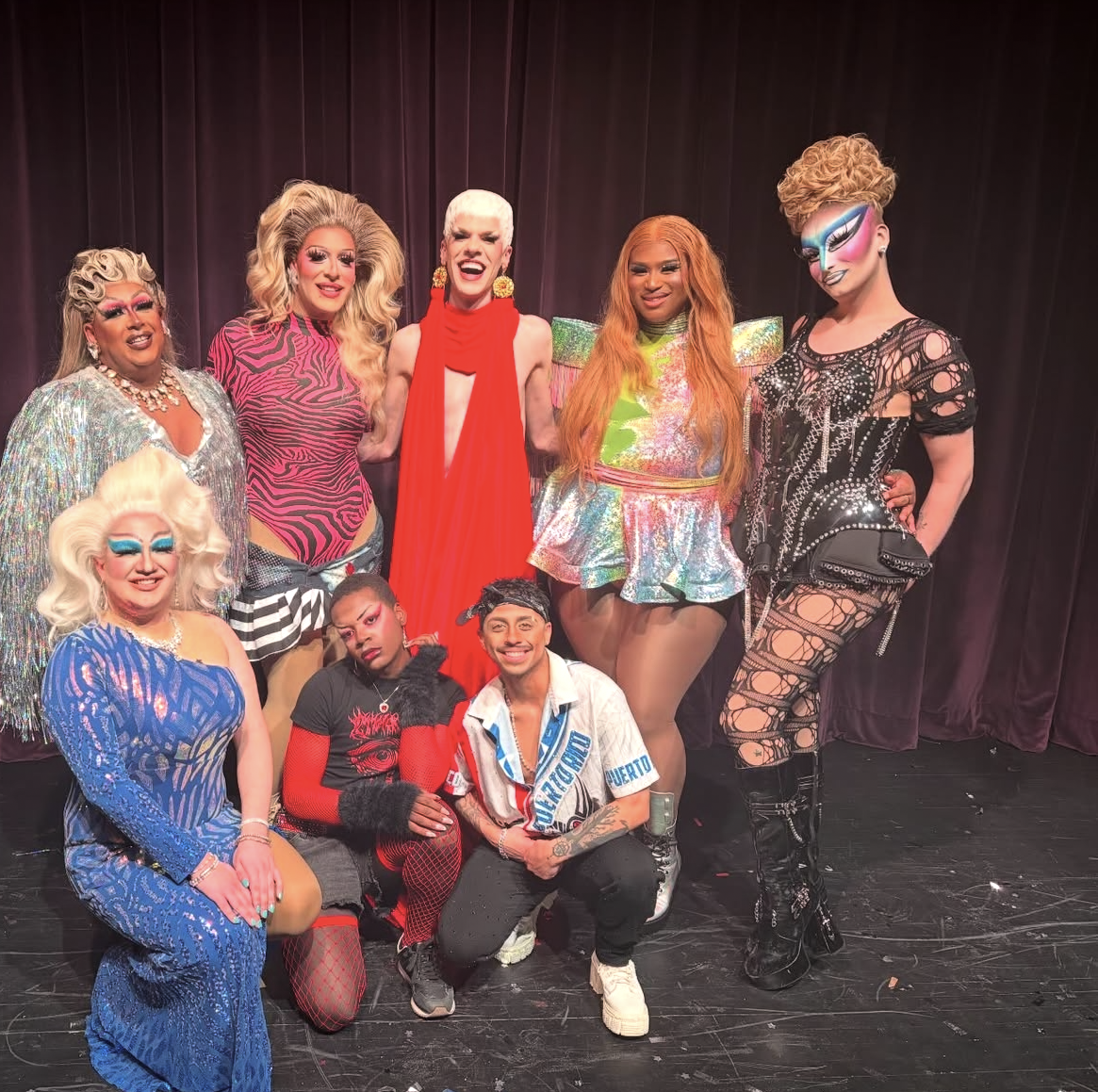
Photo courtesy of @geneseolateknight on Instagram
On Sunday, Mar. 8, I attended the Women’s March hosted by Peace Action Geneseo. It was fairly well attended; we looped around the Main Street area twice with our signs, shouting chants and waving to all those who honked when they passed by. I was grateful to feel such a strong sense of community and solidarity, especially given the current administration which thrives off of hatred, greed, and division.
At the same time, as we were prompted to chant “Women’s rights are human rights” and “This is what democracy looks like,” I couldn’t help but feel that, despite the general environment of joy and empowerment, something was missing. Something fell flat. Maybe I’ve been infected by cynicism as a result of too much bad news on my phone, but as much as I meant every shouted chant, I also couldn’t escape the intruding knowledge that this would never be enough. Every time I passionately argued for women’s rights to be respected as human rights, I felt the shadow of my cynicism on the edge of my awareness—the lingering acknowledgement that our chants would never mean anything to an administration that has no respect for human rights at all.
On Saturday, Feb. 28, I attended the annual Drag Ball in the Union Ballroom, hosted by Geneseo Pride Alliance and GLK. I was honestly overcome with the overwhelming presence of joy in the room—despite everything in the media about drag queens in particular, despite the hateful, disgusting, dehumanizing rhetoric we see all the time, there was a fierce sense of empowerment in existing without shame, and instead with celebration. I was caught up in that empowerment, and for a moment I remember thinking, “This is what it is all about.” Then I took a step outside of the Union and immediately felt like sobbing.
I have been reflecting on these moments since. I think there is something incredibly valuable about community right now; I think it is so important that we do not feel alone in the barrage of news about violence, corruption, and inhumane greed. I worry sometimes that if we are constantly exclusively exposed to the worst parts of humanity, we will lose sight of all that is persistently resilient and beautiful. We need to see that there is something worth fighting for, that there is something redeemable in a people caught up in a system that can’t help but degrade and diminish.
At the same time, it can be difficult to fully appreciate these moments when we have intimate knowledge of the constant devastation happening around us. Moments of joy feel more precious, but somehow simultaneously cheaper when you are aware of the suffering others are separately experiencing. This is also not to say that those facing violence now do not or cannot experience joy; this is rather a recognition of the vast difference between my personal suffering and that of, say, a young child living in Palestine.
Many of us on this campus have not only the capacity to address our basic needs, but also the ability to access excess. We are living in a time of almost unimaginable material wealth—and many of us can benefit from some of those gains—but, at the same time, we must reckon with the accompanying incomprehensible wealth inequality. We have privileges, and we cannot help but notice them when the phones we carry remind us incessantly of all that we have that others do not; even the reality of physically possessing a phone calls to mind the probable child labor used in several steps in the process of its creation.
In this world of immense privilege, of great physical separation from yet emotional and intellectual proximity to violence, our moments of joy and protest become complicated, though nonetheless valuable. They invite reflection. And, as I myself ask these questions, I also invite you to consider them: what responsibility must we take for our individual—and seemingly inevitable—complicity in physically distant acts of violence and exploitation? What does protest look like when you inhabit a position of privilege? And how can we appreciate our moments of joy—an act which feels both individually and collectively essential—while still reckoning with and recognizing the invisible but undeniable weight of our responsibility to each other?