
Anything goes; nothing matters
Antipathy and acceptance in our political climate
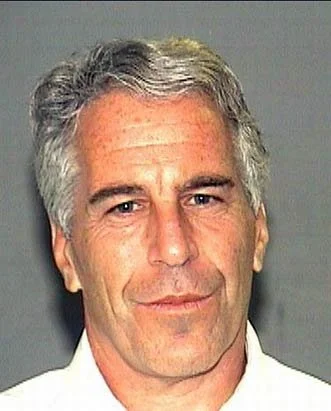
Photo courtesy of Palm Beach County Sheriff’s Department/Wikimedia Commons
I have recently come to the unfortunate conclusion that we might be completely screwed. I do not want to be cynical or pessimistic; I do not want us to become discouraged to the point of inaction. But I do wonder how we could possibly move forward from where we are now—how we can reckon with the impact of Donald Trump on our institutions and our political (and moral) culture and values. I doubt that we can attribute this to his influence alone, really, and I cannot help but wonder if there is something inherently sick about our systems or power in general.
On Jan. 30 2026, the Department of Justice issued a press release notifying the public that they were releasing “3 million additional pages” in response to the Epstein Files Transparency Act, “which was signed into law by President Trump” on Nov. 19, 2025. Within this release, they included a note that “some of the documents contain untrue and sensationalist claims against President Trump that were submitted to the FBI right before the 2020 election. To be clear, the claims are unfounded and false, and if they have a shred of credibility, they certainly would have been weaponized against President Trump already.”
Before the public had even glanced at the mountain of evidence made suddenly available to us, we were already being primed to dismiss anything that incriminated Trump; the wording used here is particularly interesting to me as well—they tell us that if the claims were true, they would have already been “weaponized” against him. Not that they would have been investigated. Not that he would have seen justice. This framing encourages us to think of any allegations as attacks on the abuser, instead of survivors seeking justice for the horrors their abusers inflicted upon them.
What I have begun to question, though, is why the Department of Justice—and their sick leader Attorney General Pamela Bondi—even attempt to separate Trump from the Epstein files, or make any effort to twist the story at all. They spend every second deflecting—to the point where Bondi, as reported by The Guardian, boldly stated, “there is no evidence that Donald Trump has committed a crime. Everyone knows that.” What do they fear is going to happen? What do they have to lose?
In 2016, when Donald Trump first ran for president, tapes from his conversation in 2005 with TV host Billy Bush were leaked to the public; in these tapes, as transcribed by BBC, Trump discusses his attitude toward relationships with women, stating, “You know I'm automatically attracted to beautiful...I just start kissing them. It's like a magnet. Just kiss. I don't even wait. And when you're a star they let you do it. You can do anything…Grab them by the p****. You can do anything.”
Trump faced quite a bit of criticism for these tapes. Clearly, though, that was not enough to stop him from winning the presidential election; in 2016, the influence of the Electoral College system worked in his favor. In 2024, though, the American public decided that his clearly deficient moral character—his insistence on treating women with the utmost disrespect and objectification, his rhetoric of dehumanization, his irreverence for the Constitution, and his infliction of human rights violations under his administration and in his personal life—were not enough to discredit him from the highest office in our country.
When we decided to let everything slide—when the public accepted him in 2016 and again in 2024—we eliminated our ability to draw a line. There seems to be nothing, now, that could incriminate him. We looked at him in all his twisted glory and decided that he fit the job description.
What are we supposed to do in the face of his presence in the Epstein files—a presence so pervasive that he is mentioned, according to the BBC, over six thousand times across the documents? What are we meant to do with a Department of Justice that is explicitly partisan? After the House of Representatives has already attempted to impeach him two times with no success, through what means can we obtain justice?
Donald Trump tells us that it is “really time for the country to get on to something else.” I think we have done enough of that—enough moving on, enough accepting anything. I think they would be overjoyed if we, in response to their barrage of information, their constant inundation of hatred and violence and immorality, adopted an attitude of apathetic passivity. They would love it if we became so overwhelmed by our helplessness that we do nothing to address the disgusting criminality and widespread abuse perpetrated by seemingly everyone with power in our country and across the globe.
I am not sure what we can do moving forward. I do not know how to handle the information we have been processing about the horrible crimes of the people—across any political divisions—who are involved in many of our most respected institutions. I do not know how we draw a line here, when it seems that the public has accepted countless human rights violations in the interest of potential (and unrealized) economic success; I do not know how we can hold up standards for our leaders moving forward, when the bar is already so incredibly low. But I do know that we should do the opposite of what they are telling us to do: we should not—we cannot—let this go.