
Supreme Court to hear case regarding President Trump’s detention policy
The details of Rhoney v. Barbosa da Cunha
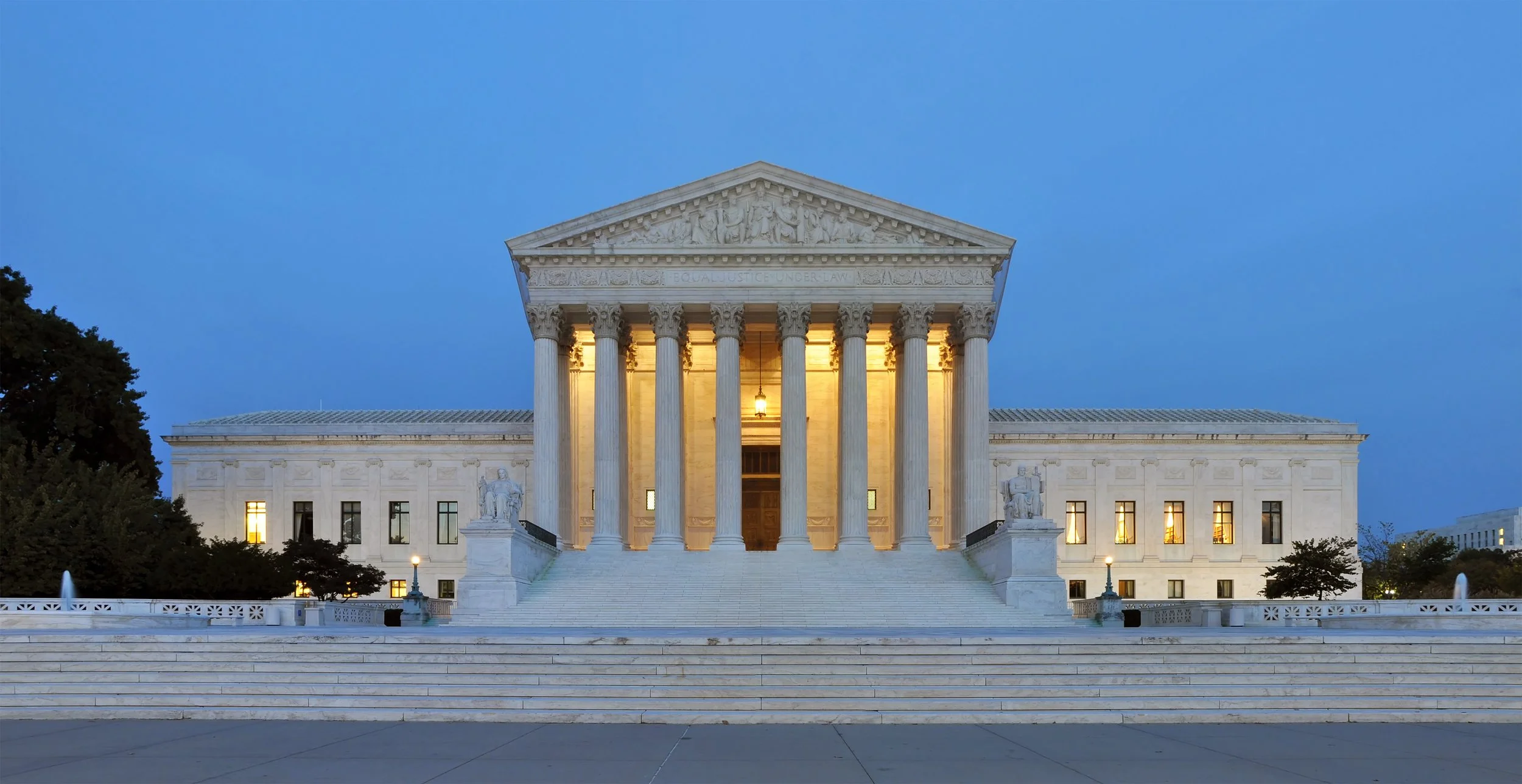
Photo Courtesy of Joe Ravi- Wikimedia Commons
In an ICE memorandum sent on July 8, 2025—accessible on the American Immigration Lawyers Association (AILA) website—the 1996 Immigration and Nationality Act (INA) faced reinterpretation. Addressed “To All ICE Employees,” the memo examined INA § [section] 235, concluding that “[a]n ‘applicant for admission’ is an alien present in the United States who has not been admitted or who arrives in the United States, whether or not at a designated port of arrival.” As such, “[e]ffective immediately, it is the position of DHS [Department of Homeland Security] that such aliens are subject to detention under INA § 235(b) and may not be released from ICE custody except by INA § 212(d)(5) parole.”
Essentially, undocumented immigrants would be subject to detention without the possibility for a “custody redetermination hearing (‘bond hearing’) before an immigration judge and may not be released for the duration of their removal proceedings.” In examining section 212 regarding parole possibilities, one finds that undocumented immigrants would be granted parole “only on a case-by-case basis for ‘urgent humanitarian reasons’ or ‘significant public benefit,’ provided the aliens present neither a security risk nor a risk of absconding,” according to Cornell Law’s transcript. The factors considered would include serious medical conditions, pregnancy, minor status, and status as a witness in future proceedings. The decision would be made by anyone identified in paragraph (a) of the law, including “directors of field operations; port directors; special agents in charge,” and an extensive list of titles recorded by Cornell Law.
The text of the original law allows for detention “in the case of an alien who is an applicant for admission.” The ICE memo redefined what “applicant for admission” meant; where before, the phrase was applied to those stopped while entering the United States, suddenly it also applied to undocumented immigrants who have been living in the United States for years.
This reinterpretation has manifested in a number of undocumented immigrants “detained indefinitely during their removal proceedings without access to bond hearing,” according to CBS News. However, TheNew York Times reports that though “immigration judges have denied hearings to people” when the cases are brought to the district court, “[m]ore than 500 district court judges and nine of 11 federal appeals courts…have rejected the administration’s new detention rule and its interpretation of the immigration law at issue.”
The Latin Times noted that this “scale of judicial resistance…is unusual even by the standards of contentious immigration litigation.” They comment that “[c]ourts covering a vast majority of the country’s population have found the administration’s detention framework to be either illegal under the statute, unconstitutional, or both. Only the Fifth Circuit, based in New Orleans, and the Eighth Circuit, seated in St. Louis, have upheld it.” Subsequently, undocumented immigrants across the United States find that they are facing different legal landscapes regarding their right to request a bond hearing. Administration lawyers, according to The Latin Times, “have described the result as ‘an unworkable patchwork of inconsistent immigration enforcement.’”
This is where Rhoney v. Barbosa da Cunha comes into play. As reported by The Guardian, “The challenger to the Trump administration’s reinterpreted policy denying bond hearings is Ricardo Aparecido Barbosa da Cunha, a Brazilian citizen who has been living in the US for more than 20 years.” According to The Guardian, Barbosa da Cunha entered the US around 2005; since his arrival, he has settled down in Massachusetts with his wife and two children (all citizens), where he “runs a small construction company.” In Sept. 2025, he was detained by ICE at a travel stop in Massachusetts, and subsequently transferred to a Buffalo detention center.
In a decision by the United States Court of Appeals for the Second Circuit, the facts of the incident were reviewed: “In September 2025, the government arrested [Barbosa da Cunha] on an administrative warrant, placed him in removal proceedings, and asserted that, while his removal proceedings are pending, he must be detained.” Barbosa da Cunha then brought his “habeas petition challenging his detention” to the district court, which “agreed with Petitioner [Barbosa da Cunha] that Section 1225(b)(2)(A) [INA § 235] did not apply to him and that…he was eligible for release on bond.”
The Trump administration then brought the case to the U.S. Court of Appeals, who agreed with the district court. Affirming the district court’s grant of the writ of habeas corpus, they stated that even if “the government’s newfound interpretation…were plausible—and it is not—we would nonetheless reject it based on our obligation to construe these statutes in a manner that would avoid the serious constitutional questions attendant to what would be the broadest mass-detention-without-bond mandate in our Nation’s history for millions of noncitizens.”
The government—filing under Philip L. Rhoney, the Acting Field Office Director of ICE’s Buffalo field office—petitioned for a writ of certiorari. The question presented: “Whether § U.S.C. 1225(b)(2)(A) mandates the detention pending removal proceedings of aliens who, like respondent, are present in the United States without having been admitted.”
The Supreme Court granted the writ of certiorari. According to SCOTUSblog, the petitioners “asked the justices to weigh in but urged the court to grant a different petition for review, Putra v. Lopez-Campos, on the same issue, describing that case as a better one in which to consider the legality ‘of the government’s mandatory detention’ policy. On Thursday [Oct. 1], the court took up the issue, but not the administration’s preferred case.”
According to CBS News, “Arguments in the case will be heard in the Supreme Court’s new term,” which began Monday, Oct. 5.