
Powerful weather conditions cause massive destruction across the New England area
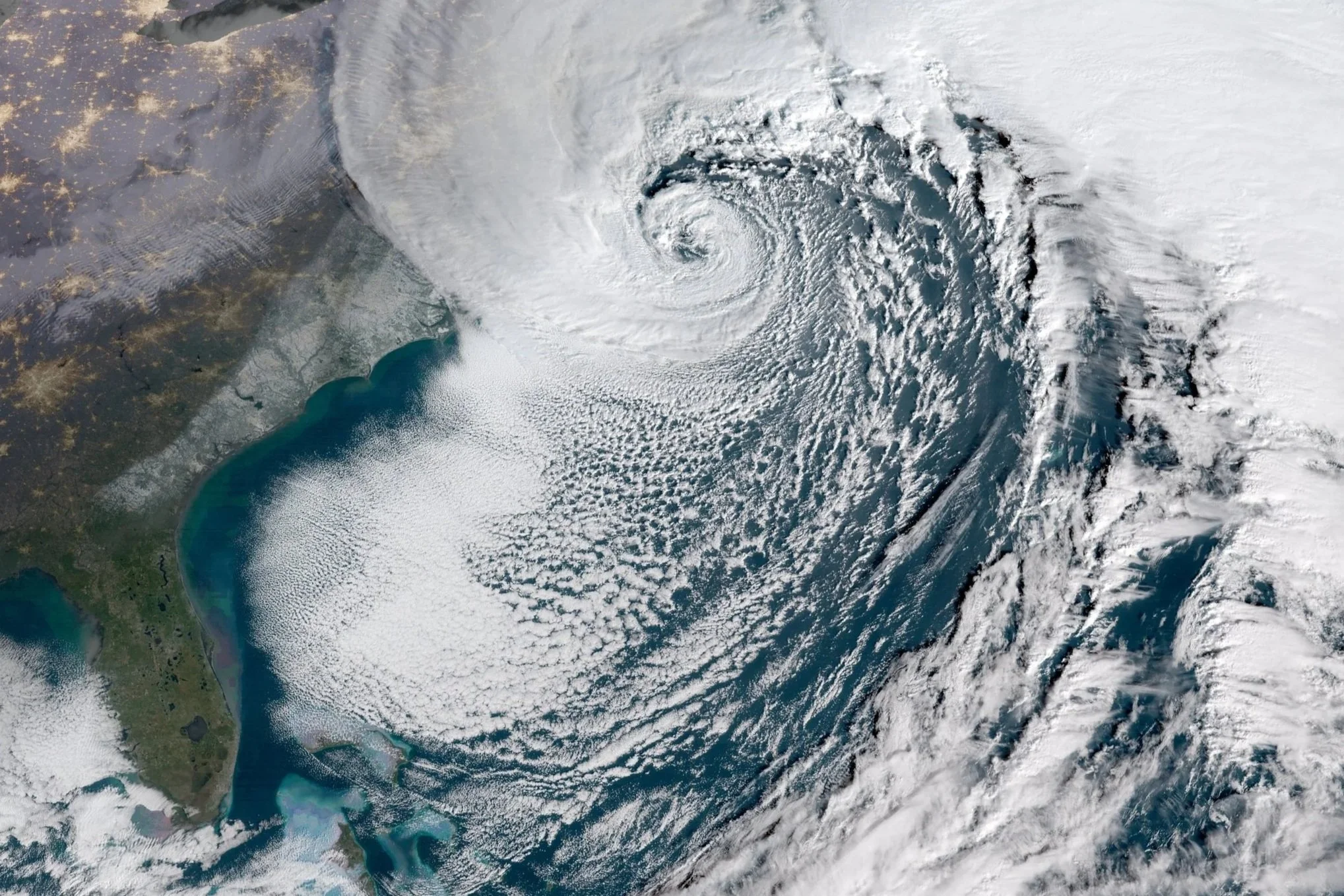
Photo Courtesy of NOAA- Wikimedia Commons
A powerful nor’easter battered most of the New England area over the weekend of Sept. 26 to 28. It produced heavy rainfall, pushed tides to high levels, and left at least one person dead. CNN described it as a “strong, early-season [storm that] delivered a weekend of wind, soaking rain and massive waves.” Nor’easters, which are described by the National Weather Service as “a storm along the East Coast of North America, so called because the winds over the coastal area are typically from the northeast,” can be incredibly dangerous.
The storm’s worst effects came on Saturday in New York City. The New York Post reported that wind gusts brought a tree down which fatally injured a 56-year-old man. To quote their article, “The 56-year-old suffered ‘trauma throughout his body’ when gusts that reached 45 mph downed the tree on Euclid Avenue in East New York around 3:30 p.m.” While little information about the victim was shared with news outlets, The Guardian said the victim was a New York City Housing Authority employee.
Alongside this tragic news, CNN further reported that “four people, including children, were injured… as wind toppled trees.” The New York Post added that two police officers were hurt on the Jackie Robinson Parkway when “a Nissan SUV slammed into their idling patrol car” as they waited for crews to clear a downed tree and light pole.
The hardest-hit areas were low-lying coastal communities. CNN reported that “[w]ater levels in Atlantic City, New Jersey, surged to the highest point since Superstorm Sandy,” which was a hurricane that hit New York in 2012. Compounding these high tides was Saturday’s full moon, which can cause high tides referred to as spring tides, as explained by the National Oceanic and Atmospheric Administration (NOAA).
In places such as Sea Bright, each high tide brought fresh flooding. According to The Guardian, Resident Caroline Virenius said her “garage filled with about a foot of water” and kept getting wet “again and again.” According to The Guardian’s coverage, it rained “more than 4 inches (10cm) since Friday in some spots in New Jersey—combined with a surging ocean [which] led to flooding amounts not seen for close to a decade in places used to dealing with high water, residents said.”
“At least 100,000 homes… along the Atlantic Coast” lost power early Saturday, according to the New York Post. The Guardian added that “[w]ell over 100,000 customers were without power across the north-east and mid-atlantic at times on Sunday… [with the] most widespread outages… in counties along the coast from New Jersey to Connecticut.” CNN would later put this total at around 80,000 “by Sunday afternoon.”
Air travel was hit hard this past weekend as well. “More than 250 flights had been canceled at Boston Logan international airport by late Sunday morning as wind gusts reached 40mph (64km/h), according to the Massachusetts Port Authority,” as cited in The Guardian. The storm also canceled events such as Sunday’s Yankees-Orioles game as reported by Bleacher Report.
Luckily, by Sunday afternoon the storm was weakening. CNN meteorologist Derek Van Dam acknowledged that “this storm has packed a punch” in his news coverage of the storm, posted in a video on CNN’s website. However, despite the waning storm, officials warned that tidal flooding could continue through high tide cycles, with Nassau County Executive Bruce Blakeman noting that another band of weather could still arrive as per The Guardian. They also noted that an El Niño pattern could bring more east coast storms this fall.