
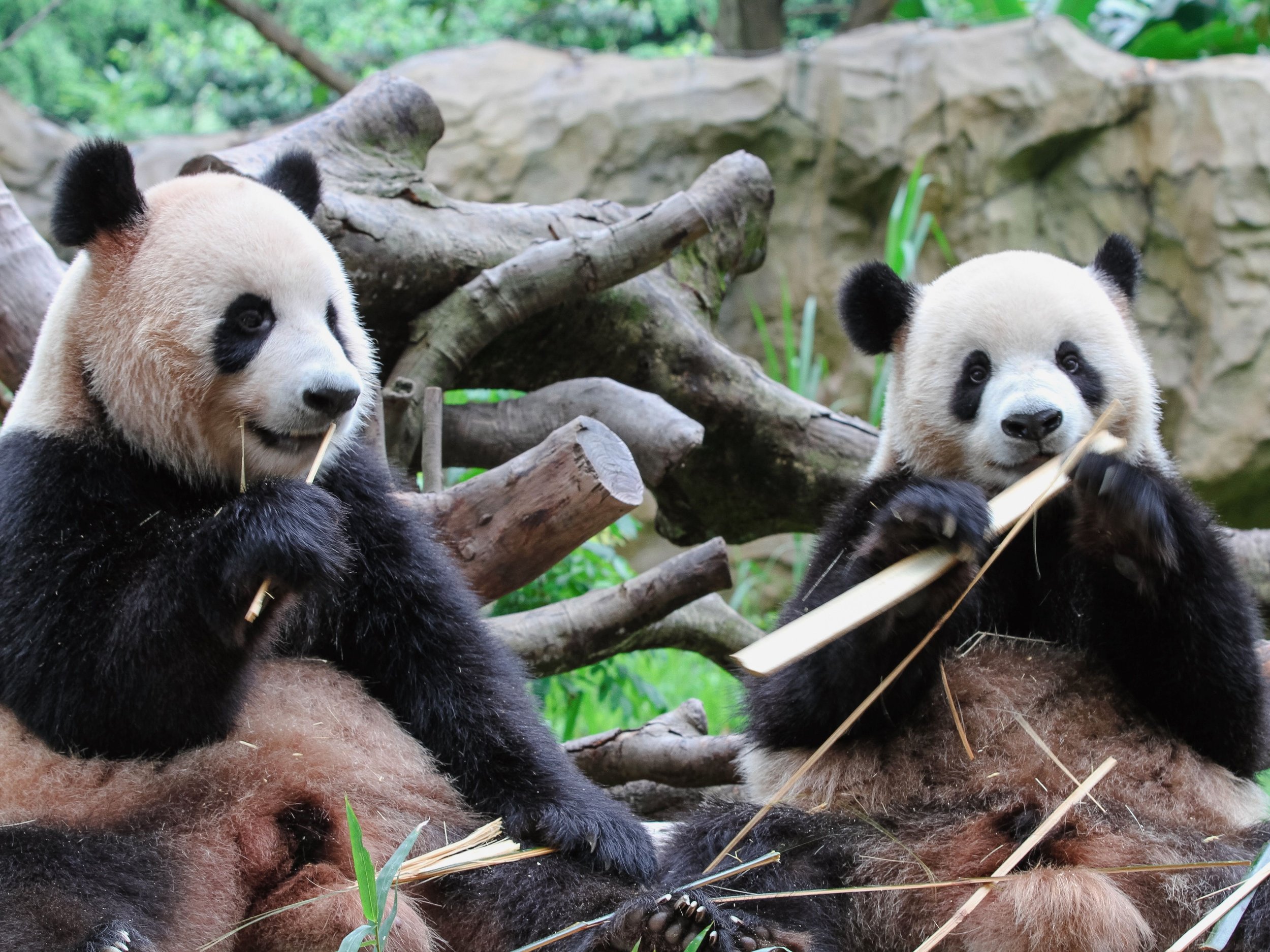
Photo Courtesy of Mehmet Turgut Kirkgoz- Pexels
The giant panda is a vulnerable species that conservationists have been working hard to revitalize. They face many risks due to high industrialization and deforestation of their habitats.
Two giant pandas made their public debut at Zoo Atlanta on Friday, Nov. 6, bringing the species back to the city. According to Kazinform, “[t]he six-year-old pandas, Ping Ping and Fu Shuang, officially greeted the public on Friday at their new home, Panda Grove, which features two indoor rooms and two outdoor habitats.” The article reports that “the pair will remain at the zoo for the next 10 years under an agreement between Zoo Atlanta and the China Wildlife Conservation Association. A grand opening ceremony was held to mark their arrival.”
Public interest was apparently immediate, with The New York Times quoting one visitor as saying, “I forgot there were other animals for a minute.” Many visitors held an assortment of panda themed merchandise as they proceeded through the festivities of the day. The CEO of Zoo Atlanta, Raymond B. King, mentioned that “the zoo never stopped selling panda souvenirs, but re-upped their supply having seen a surge of interest ahead of the 2024 departure” of the pandas, according to talks with The New York Times.
King described the pandas’ return, as per Kazinform, as “a historic moment for the zoo, highlighting the importance of international cooperation in protecting the species.” He also estimated that the pandas could raise “annual attendance by 10 to 20 percent during the first year,” adding that “people are lined up at the gates.” Chinese Ambassador to the United States Xie Feng said the partnership would “strengthen ties between the Chinese and American peoples while contributing to global biodiversity conservation.”
The pandas arrived at Zoo Atlanta, a zoo that presents itself under the banner of “Conservation in Action.” Its website directs visitors to conservation blogs about how the public can contribute, its many partners in conservation efforts, and even features a limited-edition T-shirt fundraiser, which ends Dec. 1. The zoo uses proceeds for daily operations and the care of its giant pandas and hundreds of other animals.
The excitement and joy have been a long time coming. The zoo’s panda program dates back to 1999, and Zoo Atlanta says it has “contributed over $17 million to the conservation of wild giant pandas.” They say that money and support go to “reserve management, protection stations, reforestation projects, population monitoring equipment, and research on genetic diversity.” The zoo adds that just stepping inside the zoo as a visitor goes far beyond what one might think, and that each ticket goes to helping broader conservation efforts.
However, conservation projects do not come with a simple checklist. Even after the International Union for Conservation of Nature downgraded the species from endangered to vulnerable in 2016, as per The San Diego Zoo Wildlife Alliance, Zoo Atlanta wrote that pandas are “far from out of the proverbial woods.”
The World Wildlife Fund (WWF) reports that there remains “just over 1,800 pandas in the wild,” and that they remain on the status of vulnerable. WWF says that one of the biggest causes for their vulnerable status is habitat loss, stating that “infrastructure development (such as dams, roads, and railways) is increasingly fragmenting and isolating panda populations, preventing pandas from finding new bamboo forests and potential mates.”
Protecting pandas benefits far more than just the pandas themselves. WWF calls the species “an excellent example of an umbrella species,” explaining that conserving pandas also protects animals such as the golden monkey, takin, and crested ibis. The organization adds that “pandas also bring sustainable economic benefits to local communities through ecotourism.”
Zoos such as Zoo Atlanta play a visible role in the effort of conservation. A 2024 New York Times investigation examined the panda loan program, raised questions about releasing zoo-born pandas into the wild, and reported on how zoo leaders see their work. For instance, the San Diego Zoo said breeding has expanded scientific understanding of the species, stating that “[c]ritical intervention, including conservation breeding, has been necessary for the survival of giant pandas.” In that same article, a National Zoo spokeswoman described pandas in zoos as “insurance against extinction.” The New York Times noted that “[w]estern money and attention have coincided with China’s expansion of nature reserves and stricter logging rules,” meaning that there is hope for the panda population.
For Atlanta visitors, the pandas offer a chance to see an animal that spends most of its time sleeping, and eating roughly “26 to 84 pounds of [bamboo] a day,” according to the WWF. Members can visit Panda Grove early during Panda Mornings, held Nov. 9-22 from 8-9 a.m., and fans who cannot make the trip can follow Ping Ping and Fu Shuang on the zoo’s Panda Cam!