
Climate change struggles have put new species on thin ice
Antarctica’s emperor penguins and fur seals have been recently classified as endangered
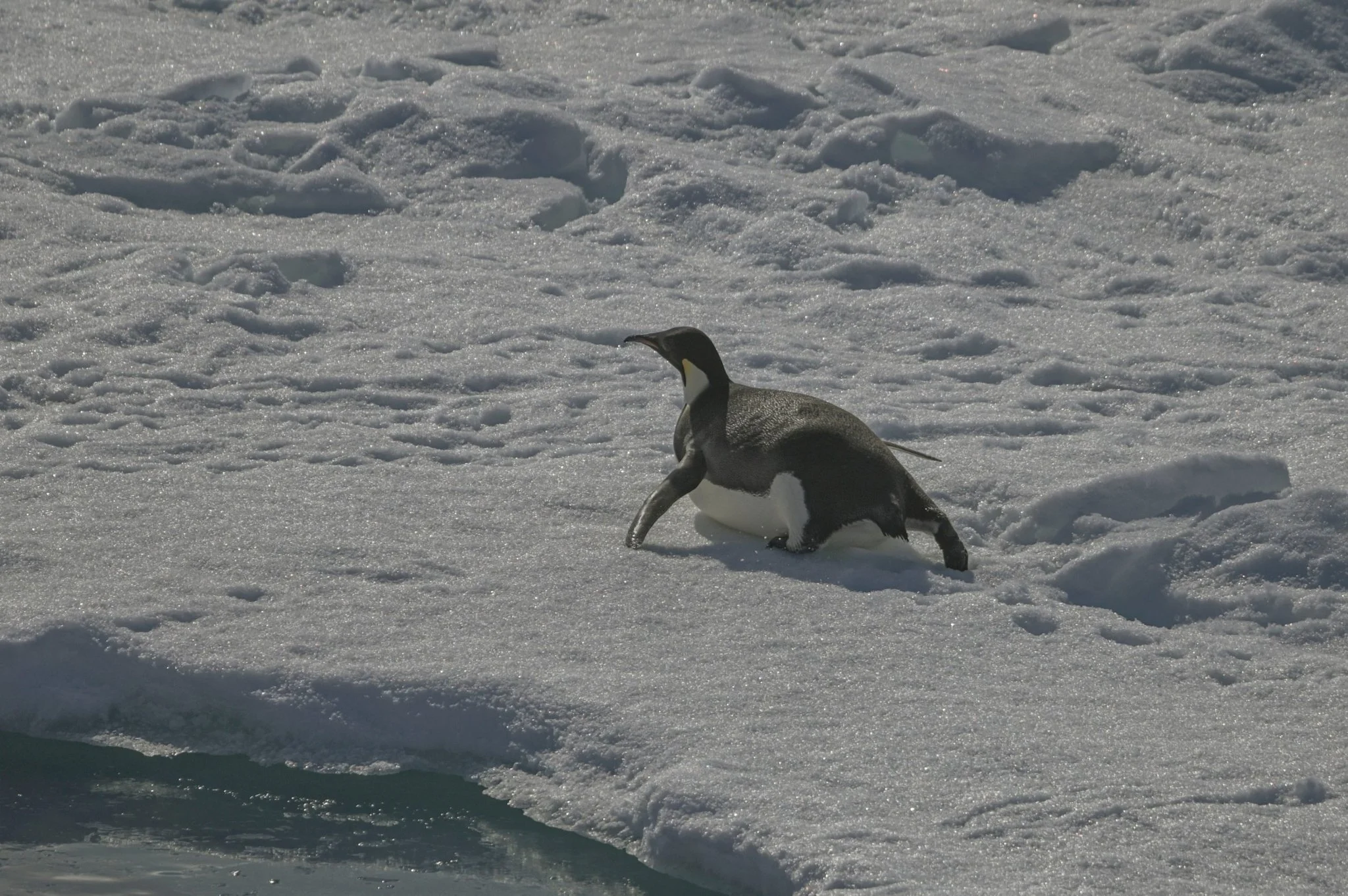
Photo courtesy of Aleskey_Loginnov/Wikimedia Commons
Climate change is a real issue facing many communities and habitats. The most recent victims of these negative changes: emperor penguins and fur seals living in Antarctica.
Penguins depend on ice to live, specifically, a type of ice called “fast ice,” as explained by the BBC, “which is ice that stays attached to the land or seabed.” The penguins raise their young on this ice, which is “break[ing] up too early” due to rising temperatures. Normally, the fast ice provides a safe place for baby penguins to grow.
Fur seals rely on krill, a tiny sea creature, as a main food source. The BBC further documented, “warmer oceans and melting ice have reduced the number of krill… with less food, fewer seal pups are able to make it to the age of one.”
The International Union for Conservation of Nature (IUCN) has detailed exactly how severely climate change and the melting of Antarctic ice has affected these species. Emperor penguins and Antarctic fur seals have been added to the IUCN’s Red List of Threatened Species—officially classifying them as endangered. “The emperor penguin,” the IUCN has reported, “has moved from Near Threatened to Endangered on the IUCN Red List, based on projections that its population will halve by the 2080s.” Fur seals were previously in one of the lowest categories of the Red List—“Least Concern”—as depicted by the official IUCN Red List website. Now, the seals “[have] moved from Least Concern to Endangered on the IUCN Red List, as its population has decreased by more than 50 per cent,” according to the IUCN’s official website.
As of Apr. 9, 2026, the IUCN names “climate change in Antarctica [as the] leading [cause of] changes in sea-ice that are projected to cause” these species’ suffering and population decline. Dr. Grethel Aguilar, the International Union for Conservation of Nature’s Director General, said, “These important findings should spur us into action across all sectors and levels of society to decisively address climate change. The declines of the emperor penguin and Antarctic fur seal on the IUCN Red List are a wake-up call on the realities of climate change,” as documented on the IUCN’s website.
The World Wildlife Fund (WWF) details more extensively the importance and pure impressiveness of emperor penguins: they “are the largest living penguin species… [and] are brilliant swimmers. Emperor penguins have the deepest and longest dives of any bird, often reaching depths of over 200 metres.” Their feathers are also unique; emperor penguins have “about 70 feathers per square inch” of their body, as well as “large fat reserves and, proportionally, smaller beaks and flippers compared to other penguins” in order to conserve warmth. Unfortunately, it is becoming increasingly obvious that their environment is not adapting as well to climate change as the penguins are to their habitat. The WWF further reports that “Emperor penguins are a vital part of the Antarctic food chain,” meaning that if they become endangered or extinct, “all the wildlife that depends on” the food chain could also suffer.
As per the Animal Diversity Web (ADW), fur seals also play an important role in Antarctic food chains, feeding on mass amounts of krill; a male fur seal’s diet is estimated to be up to 50 percent krill. These seals are also prey for leopard seals, killer whales, and sharks.
Humans are largely to blame for the worrying decrease in numbers of emperor penguins and fur seals, as documented by Cool Antarctica. Human tourism to the Antarctic releases pollution from the ships and aircraft used for travel, and risks oil spills into the waters. Human-produced chemicals and use of oil contribute to ozone depletion, which leads to negative climate effects. Mining for oils and gas is also a threat to Antarctic environments. To fully elaborate the severity of the issues facing the Antarctic and its species, the Australian Antarctic Program has said, “There are few unvisited places left on Earth. We have started to realise their enormous value to humanity. The clean air, water and ice of Antarctica are now of global importance to science.”