
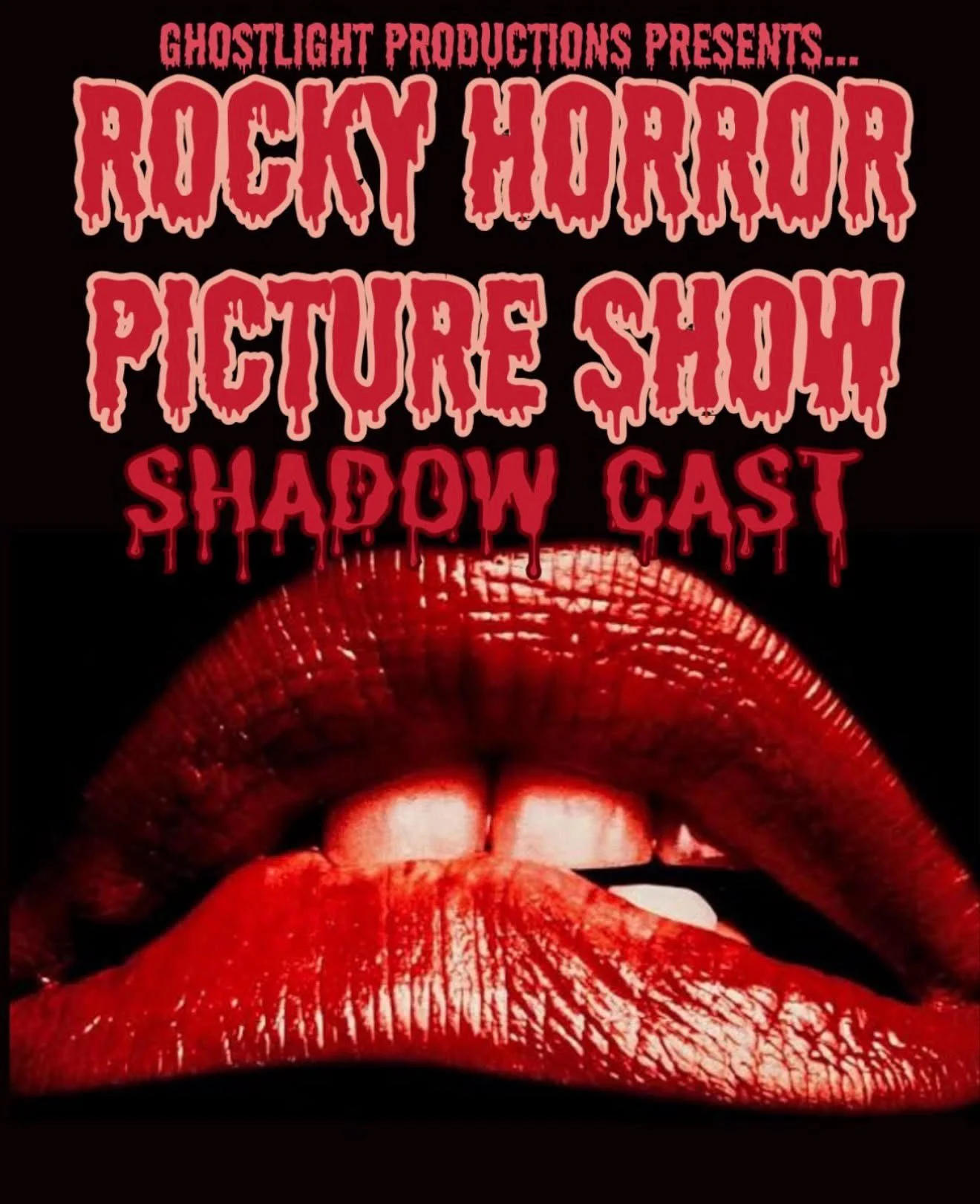
Photo courtesy of @ghostlightgenese- Instagram
Plan ahead so you can make it to the show!
On Nov. 7, at 7:30 p.m., The Rocky Horror Picture Show (1975) returns to SUNY Geneseo!
This is not the first time Rocky Horror has come to SUNY Geneseo. According to a 2024 Lamron article, “It has been a tradition over the years for Geneseo to host a screening of The Rocky Horror Picture Show (1975) in the MacVittie Union’s ballroom around the end of October.” This tradition has continued into this year, but another production is in the works: Ghostlight Productions’ shadowcast rendition of the classic show.
A cult classic, The Rocky Horror Picture Show (1975) begins its journey with the starry-eyed newlyweds Brad and Janet, who are a manifestation of 1950s conservatism and innocence. After their wedding, their car breaks down in the middle of the forest, stranding them beside a large castle. They are greeted with a party, where the eccentric nature of the film is revealed to the audience, and each character who lives in the castle is introduced. Frank-N-Furter, the scientist of the castle, is revealed to want a man so badly that he makes one for himself. The name of the creation? The eponymous Rocky Horror. Chaos ensues as the traditionalist nature of Brad and Janet clash with the hedonism of Frank-N-Furter.
Rocky Horror was first performed in 1973 at the Royal Court Theatre in London, as relayed by the New York Theatre Guide. The show starred the late Tim Curry, whose popularity was greatly influenced by his Rocky Horror role as Frank-N-Furter. The show’s last and 2,960th theatrical performance was performed on Sept. 13, 1980.
In 1975, the movie was released, which is what is used in most performances today, using a technique called shadowcasting.
Shadowcasting is a type of theatrical production where a film is projected on a screen. The actors—usually with full costume, makeup, and props—act out the film scene-for-scene alongside the movie, lip syncing to the songs. While shadowcasting existed prior to Rocky Horror’s release, the show became inextricably linked to the practice and it became overwhelmingly associated with the show.
A significant benefit of shadowcasting is the immersion that the audience experiences. In some renditions of The Rocky Horror Picture Show (1975), audience members who have never seen the show are invited up onstage for some spirited activities. By nature of the shadowcasting performance, the classic story onscreen is brought into the real world by the live performers in the foreground, which is intended to elevate the performance and add even more artistic elements to the show.
Audience members are also encouraged to dress up in fun costumes as a part of the immersive experience. Some dress up in halloween-esque costumes, but many dress up as characters from the show, like Frank-N-Furter, Eddy, Janet, Brad, or Rocky.
That being said, typical Rocky Horror etiquette warns against wearing stripes. The superstition stems from an urban legend that claims the crew members for the 1975 movie were caught wearing stripes in the background of certain shots, though no photographic proof of this exists.
Ghostlight Productions—a student-led theatre organization at SUNY Geneseo—is ready to go for a shadowcast Rocky Horror production, according to their Instagram page; they held auditions mid-September, and a month and a half later, their hard work is paying off.
Head to the Alice Austin Theatre in Brodie 248 on Nov. 7 for a night of aliens, pop-rock, and seduction. Doors open at 7 p.m., and the show begins at 7:30 p.m.