
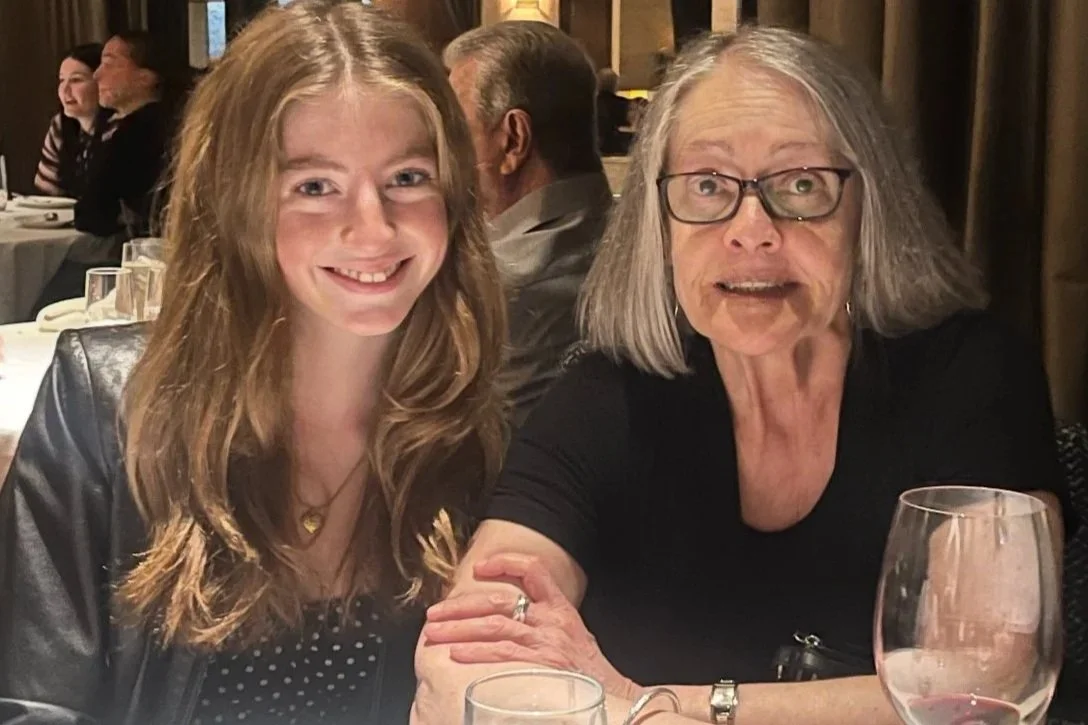
Photo courtesy of Dr. Maria Helena Lima
Consider taking some of Dr. Lima's classes this upcoming semester!
Professor Maria Helena Lima would like you to get her name right. She starts every class with an introduction and printed class list and has no hesitation to tell her students that it is not Professor Lima, it is Maria. Regarding her official title, she states, “When I came here I was just Maria Lima, but everything I publish is Maria Helena Lima. So at some point I said, no, I wanted to be my whole name.”
Dr. Lima has taught in Geneseo’s English department since the fall of 1992, when she arrived as the department’s first postcolonial and feminist hire. The campus interview was, in her words, “really intense.” Not everyone in the department thought the position was necessary, and she says the resistance followed her for years; “every time I came up for review,” she said, “I would get comments such as, ‘she does ideology, not aesthetic.’”
She credits then-chair Don Watt with getting her through the door. She said, “I knew that he was committed to make the department a little bit more interesting.” Dr. Lima also named Ron Herzman—a fellow professor—as a key ally by the time she came up for tenure and promotion.
Her biggest fight, she says, was over the humanities. When she arrived, the syllabi for HUM 220 and 221 were run almost entirely through white European men, and she argued against them being called “humanities” at all. After a Saturday retreat at Letchworth State Park and a lot of discussion, the course was renamed to Western Humanities. “This has really been the battle of my life in many ways,” she said; she has since built her own version, centered on the Black Atlantic and slavery, with texts like Aphra Behn’s Oroonoko.
Dr. Lima was born in Brazil, earned her PhD in comparative literature at the University of Maryland, College Park, and began graduate work close to age 40. She spoke about how this gave her a different way of looking at things in comparison to her peers in the graduate program. As she put it, “I would be the only one in the table of 15 saying—the teacher would mention a text and everyone would just be nodding—and I say, I haven’t read that, can you tell me about it?”
She teaches the way she liked to learn in graduate school: in a circle, with students expected to arrive having done the reading. She has little patience for the lecture-and-final-exam model, and says she stopped giving exams by her third year at Geneseo.
Lima also has a history with The Lamron. She served as The Lamron’s faculty advisor for a few years, though she cannot say exactly how many. Her routine was to take the editor-in-chief out to lunch every two weeks. “It was not an attempt to curtail their creativity,” she said. As she tells it, the lunches were a way to catch the paper up on what was happening on campus; she sat on the Faculty Senate every year she advised, and she wanted student journalists to hear about it. “It was an offer,” she stated.
The arrangement ended when a new editor-in-chief decided to look for an advisor from the communication department, which seemed a more fitting home for the role. Dr. Lima took it in stride; “I said, good luck with your endeavors,” she recalled. The lunches, she said, showed that she cared. While she no longer serves as the faculty advisor, she is still thinking about how faculty can support student journalists. “How can you get students more involved?” she asked. “What do you need from us faculty?”
She is a firm believer in the press as an institution. She cited author Nikole Hannah-Jones’s description of a newspaper as the first draft of history, and claims it makes her value papers even more. “Where do history books come from? Where’s the archive?” she asked.
She is open about her politics and knows some students find her polarizing; though she doesn’t agree with the word polarizing. “No, I don't mind being hated,” she declared. “I don’t want people who don’t believe in the way I teach, number one, who do not believe in my value system, who do not believe that there’s a world out there that can be so much better if it’s not ruled by the one percent.” She added: “This is who I am, love me or leave me. For God’s sake, leave me.”
That outlook shapes how she reads literature, too. Her dissertation director—Sue Lanser—once asked her class what they thought of universals, then offered that universals might be “particulars in disguise.” The idea has stayed with Dr. Lima. “The love that literature puts on a pedestal is usually heterosexual, or seemingly heterosexual love,” Dr. Lima said. “So the idea of universals being particulars in disguise just stayed with me; that’s the way I try to look for thematic clusters.”
Her advice to SUNY Geneseo students is to “step out of themselves, to put their phone away a little bit, to read newspapers, even if you’re reading them online, rather than just TikTok or Instagram.” She compares the college to a nation and tells first-year students in her 203 class that they are its citizens. In her view, the more involved students are in campus groups and events, the less isolated they become.