
Grace Hutton on beekeeping at SUNY Geneseo
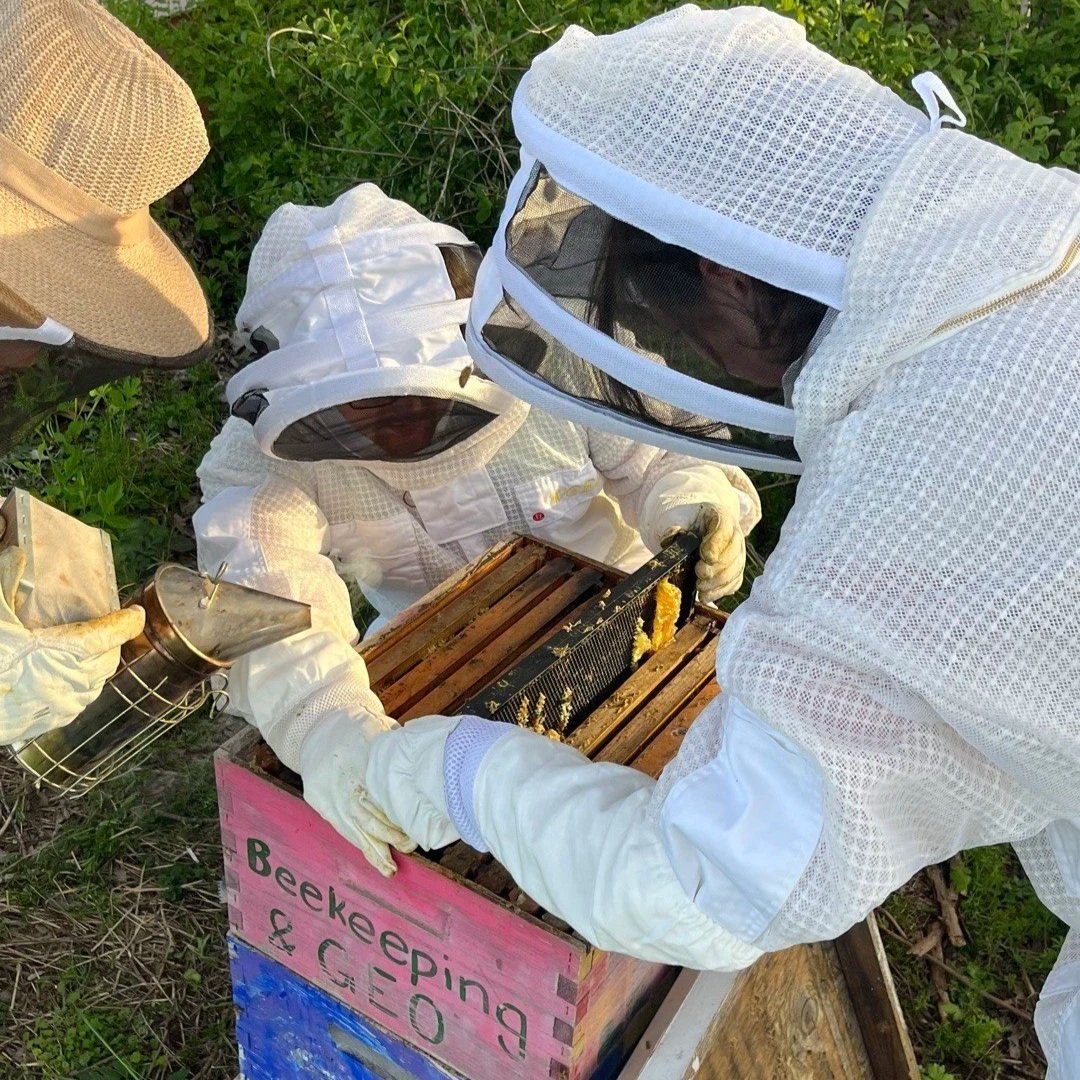
Photo Courtesy of Grace Hutton
The SUNY Geneseo Beekeeping Club goes on a hive visit to take care of the honeybees!
SUNY Geneseo is home to a wide variety of clubs and organizations that students can choose to get involved in. Almost all clubs have members with a shared interest in something, no matter how obscure; these can range from a shared academic focus, a hobby, or even a part of the members’ identities. Geneseo’s Beekeeping Club is one of the many interesting clubs we have on campus. On Wednesday Sept. 18, I was able to sit down with Grace Hutton, the club’s president, to learn more about the club, what its members do, and what it is like to work with the bees on campus.
When asked about the structure of the club and how involved members are, Grace shared that the club currently has at least 20 people attending its weekly meetings, in which students are able to learn more about bees and how they can get involved with tending to the bees kept on campus. She talked about how most people who join the club have at least some interest in bees, but all have ranging comfort levels with being around the actual hive. Grace further emphasized that member involvement “depends on the member”; she encourages members to reach out if they want to be more involved but also recognizes that people have varying comfort levels, and shared that the club has always had a bunch of members who regularly come to the weekly meetings without visiting any actual beehives.
When I asked Grace to describe weekly meetings, she spoke about how they are often composed of varying “presentations about bees and bee maintenance.” She said that these presentations are made by club members and are often connecting what a student is interested in or what they are studying with the lives of bees; the previous president of the club, Emily Szczublewski, “knew a lot about native plants, so she did some presentations on that” throughout her time with the club. Grace shared that “in [her] own studies [she’s] interested in things to do with human reproduction, so [she] gave a honey bee reproduction presentation” that she was able to share with club members.
Grace also shared that the club officers are currently trying to “plan out some activities for crafts to do” primarily because “in winter it’s not really feasible to go down to the hive”; being able to do crafts alongside the presentations allows members to continue spending their time learning and sharing information about bees once it’s later in the semester and hive visits are less frequent due to weather.
When talking about going on hive visits, Grace shared that club members who are interested are able to go to the hive somewhat often while the weather permits. She shared that the club has a hive located near the track where European Honey Bees are cared for by the club members. She shared that over the summer herself and someone else would take the time to come visit the hive once every few weeks to ensure that the hive was healthy and continuing to thrive. She emphasized that students who have attended a safety meeting and signed a waiver—which ensures both the safety of students and the safety of the bees—have access to the two full beekeeping suits that the club has, meaning that up to two students can be working with the hive at once.
Grace explained that in order for the bees to remain healthy, a certain amount of honey that they produce has to be left with them; based on the current state of the hive, the bees “have not produced extra honey yet,” but the club’s members are “hoping that next year they will,” which doesn’t seem unlikely considering the close care the hive receives from the club. She shared that alongside directly caring for the bees, members also take the time to do “general maintenance” for the hive, such as weeding and making sure the entrance to the hive is cleared out.
Grace shared that alongside ensuring that club members attend a safety meeting and sign a waiver that ensures members “understand everything that is happening,” the club does “mite test[s] periodically” to make sure that “varroa mites [that] live on the bees” and steal nutrients are not in the hive. She stated that when necessary, the members will treat the hive in an attempt to rid it of the mites and keep the bees healthy; this has been necessary in the past and has successfully rid the hive of the mites each time. She shared that alongside this, the club winterizes the hive by “getting something that’s basically a tarp” and placing it around the hive for additional warmth. She said that “in the winter [the bees] stay in the hive mostly, and they just buzz, and that generates enough heat” for the hive to survive, but the additional heat from the wrap around the hive can help to ensure they remain warm.
The Beekeeping Club is always open to welcoming new members with an interest in bees or beekeeping so, if interested, feel free to reach out by email to beekeeping@geneseo.edu or reach out by attending a meeting, held at 6:30 p.m. each Tuesday in Bailey 201. The club is also findable on Instagram under the username @beekeepingatgeneseo.