
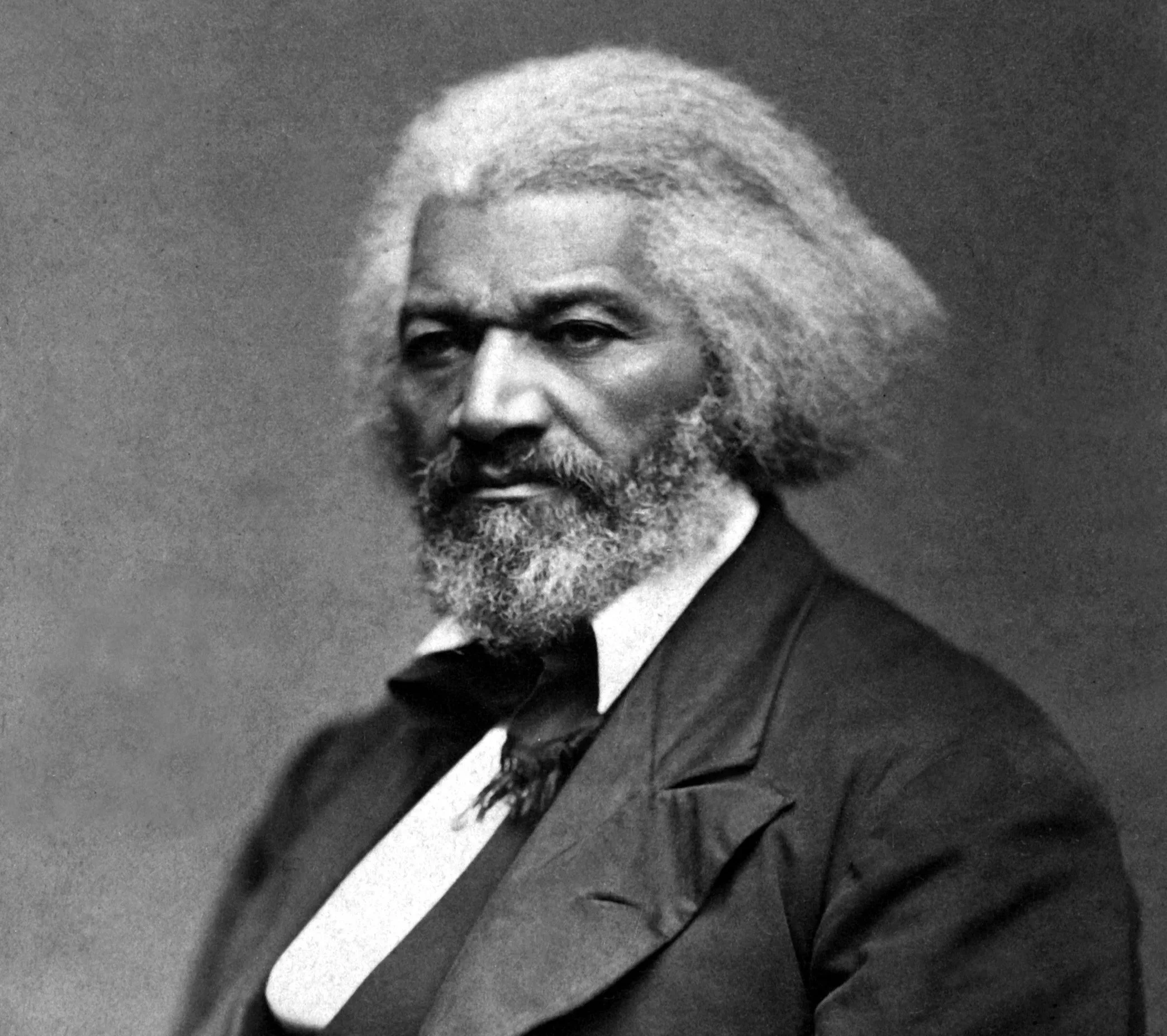
Photo Courtesy of George Kendall Warren- Wikimedia Commons
On Nov. 4, SUNY Geneseo welcomed Dr. Thomas Merrill, Associate Professor of Government at American University, to speak on “Civic Action and Liberal Education in the Narrative of the Life of Frederick Douglas.” The lecture was hosted by the Forum on Constitutionalism and Democracy, directed by Dr. Carly Herold of SUNY Geneseo’s Philosophy Department, and Dr. Aaron Herold of SUNY Geneseo’s Political Science and International Relations department.
At American University, Merrill is the director of the Lincoln Scholars Program, which served as a model for SUNY Geneseo’s Douglass Scholars Fellowship. Established in 2026 by Dr. Carly Herold, the Douglass Scholars Fellowship aims to provide students with an environment in which they can expand upon and enrich their liberal education beyond their coursework.
One of the most profound models of the significance of liberal education is Frederick Douglass. Born into slavery, Douglass came to recognize the profound connection between education and freedom. Despite the dangers of learning to read as an enslaved person, he pursued literacy and became one of the most influential abolitionists, public orators, and thinkers of his time.
During the spring semester, the students in the program—the Douglass Scholars—meet in reading groups with SUNY Geneseo faculty from several different disciplines to read and discuss important and interesting texts, thinking together about politics and morality in a small, welcoming environment. At the end of the semester, the students take part in a public symposium with a visiting scholar. Last year, the Douglass Scholars welcomed Dr. Roosevelt Montás of Bard College as the keynote speaker in what was a wonderful discussion.
In his lecture, Merrill used Frederick Douglass’ memoir, Narrative of the Life of Frederick Douglass, an American Slave to explore the relationship between civic education and liberal education, and argue that universities cannot adequately prepare students for civic life simply by teaching citizenship, civil discourse, and workplace skills. Liberal education is necessary to prepare young people for civic life, as it encourages the questioning of fundamental issues regarding freedom, morality, religion, and what makes life worth living.
Merrill began by examining Douglass’ time living under Edward Covey, a so-called “slave breaker” with the goal of breaking the resistance of enslaved people through physical punishment, intimidation, deception, and constant surveillance. After several months of abuse and torment, the 15-year-old Douglass fought back, wrestling with Covey for hours. After their confrontation, Covey never again laid a finger on Douglass.
Douglass describes the confrontation as a turning point in his life. He explained that although he remained a slave in form, he was no longer a slave in fact. While Douglass was still enslaved legally, he was no longer a slave internally, as his sense of freedom had been restored.
Merrill argues that the most notable aspect of the confrontation is not simply that Douglass physically fought back, but rather that, after long deliberation, he consciously chose to resist, knowing that he could be killed for it. This introduces the question, Merrill says: what is worth dying for, and therefore, what is worth living for? He explains that each person must eventually decide what sort of life they want to live, which involves considering what they value enough to sacrifice for.
Merrill considers the core of these deliberations, however, to take place earlier in Douglass’ narrative, during his reflections on the Chesapeake Bay. During his time in bondage, Douglass often spent Sundays, his only free time, looking out over the Chesapeake Bay. In this passage of the narrative, Merrill explains, “this is a moment of intense inwardness, reflectiveness, and contemplation. In a moment of clarity, Douglass somehow sees the whole world, the whole human condition, laid out before him, from the stream of the ships to his own bondage.” He says that “Douglass, at this moment, somehow stands above and outside the world’s busyness and colors,” grasping a sort of God’s eye view of the world, as he began to question his position as an enslaved man. It is here, Merrill argues, that Douglass decides to resist Covey.
Merrill applies the discussed ideas within Douglass’ narrative to contemporary university education. He argues that two approaches to today’s higher education make meaningful reform difficult: the student-choice model and the workforce-skills model.
The student-choice model treats students as consumers who should be able to choose any courses that interest them. Merrill criticizes this approach, as he says it encourages universities to offer trendy or novel courses, rather than maintain coherent educational programs. He additionally says that it makes it difficult to establish prerequisites and progressive stages of learning. The student-choice model can prevent students from developing meaningful connections between their courses, and students may graduate feeling that they took many classes without adding up to anything in particular. Merrill believes that education should have a coherent structure with a beginning, middle, and end, rather than simply consist of a collection of unrelated courses.
The other contemporary approach to higher education Merrill criticizes is the workforce-skills model, which emphasizes preparing students for employment by teaching them useful workplace skills. His concern is that universities are increasingly treating ethical development as though it were simply another workplace competency, and not something that actually develops through participation in a community, practicing those qualities over time. Merrill believes that Douglass serves as a model of the importance of civic action and liberal education working together. Civic action without reflection can become thoughtless, as people act without understanding why they are acting or what they are trying to accomplish, while reflection requires application to the real world.
Through Douglass’ life, it is clear that universities must do more than prepare students to participate in civil life; they must also encourage them to reflect on the values and principles that guide their participation. This is done through liberal education, which asks the fundamental questions about morality, freedom, and what makes life worth living. Through programs such as the Douglass Scholars Fellowship, SUNY Geneseo seeks to create opportunities for students to engage with these essential questions beyond the traditional classroom.