
A positive charge on campus: The Physics and Astronomy Club
The club is full of potential energy, and there is no escape velocity from their enthusiasm
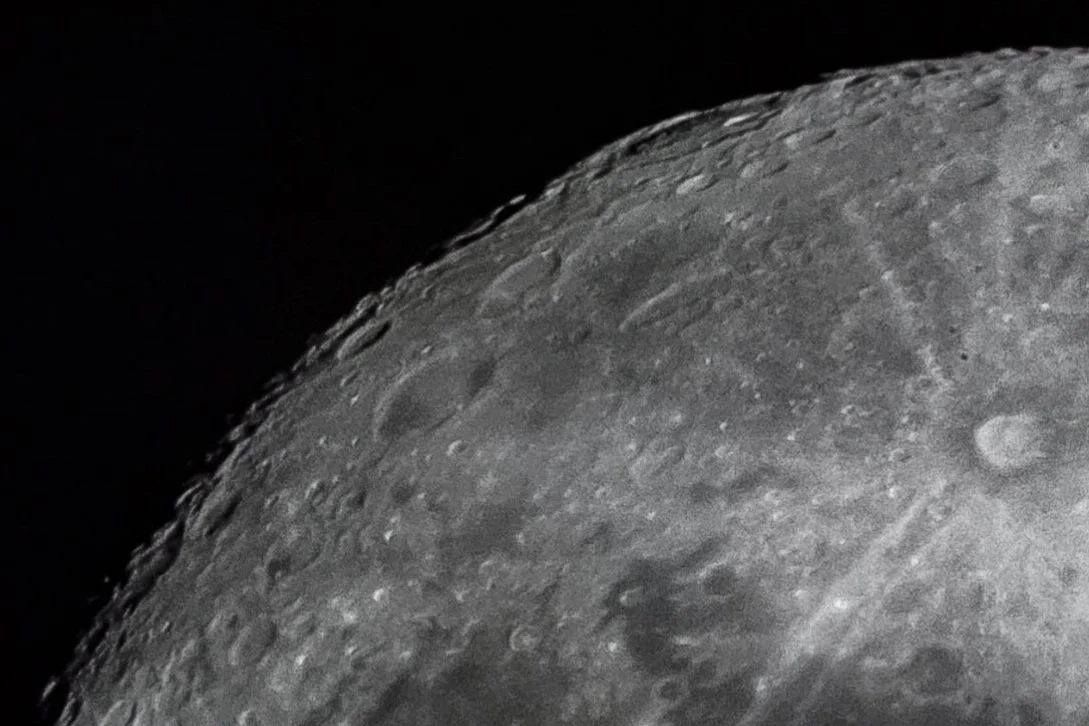
Photo Courtesy of Aiden Muller
Physics and astronomy lovers, get ready for an entirely new universe of possibilities—Geneseo’s Physics and Astronomy club is generating some serious momentum. The club’s e-board, consisting of President Zachary Boice, Vice President Christopher Desiderio, Event Coordinator Gavin George, and other dedicated physics and astronomy-loving students, is looking for “ways to make science more approachable to all,” as President Zachary Boice told The Lamron.
Recently, on Thursday, Sept. 24, as advertised on the club’s Instagram account, they hosted an out-of-this-world event on Doty Field. The club brought out two telescopes—one lended to the club by Geneseo, and one brought by a student, Aidan Muller—for eager students to look through and observe the stars in the night sky, right above the Geneseo campus. Attendees were able to view stars, the moon, saturn, and even a meteor. The stargazing night served as an opportunity for students—physics majors and non-physics majors alike—to spend the evening with a stellar community and spend some time outside observing scientific wonders.
This was only the first stargazing event of the semester, and the club’s president discussed plans for a few more to take place throughout the semester, depending on weather. When the weather—and clouds, as nights which are too overcast do not provide the best stargazing skies—cooperate, the events have the potential to make astronomical impacts across campus. As “zero knowledge of physics” is required, as per Zachary, he and the rest of the club hope that gatherings like these will “inspire curiosity” in other Geneseo students. The e-board’s love for physics and astronomy, and sharing that with others, is so strong it can basically be considered another law of physics.
Much time and planning goes into the execution of stargazing nights. Zachary explained to The Lamron that the location of this past week’s viewing was chosen carefully, as the club decided it would be “the least light-polluted area on campus[, giving everyone] the opportunity to see as many stars as possible.”
“Light pollution,” as explained by The National Park Service, “is the excess or inappropriate artificial light outdoors… Light scattered through the atmosphere brightens the night sky, making stars and planets impossible to see due to the reduced contrast. Light pollution also prevents the human eye from fully dark-adapting and reaching its maximum sensitivity.”
The Physics and Astronomy club is looking to have more events, even as frequently as every week, as Zachary told The Lamron, and there is no friction stopping this group’s love for physics, astronomy, and making connections with others. On Oct. 1, the club continued accelerating into the semester with a planetarium show in Newton Hall. Two showings were offered, one at 6:30 p.m., and the other at 7:10 p.m., as advertised on the club’s Instagram, and the enthusiasm was electric.
Geneseo students within Geneseo’s Department of Physics and Astronomy are offered preparation “for a variety of career paths, including graduate programs in physics, engineering and related fields; teacher certification; and research jobs in industry and at national laboratories,” as per Geneseo’s official website. Students studying outside of this department, have no fear, there is no force stopping you from connecting with these ideas. The Physics and Astronomy Club events are open to all, and the e-board is putting their best force forward to create an environment every student can be over the moon to learn in.
The Physics and Astronomy Club’s Instagram is the best place to check in order to stay up to date with club events, make sure you are on the same wavelength, and never miss a meeting. The e-board has many more exciting, positively charged events planned!