
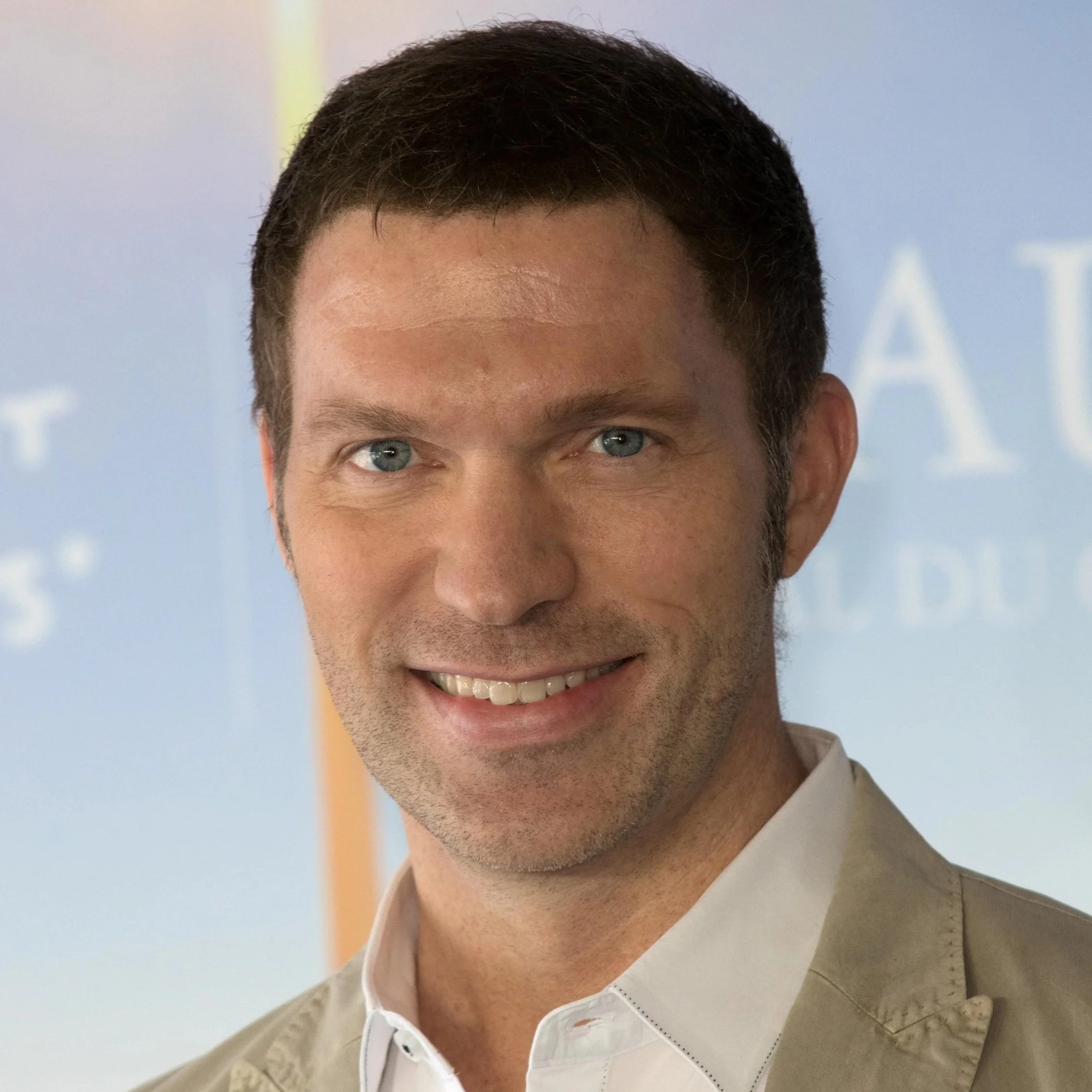
Photo Courtesy of Thierry Sollerot- Wikimedia Commons
Travis Knight is the current CEO of Laika and the director of Wildwood (2026), being responsible for bringing this wonderful and gorgeous movie to life.
Spoiler free review
I have always had a fix for dark fantasy. The appeal is right in the name: taking the furthest reaches of our imagination, often used to mystify or entrance us in escapism, and subjecting it to the harsh complexities of the world in which we actually reside. Darkness adds such fervent verisimilitude to fantasy worlds that it becomes almost impossible to avoid feeling mesmerized. When you compound this aesthetic with the medium of stop-motion animation, you create something with the power to shape childhoods, awe adults, and inspire artists worldwide.
Wildwood (2026) was announced in 2011 by Laika, with Variety reporting on it over fifteen years ago. It is a stop-motion animation studio based in Oregon, shortly after the release of Colin Meloy’s novel of the same name. Laika is known for projects such as Coraline (2009), ParaNorman (2012), and Kubo and the Two Strings (2016), according to Bloomberg.
What sets Wildwood apart from Laika’s previous projects is the sheer scale of its production: fifteen years of work, an estimated 100 million dollar budget according to Bloomberg, and the longest runtime of any stop-motion project in history as confirmed by Smithsonian Magazine.
The story takes place in Portland, Oregon. It follows teenager Prue McKeel, who ventures into the Impassable Wilderness when her baby brother, Mac, is kidnapped by a flock of crows. She is joined by her classmate, Curtis, who takes on a nerdy, kid-brother sort of role, fitting into a heroic bildungsroman, or coming-of-age, arc.
They both stumble into a mythical land facing sociopolitical ruin. The different realms of the forest are in anarchy as an exiled figure, the Dowager Governess, builds an army to take control of the forest and use black magic to revive her lost son.
It is a world of anthropomorphic communities, mystics, bandits, and ecological magic. The forest itself is as much of a character as any other figure in the story, and we get to watch as the fate of the realm culminates in a staggering battle.
The star of this project is its stop-motion animation. It is unlike anything I have ever seen. The grandiosity of what you are watching is hard to fathom when you are in the theater. The set design seems to emulate the aesthetics of 80s dark fantasy, such as The Secret of NIMH (1982) and The Last Unicorn (1982). It thrives in both the sunny backdrop of modern-day Portland and the dark, engrossing mystique of the woods. It is the sort of fantasy that holds your hand as it pulls you into the world, creating the Ghibli or Disney effect, one that has the power to define childhoods and forever alter the way you look at art.
The third act specifically is a testament to the studio’s never-before-seen talent, and it will go down as one of the greatest battle scenes in all of fantasy. The movement is fluid and lifelike, adding to the brutality of the battle while entrancing you in the beauty of the set and character design. It is uncanny to look at the expressions on the models’ faces and feel as if you are looking at something with life, a soul.
The PG-13 rating may surprise some, but it is the result of a script that pulls no punches. There is no catering to the MPA (Motion Picture Association) . While still a story for all age groups, mature themes are explored and the battle scenes do not hold back in their violence. We have seen this approach before with iconic projects like Watership Down (1978) and Princess Mononoke (1997), but it has become rarer in recent years. It can feel like animation has the conundrum of having to either overtly cater to children or overtly cater to adults so as not to confuse audiences with its intent. Adult animation is often overly crude, and children’s animation deals with the bottleneck of age ratings. It is always nice to see a project of this size cater to that niche in animation, where it serves to create something that avoids simple definitions or clear intent beyond the will to craft something magnificent.
This creative freedom can unfortunately come at a cost. So far, it is underperforming at the box office despite stellar reviews. According to The Numbers, Wildwood (2026) is currently sitting at about 25.7 million dollars globally as of Nov. 11, 2026. DFI Rentals confirms that movies generally need to make two and a half times their production budget to make profit. This means the film would need to hit over 200 million dollars in order to turn an actual profit. It looks unlikely, but it is all the more reason to go to see the film in theaters.
The only criticism I have for the film lies in the story itself. It can take a little time to get going, and feels the slightest bit generic at points. But the familiarity could be the point. I see it as filling a similar role to The Princess Bride (1987). There is always a cultural consciousness regarding the archetype of a genre, but it is usually a Frankenstein of different projects and myths. The Princess Bride (1987) is not a particularly unique fantasy story, but it quickly became the quintessential fantasy film because it perfectly encapsulates the essence of the genre.
Wildwood (2026) does the same for dark fantasy, serving as a historic benchmark for how we view the genre. It is the product of a collective will, a determination to create something whose sheer epicness will be remembered for generations to come.