
Photo Courtesy of Wikimedia Commons
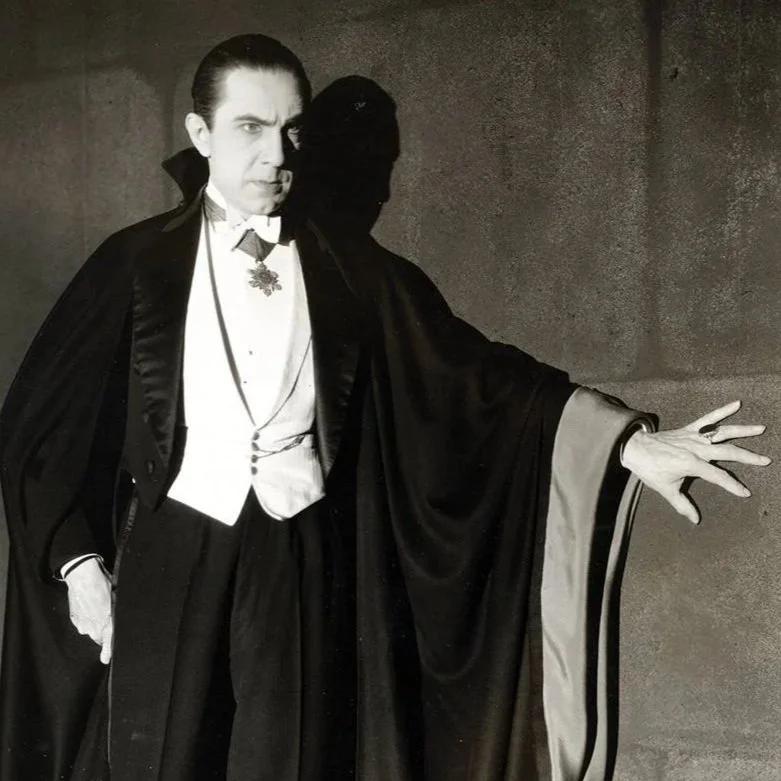
When most people think of vampires, we often picture the same regal figure with smooth-backed hair. But how did we get here from a bloodthirsty creature?
Halloween is right around the corner, and with that, we tend to see the same general collection of monsters littering the yards of our neighbors, dominating the television channels, and presenting themselves as ideas for costumes. For centuries, humans have been creative enough to think up creatures that lurk in the darkness, and yet it seems that only a few seem to exist universally in our minds. Where did these monsters come from?
Without a doubt, it is vampires that have become the most popular monster. They are the easy answer when you are coming up with a costume, and have dominated a plethora of film franchises, from Hotel Transylvania (2012- ) to Twilight (2008-2012).
In about every mythology, you can find traces of monsters that sought out victims to drink their blood. However, HISTORY cites Vlad the Impaler, a prince rumored to drink his victims’ blood in battle, and Elizabeth Báthory, a countess and murderer believed to have bathed in the blood of her victims—though these rumors were likely false—as the ones who got the vampire ball rolling. It is likely because of them that vampires have a human appearance rather than the decrepit monsters of myth.
According to PBS, the true origin of the term “vampire” was around 1725, when there were reports of corpses coming to life and causing panic in towns across Europe, only stopped with a stake through the heart. Though these were likely just confused understandings of diseases such as rabies, actual militia were sent to deal with these “vampires.”
Of course, the vampire’s real claim to fame would be from literature, and these same books would also be where the modern, romantic appeal of vampires started. The Vampyre by John William Polidori is cited by Jan Capek in HISTORY as being the origin of the “aristocratic and privileged, rhetorically powerful and seductive” vampire. The arguably more popular novels that came later; Carmilla by Joseph Sheridan Le Fanu and Dracula by Bram Stoker are both stories filled with sexuality that would have been taboo at the time. Carmilla is famous for having sapphic undertones, and Dracula is based around the concept of immoral romantic action. While presented in much too dark a way to make them anything worth celebrating in the original text, it is probable these concepts morphed into themes of sexual freedom in modern times.
Zombies are a close second to vampires in terms of pop culture. We are a generation that graduated from Plants vs. Zombies (2009) to The Walking Dead (2010-2022). A world that has been overrun by an unstoppable yet unthinking force is an easy setting for any apocalypse tale.
So many monsters, such as ghosts or vampires, are all some form of the dead brought to life. With zombies being that in the most literal sense, one might think they would have an origin story muddled up from years of mythology and folklore. And yet, we know exactly where zombies first came from.
According to the National Public Radio, the concept of zombies, at first spelled “zombi” in the United States, originated in Africa, and was brought over to Haiti during the slave trade, where it would become most prevalent. The horror of a zombi was the concept of never being free from slavery, even after death. Then, they were not seen as violent monsters with a hunger for flesh, but soulless bodies that were trapped and forced to work for eternity. According to Britannica, the word would first enter pop culture with the 1929 book, The Magic Island by William Seabrook, which featured the zombis working for the Haitian-American Sugar Company.
The earliest zombie films were, according to NPR, directly inspired by The Magic Island, and were well aware of the association with slavery in their plots. White Zombie (1932) was the very first zombie film. Our modern interpretation of zombies is rather recent. It was Night of the Living Dead (1968) that introduced the violent, cannibalistic aspect of zombies so prevalent today, although that is not what these creatures were originally intended to be. These monsters were actually more inspired by vampire-based works of fiction, according to Britannica. However, the film’s sequels would refer to them as such, forever changing pop culture’s understanding of zombies.
The last monster covered in this article will be one that is paradoxically underutilized despite being among the most popular monsters around. The werewolf, one we can all confidently identify despite not being able to point to any media centering around one without having to think for a moment.
Like vampires, there are mythologies which mention a menagerie of supernatural beings centered around shapeshifting. There are notable myths from the Greeks, the Norse, and even Mesopotamia which mention humans turning into wolves permanently, though when exactly this shifted to being able to switch between two forms is a bit hard to pin down. Historia Magazine suggests a possible origin was fear from viking raiders who wore wolf skins in battle.
Apparently, another possible source stems from society being convinced werewolves were real. According to HISTORY, there were multiple serial killers in the sixteenth century who claimed to have an ointment that turned them into wolves, such as Giles Garnier. Later, a man named Peter Stuble was accused of murder and cannibalism by a mob who claimed they saw him turn into a wolf. Stuble confessed to having a belt that allowed him to shapeshift, though this was possibly under the pressure of the mob.
HISTORY suggests the origin of werewolves has to do with diseases such as lycanthropy, which causes people to believe they are turning into wolves, rabies, hallucinations, or disorders involving excessive hair growth.