
The Odyssey (2026)
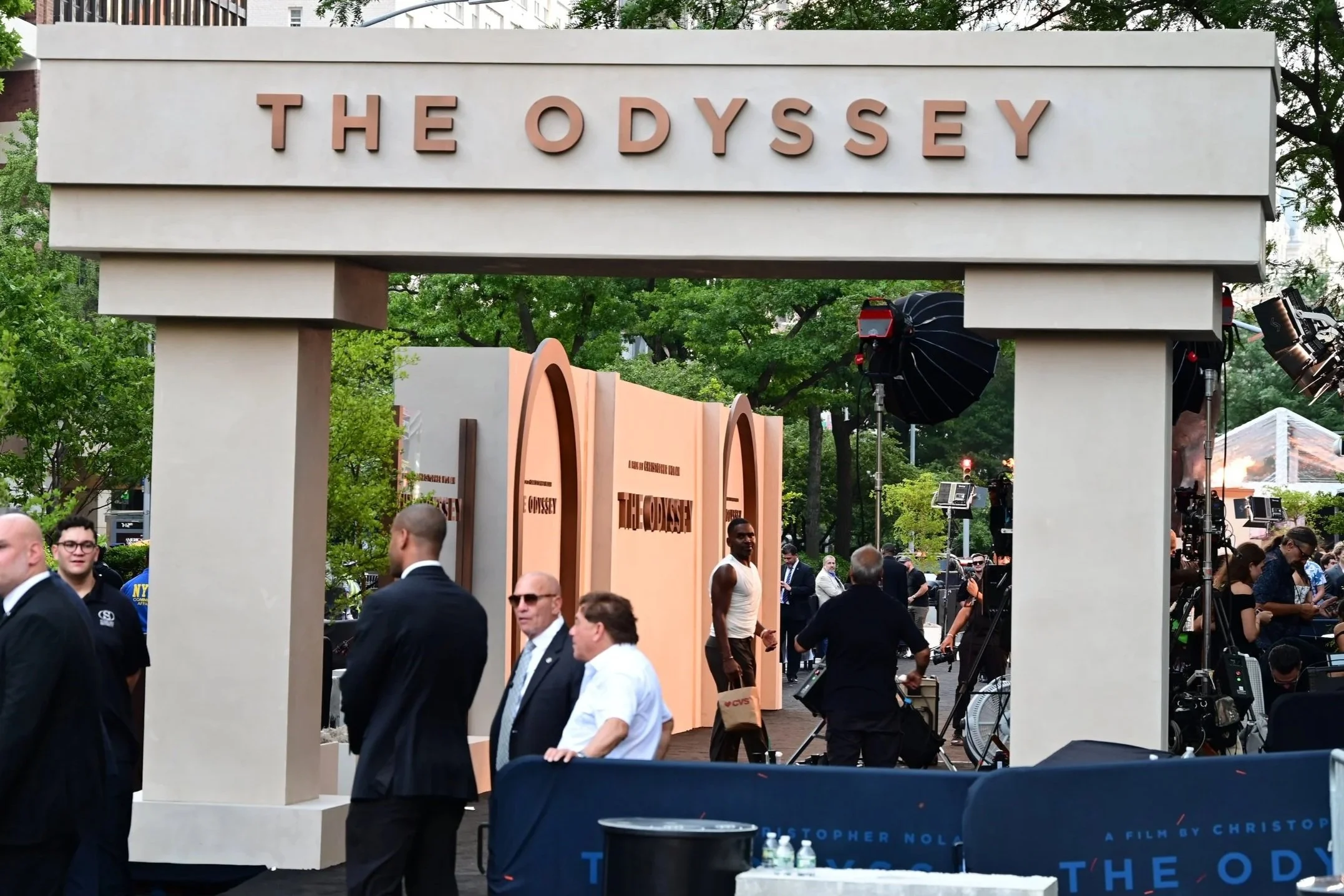
Photo Courtesy of Philip Romano- Wikimedia Commons
On July 17, 2026, The Odyssey (2026), Christopher Nolan’s blockbuster adaptation of the 2,700-year-old ancient Greek epic poem of the same name, made its triumphant debut in cinemas across the U.S.
The ancient story, predominantly attributed to the poet Homer, follows Odysseus—a husband, a father, and the King of Ithaca—and his strenuous and agonizing journey home from a ten year astrayment filled with grotesque war, unmitigated misfortune, and a tribulation of fate and morality. Given Nolan’s monumental and cerebral discography, with films such as Interstellar (2014) and Inception (2010), as seen on IMDb, I was sure this film was going to be a profoundly immersive and stimulating journey—regardless of my final consensus.
Traditionally believed to be composed and performed through oral tradition, according to the University of Michigan Library,The Odyssey was not transcribed until the eighth century. Since then, the tale has been adapted, translated, and reinterpreted countless times, resulting in an array of unique and diverse retellings and interpretations of the timeless epic. Christopher Nolan’s film adaptation was based on classicist Emily Wilson’s translation; publishing in 2017, she became the first ever woman to publish Homer’s The Odyssey, and her translation is highly regarded for its freshness and accessibility, as seen on the W. W. Norton & Company website.
The film consists of Nolan’s familiar ensemble of predominantly A-list actors. According to IMDb, it features Matt Damon as Odysseus, Anne Hathaway as Penelope the Queen, and Tom Holland as Telemachus, their son. Additionally, it stars Robert Pattinson, Samantha Morton, John Leguizamo, Elliot Page, Zendaya, and many more.
The Odyssey (2026) received a near perfect certified fresh critic score of 94 percent on Rotten Tomatoes. The film has become the highest grossing rated R film of all time with $1.35 billion as of August 2026, according to The Guardian, making film history. Additionally, according to CBS News, it has become the first film to be shot entirely using a 70mm IMAX camera. It is an expensive, tedious, loud, and all around inconvenient way to shoot film, hence why it is used sparingly in the film industry. Building a muffling system for the massive camera and cleverly using mirrors to film intimate, close-up scenes were a few ways in which Nolan and his team overcame its technical limitations, according to an article of The Credits.
The film is also celebrated for the limited CGI use, instead opting for Nolan’s trademark practical effects for authenticity. One display of these efforts is the battle scene of Odysseus and his crew versus the Laestrygonians, brute cannibalistic giants. Committed to using practical effects, they hired the necessary stunt actors. According to The Guardian, Matt Damon’s stunt double was a 4-foot-6-inch stuntwoman named Devyn Dalton, who went head to head with stunt actors standing at 7 feet tall, according to an article on Film Shrine.
Additionally, and personally most notably, the impeccable soundtrack composed by Ludwig Göransson was nothing short of divine and gut-wrenchingly suspenseful. It was everything haunting, visceral, and raw. According to an article on Classic FM, the soundtrack was composed using instruments to mimic the resonant ringing of traditional ancient Greek instruments, blended with contemporary pounding synths, and was revolutionary in its approach. A different article on Classic FM notes that Nolan wanted Göransson to stay away from the typical orchestral sounds of Nolan’s films; this innovative soundtrack was the inevitable brilliance of the collaboration of two of the most talented and outstanding figures in the film industry today.
Despite praise, criticisms sparked over casting choices as noted on Britannica; historical inaccuracies and choices in language, which Nolan addressed in an article on Variety; and garments thought to be too similar to the Renaissance Era rather than time accurate clothing, according to a review on London Review of Books by Emily Wilson. In Wilson’s review came the most shocking and notable criticisms. In her review essay, she expressed her disappointment and dissatisfaction with Nolan’s adaptation. She emphasized the lack of emotional depth, and evidently, the lack of proper Homeric representation of the qualities that define The Odyssey as one of the most renowned pieces of literature of all time. She also highlighted the film’s minimalization of the complex and layered female characters, reducing them to victims or mere whispers of their impact in the text.
Though I have yet to indulge in Homer’s The Odyssey in text, I thoroughly enjoyed the film. After considering Emily Wilson’s criticisms, I recognize the limitations and wonder how my thoughts may differ once I have experienced the full story. Yet, as the credits began to roll, I could not help but sit there, jaw agape. The film was stunning, thrilling, and surprisingly accessible. Even days later, it stayed on my mind and left me hungry for more.