
The dark side of the 60s
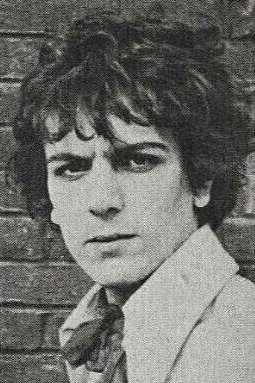
Photo Courtesy of Hit Parader Magazine- Wikimeda Commons
Syd Barret was a founding member of Pink Floyd before drug use and incorrect behavior made it clear that he needed to be replaced.
The 1960s: a decade of spiritual, chemical, physical, and legal exploration. Much like the hippies of the time, we love to wear rose-tinted glasses when looking back. We love to remember Woodstock ‘69, psychedelia, and free love. We do not love to remember the drug abuse, the breakdowns, and the decadence. So why did we choose to forget, and what happens when we pull back the curtain?
The counterculture of the 1960s was spearheaded by middle class Baby Boomers, driven by a domino effect of cataclysmic shifts—birth control, and much more importantly, psychedelic drugs. On top of that, nonviolence movements spread across college campuses countrywide (with similar movements growing abroad). The younger generation had become distrustful of the post-Cold War government. The Civil Rights Movement and Vietnam draft added fuel to the fire. Music started to reflect this sentiment. Bob Dylan performed “Only A Pawn in Their Game” at the March on Washington, and Jimi Hendrix’s cover of “All Along the Watchtower” became an anthem of the Vietnam War protests.
Yet, this music could still easily sit on the bill with colorful, light-hearted acts like Jefferson Airplane and The Byrds. The music may be incredible, but when will the darkness of the lyrics seep into the instrumentation? Who is giving voice to the darker side of the culture? The ones who experimented with amphetamines and heroin, leaving acid trips with psychosis instead of wisdom. The ones who wrote music about their lifestyles with grit, self-awareness and uncomfortable transparency.
The 13th Floor Elevators are often credited as the first psychedelic rock band, with their debut album, The Psychedelic Sounds of the 13th Floor Elevators (1966). It was the first album to use the term psychedelic in its title. Their music was influential but did not sell many records. Today, they are known for their frontman: Roky Erickson.
Roky Erickson was a heavy LSD user. He championed the drug in his lyrics, liner notes, and interpersonal relationships. The Texan authorities did not seem to share this psychedelic open-mindedness. Sure enough, the band was aggressively targeted by local law enforcement while on tour. Eventually, Erickson was arrested for possession of a single joint. He had been diagnosed with schizophrenia a year prior and used the diagnosis to plead insanity to his drug charges, leading to a stint in a mental hospital, according to Loud and Quiet.
Erickson was not the only tragic psychedelic figure of the ‘60s. The most infamous story of psychedelic insanity belongs to Pink Floyd’s first frontman, Syd Barrett.
Syd Barrett was a psychedelic pioneer. Pink Floyd’s debut, The Piper at the Gates of Dawn (1967), is a masterpiece of the genre. Barrett’s whimsical songwriting and innovative guitar work, a mix of jazz-inspired free-form playing, alongside revolutionary work with feedback and distortion, created an atmosphere unlike any record before it.
Unfortunately, Barrett’s heavy psychedelic use exposed underlying mental health issues. To compensate for Barrett’s increasingly erratic behavior, Pink Floyd hired David Gilmour in ’67. According to page 65 of Saucerful of Secrets: The Pink Floyd Odyssey, Gilmour recalled that Syd Barrett “just looked straight through me, barely acknowledged me that I was there.” Pink Floyd announced Barrett’s departure in 1968.
While LSD may be the drug that defined the era, it was not the one that wreaked the most havoc. Heroin and amphetamines were rapidly spreading through inner-city communities. The Velvet Underground was candid in their involvement with these substances, writing brain-shattering music about their addiction and experimentation. Their controversial track, “Heroin,” is a seven-minute piece that uses chaotic tempo changes and an overwhelming viola performance to symbolize Lou Reed’s experiences with the drug.
The band’s sophomore release, White Light/White Heat (1968)—a direct reference to crystal meth—is one of the most influential albums ever recorded. It laid the foundation for punk, noise-rock, and alternative music. The album is raw, distorted, and disturbing. The most infamous track, “Sister Ray,” is a 17-minute improvised one-take with incoherent lyrics outlining a scene of drug-fueled orgies and violence. They do not moralize the scene; they just let depravity seep into the chaos of their improvisation. The audio engineer is rumored to have walked out during the recording due to the sheer volume of John Cale’s deformed organ.
As the decade ended, a small group in the UK had been making waves with a dark sound unheard of in commercial music…
Black Sabbath’s debut, Black Sabbath (1970), gave birth to heavy metal. A sound formed out of the darkness of Birmingham factories, in a haze of black hash. The album opens with the sound of rain and ringing bells. The listener is suddenly hit with Tony Iommi’s iconic tritone riff, an ominous growl dripping with dread. Ozzy sings about a man caught in the occult, stalked by a satanic presence. It was immediately apparent that this was something completely new.
The “peace and love” decade was coming to an end, and it did not fade quietly into the 70s; it curdled, and out of that rot came an era of grit and realism that took influence from the darkest sounds of the era.
It was never just flowers and free love; the unseen influence of the era lies in the casualties of hedonism, and the artists did not try to pretend that they had all the answers.