
Goncharov (1973): if you haven’t seen it, you should
Goncharov (1973) is the greatest mafia movie ever made for a reason
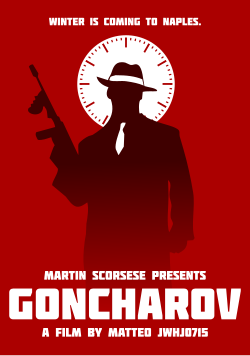
Photo courtesy of Wikimedia Commons
“The greatest mafia movie ever made” echoes the tagline of Martin Scorsese’s 1973 semi-forgotten masterpiece Goncharov (1973). Known for its progressive but hard-to-follow plotline of a man at odds with himself post dissolution of the Soviet Union, fans connected deeply with the undertones of love, loss, and betrayal of those closest to you.
The star-studded main cast of Robert De Niro, Cybill Shepherd, and Harvey Keitel made for a delightful experience as the chemistry was undeniable. It would shock viewers to know that unaccredited members of the film include Lynda Carter of Wonder Woman (1975) as a background dancer during the infamous “Nightclub flashback.” When asked to comment about it years later, Carter only posted a singular photo of her and Henry Winkler with the caption “Me and ‘The Fonz’ at the premiere of Goncharov (1973) at Grauman's Chinese Theatre.”
The true standout character according to most fans however is the infamous, and highly quotable, Joseph “Ice Pick Joe” Morelli. Morelli was played by the late great John Cazale in one of his most coveted and cherished roles. Morelli was hand picked by Martin Scorsese himself, who, after witnessing Francis Ford Coppola's The Godfather (1972), knew he had to have him.
Ice Pick Joe’s character is often favorited due, in part, to his asynchronous plot to the rest of the movie's storyline, serving as a henchman to the main antagonist, Mario Ambronsini, expertly played by Al Pacino. However, despite being the henchman and right hand to the antagonist, Ice Pick Joe is never seen with him.
The character is only mentioned at times to other members of the cast before getting a quick cut to whatever the man is doing. Oftentimes it’s cut to him brutally murdering his targets with his ice pick, but other times Scorsese plays with the inner workings of the killer's mind. Many fans praise these sections in particular due to their poignant handling of childhood trauma and mental illness.
Goncharov (1973) is infamous for having multiple cuts, releases, and extended editions, all of which have caused disputes over characterization, scene progression, and even the ending, of which there were reportedly six different shoots. However, all loosely follow the story of Goncharov, a member of Russian organized crime, as he tries to establish a foothold in Naples, Italy. The film has been often described by critics as “what a mafia movie should be.” It was also heavily praised commercially and by movie-goers for being a brilliant subversion of the Russian and Italian mafia stereotypes commonly portrayed in American cinema at the time.
The full director extended cut of the movie is over nine hours long, providing many deleted scenes or alternate takes that weren't included in the original release in 1973. However, despite the differences in all releases, all versions are considered canon according to Scorsese, so the audience is allowed to choose precisely what cannon they wish to believe in.
The six endings were all vastly different. Some would feature the death of all main characters with the antagonist prevailing in his plans. One of those endings reportedly centered around Ice Pick Joe’s descent into madness after confronting his father, finally bleeding over into the main story. The one true ending many abide by is the so-called “good” ending. This ending, while unrealistic, features the infamous bridge, which Goncharov had tried to throw himself off of.
In this scene, Andrey and Goncharov reconcile to continue forward and leave behind their past. The scene was originally praised for showing “the brotherhood of man” but is now championed by queer fans as one of the first love confessions between men in a major motion picture film.
So whether you buy into the “good” ending or prefer one of the darker cuts, viewers should see for themselves what makes the legacy of Goncharov (1973) so everlasting. Goncharov (1973) is constantly enduring because it does what many mafia movies cannot: it refuses to settle into a single truth or cut. It’s a film that questions not just its characters and their motives, but the nature of storytelling itself. From themes of memory, myth, and meaning, it all tangles and weaves together a way that makes the viewer genuinely feel for the outcomes and lives of the characters.
Perhaps that is why it continues to permeate culture decades later, living on in fragments, online debates, and devoted rewatches. If you have not seen it, you should, not just to understand the hype, but to decide for yourself which Goncharov (1973) is the real deal.