
Eighteen hours of darkness: the roots of the most wicked genre of music
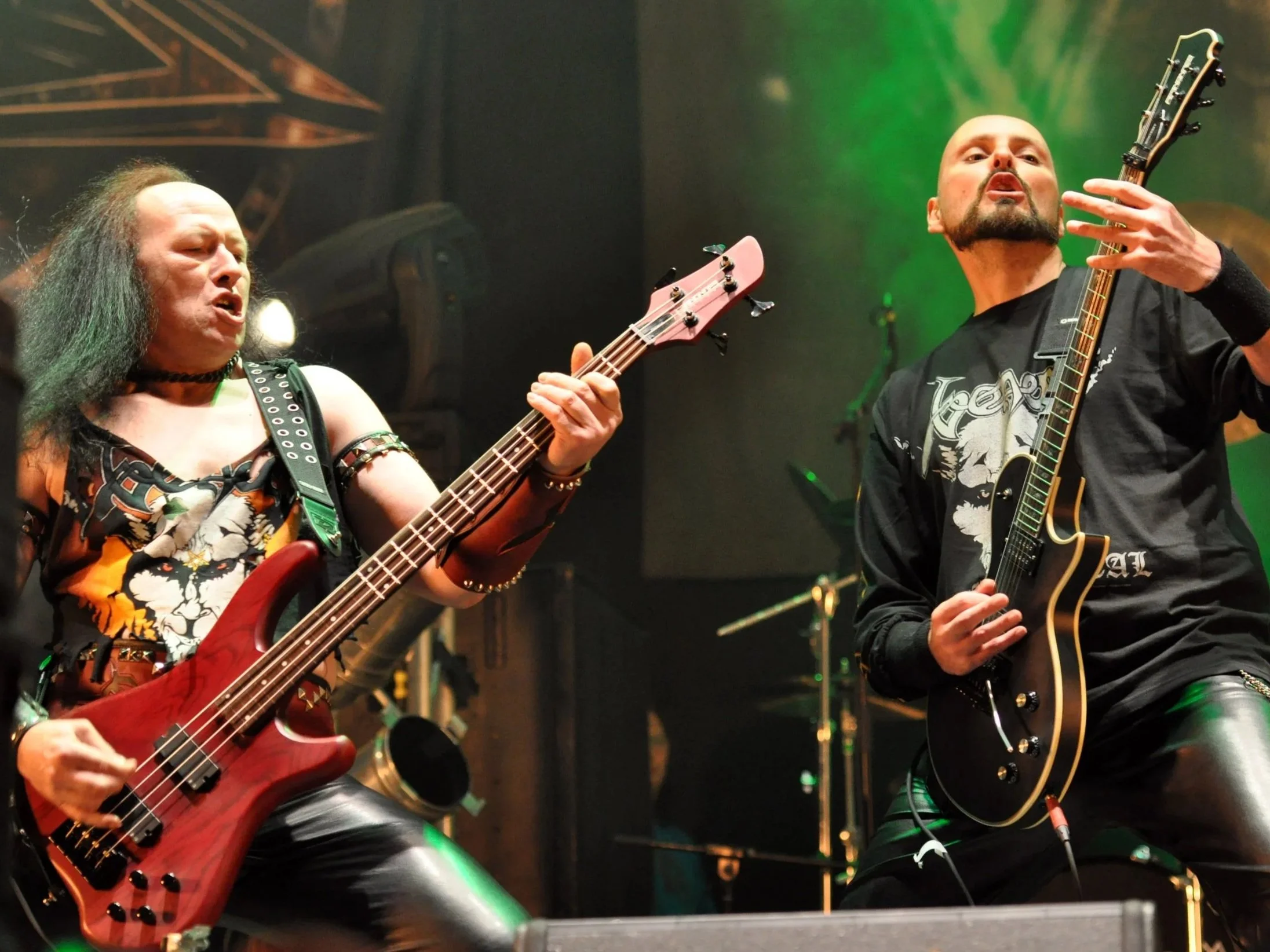
Photo Courtesy of Jonas Rogowski- Wikimedia Commons
The cultural consciousness regarding metal is an amalgamation of different myths, controversies, and stereotypes all bundled in a neat pile—easy pickings for references and assumptions alike. Each era has its own contribution to this pile: the leather jackets and theatrics of the new wave of British Heavy Metal; the long-haired teenagers and patched jean jackets of thrash metal; and the indecipherable vocals and violent lyrics of death metal. But there is one movement that is harder to define—a movement birthed by those that thought the most intense genres in music had grown soft, who aimed to create something utterly indefinable by the mainstream.
Norwegian black metal was a promise to make every day feel like the winter solstice: to live a life defined by the eighteen hours of darkness. It was the outcasts of a nation taking a global movement and making it their own, a vessel to worship the evil in all our lives.
To discuss the second (Norwegian) wave of black metal, we must start with the first wave of black metal, an underground movement of extreme metal that was primarily propagated by tape trading.
The New Wave of British Heavy Metal (NWOBHM) had garnered a reputation for occult themes around the early eighties, triggering what History calls the Satanic Panic. But most of those accusations were confusing fantasy with reality. When Iron Maiden and Dio wrote The Number of the Beast (1982) and Holy Diver (1983), it was quite clear that their influences were more akin to Tolkien or Dungeons & Dragons rather than any serious occult sources. Furthermore, the production is too polished, and all references to “Satan” or “the occult” were ones of fear and theatrics. Black Sabbath, for example, never romanticized evil in their early work. They were just as scared of it as most of us, as evidenced by an iconic line in the opening of Black Sabbath’s 1970 debut: “Oh, no, no, please, God, help me.”
The lines started to blur once Venom hit the scene in the UK. Their debut Welcome to Hell (1981) boasted a different attitude than any project before it. The goat and pentagram were right in your face. They wanted to mock religious culture, and they wanted to scare people. They even coined the term “Black Metal” in their 1982 sophomore release of the same name. Although not professed Satanists themselves at the time—this attitude comes later—they made sure to make it ambiguous enough to keep the theatrics in full swing.
Cronos (Venom’s lead singer) had a unique vocal approach that would lay the foundation for almost all genres of extreme metal. Most NWOBHM bands had operatic vocals or typical hard rock singing. Even Lemmy (Motorhead) had some melody in his approach. Cronos, on the other hand, was practically barking the lyrics.
Venom was not the only group pushing thematic boundaries. The Danish group Mercyful Fate formed in 1981 and immediately started to cause a stir. They are not unlike most NWOBHM bands and have quite an obnoxious vocal approach that feels more Hair Metal than anything else from this era, but their gothic, openly occult imagery often lands them in the first wave of black metal. I find that they are the worst band from this era, but their influence cannot be overstated.
Meanwhile, in Switzerland, Hellhammer was busy releasing their 1982 debut. It received terrible reviews as though the band was “an embarrassment to music itself” according to Only Death Is Real: An Illustrated History of Hellhammer and Early Celtic Frost, 1981 -1985. Though the music is…not great, you could tell something was brewing beneath the terrible musicianship. They had an approach that was more complex than the abrasive stagecraft of Venom and Mercyful Fate. An exploration of darkness that was more than some campaign to scare parents.
This newness was fully harnessed with Celtic Frost, a band that formed from the remnants of Hellhammer’s 1984 breakup. Something exciting had finally emerged from this sinister exploration of metal. Thomas Fischer, leading figure of both bands, has gone on record to say, “Martin and I were so shocked at how the Hellhammer EP came out and, given our ambitions to become better musicians, we knew there was a lack of quality in the vehicle called Hellhammer. The night we formed Celtic Frost, we approached everything differently than the band Hellhammer had done,” as recorded by Decibel.
Celtic Frost proved their worth with To Mega Therion (1985). They had the image, the artwork, and, most importantly, the atmosphere. The lyrics are an introspective exploration of ethereal landscapes, an inquiry into the artist’s shadow side. The guitars have the explosive chainsaw tone. Each drum kick is a punch to the mouth. The bass is an unstable rope bridge between the percussion section and lead strings. They even incorporate symphonic elements to further develop the epic atmosphere. It is brutal, yet still beautiful.
They did not rely on shock value to sell records. Instead, they lived in the shadow cast by the majority and peddled their music to the minority. This marked a big shift to extreme metal’s image. It was an embrace of the underground. Thrash, Punk, and the NWOBHM always had an audience that could propel them to superstardom, even if it felt alien to their philosophy. Celtic Frost knew they were unmarketable, and it was a core aspect of their character. Venom and Mercyful Fate still had that “stadium-act” energy to their approach. Celtic Frost was the identity shift required for Norwegian black metal to blossom.
Venom, Celtic Frost, and Mercyful Fate—three undisputed faces on the first wave of black metal’s Mount Rushmore. There is one band missing, and they were the single most important influence on the second wave of black metal: Bathory.
Bathory formed in Sweden circa 1983, fronted by Thomas “Quorthon” Forsberg. Their self-titled debut created the blueprint for Norwegian black metal. The white Old-English font was pitched against the night-black album cover, with a single stenciled goat in the center, its red eyes the only thing in between the contrasting ends of the color spectrum. The production is terrible, something we will see is necessary for the next iteration of black metal. Lemmy may have had a raspy voice, and Cronos sang like a barking dog, but Quorthon sounded like something not of this world.
Extreme metal from this era was branching into different, deeper, forms of vocal distortion. Proto-death metal and goregrind all relied on guttural distortion and the “death-growl.” Quorthon was the first to truly harness the disgusting nasal distortion that would come to define the coming waves of black metal. Despite being revolutionary, it is still missing some key aspects of the second wave that keep it in the first, mostly its reliance on the skank beat and sleeve-worn speed metal influence.
Norwegian black metal was birthed by one group and one group only: Mayhem, the rise of which I will be covering next week.