
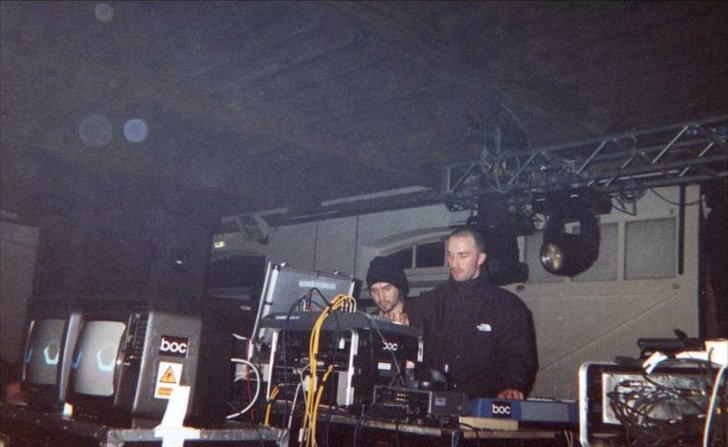
Photo Courtesy of Angular- Wikimedia Commons
In April of 2026, Boards of Canada (BoC) showed their first signs of life since their last album rollout in 2013. After 13 years of silence, a random selection of individuals who had previously purchased BoC’s music from Bleep received VHS tapes in the mail. The tapes’ cryptic, gritty video compilations started to make their way across the internet as fans tried to figure out their meaning. At the same time, strange posters appeared in major cities around the world. On Apr. 16, 2026, the official BoC YouTube page posted “Tape 05,” a music video for a song we now know as “Deep Time.” It was official: BoC was back; a new album was coming on May 29, 2026.
I was in a state of shock. There was always a glimmer of hope, but I knew their return was not guaranteed. The release date miraculously coincided with my upcoming backpacking trip. I preordered the FLACs and promised myself I would not listen to the album until I reached Heidelberg, Germany.
I soon found myself at the foot of Heidelberg Castle two days after the official release. I put on my favorite headphones and trekked forward.
The album starts with the 30-second track “Introit” (a reference to the psalm sung as the clergy approach the altar during Catholic Mass). The sweeping distorted arpeggios sound like a VHS-era discovery track for a children’s program. It is the duo’s signature sound coming back to life. It is not a farce: they really are back.
“Introit” fades into “Prophecy at 1420 MHz” with a sustained sub-bass C note. The track is a slight departure for the duo. The gothic synthwave atmosphere is arguably their most electro-dance leaning track since “Nloglax” from their EP Hi Scores (1996).
In “Prophecy at 1420 MHz” we hear string instruments deep in the mix, and they come back with fervor a few tracks later on “Deep Time.” String instrumentation returns for the first time since the album The Campfire Headphase (2005), a calculated risk when it was released. Leaks from their early unreleased music show clear influences from guitar driven shoegaze like My Bloody Valentine and Cocteau Twins, as the brothers discuss in an interview on Pitchfork . BoC are known for branching out of the strict limits of IDM/Electronic music, so the return of strings comes as no surprise.
The album moves forward with its swirling ambient soundscapes that rarely give the listener easy resonance. BoC are known for circling around the fifth note of the key (flirting with the Locrian mode) and rarely stick to any given scale degree. Their keyboards and synths are often slightly out of tune and drone over the fluctuating percussion, a blend of live recordings and drum machines, layered to keep the listener on their toes. Aggressive vocal sampling on tracks like “Father and Son” and “Age of Capricorn” brings the listener back to some of their early work released under the alias “Hell Interface.”
As the album continues, it feels more and more like a sonic study of their career. The nostalgic IDM of Music Has the Right to Children (1998), the hauntology of Geogaddi (2002), the Electroacoustic of The Campfire Headphase (2005), and a touch of the video-nasty dread in Tomorrow’s Harvest (2013) all come together to create something new.
Marcus Eoin only receives partial writing credit on six out of eighteen tracks on the album. After “Prophecy at 1420 MHz,” he is not credited again until track 11, “Into the Magic Land.” This can be seen on the physical albums, and by searching the songs on ASCAP This has stirred controversy in the community, many claiming that the duo broke up, some even theorizing that Marcus is dead, and though the pair has yet to confirm the reason for this, we can safely say Marcus Eoin is not dead.
There have been rumors in the past that the aforementioned Hell Interface era was a Michael solo project. This would explain the return of that sound on an album where he fronts most of the writing.
Many of the track titles and sample sources bring back the religious ethos from their sophomore release Geogaddi (2002), focusing more on Christianity, Hell, and Judgement. “The Word Becomes Flesh” pulls directly from verse 1:14 of John’s Gospel and The Process is speculated by the BoC wiki to refer to the Process Church of Final Judgement which was active for a brief period in the 1960s and 70s.
In the liner notes found on the physical copy, Michael is even credited with “audio evocations.” Whether this means a symbolic evocation of musical energy, or the evocation of spirits and/or deities is currently unknown. Someone should call Jimmy Page, maybe he can help us figure it out.
In all seriousness, I think this album is a response to the immense dystopian themes on their previous album, Tomorrow’s Harvest (2013), which is often considered harder to listen to than the notoriously unsettling Geogaddi (2002) due to its sheer hopelessness. Inferno (2026) takes place after we have accepted this Huxleyan Dystopia and are awaiting judgement. Judgement from whom? I am not totally sure, and I do not think BoC is sure either.
I finished this album for the first time at the Philosopher’s Garden overlooking the city of Heidelberg. I had absorbed “You Retreat in Time and Space” and felt grateful for their return, and I had accepted their likely departure.
I had wondered for years what a return to form would look like for such a shapeless duo. It looks like Inferno (2026).