
Bad Bunny’s historic Super Bowl performance
The symbolism behind his highly anticipated halftime show
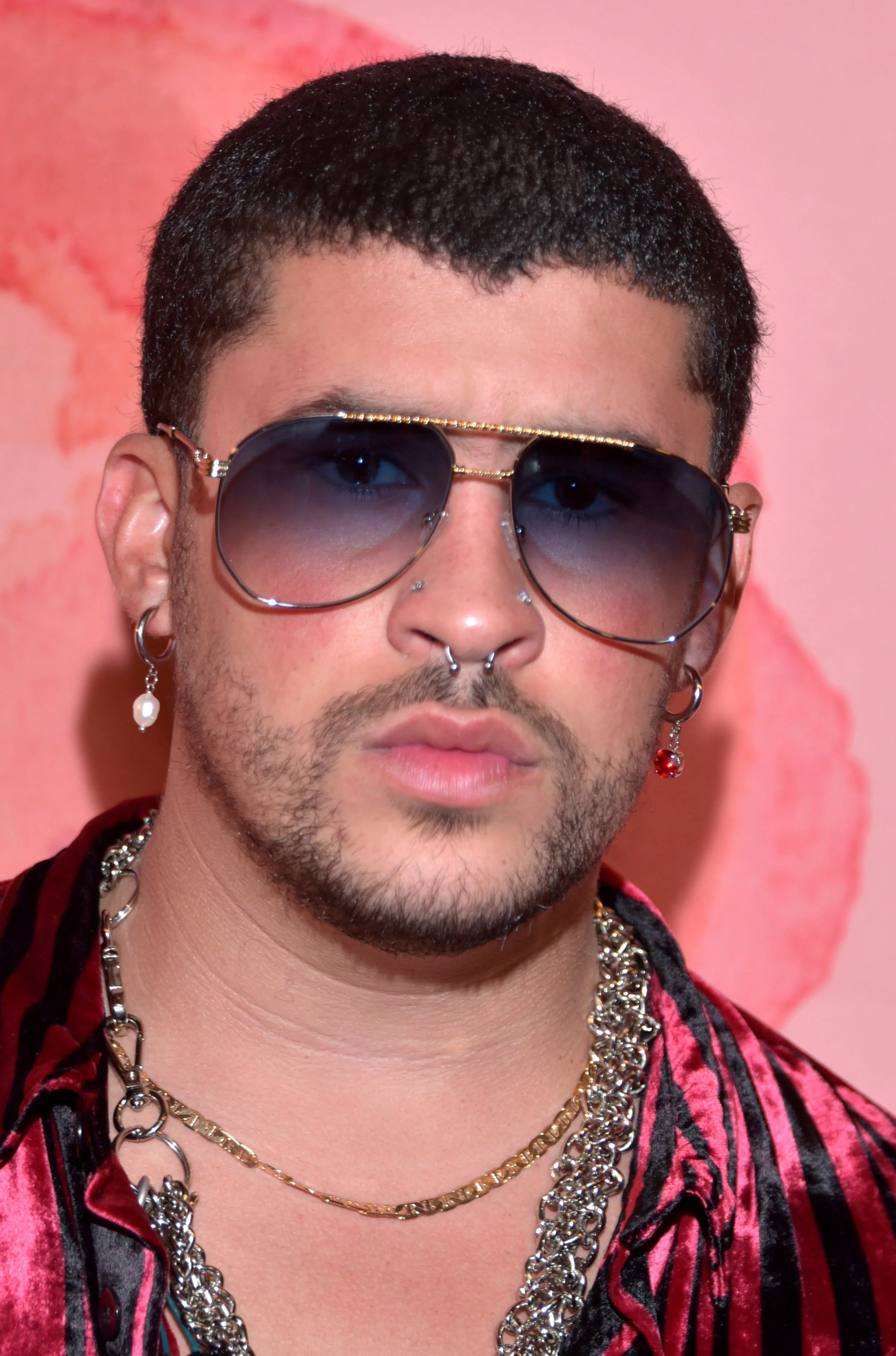
Photo courtesy of Glenn Francis/Wikimedia Commons
Super Bowl LX, which saw the Seattle Seahawks face the New England Patriots, and whose halftime show was headlined by Puerto Rican artist Bad Bunny, broke records with an average viewership of 124.9 million viewers, according to The New York Times, across NBC, Peacock, Telemundo, NBC Sports Digital, and NBC+, and now sits as the “most-watched show in the history of NBCUniversal,” according to NBC News.
According to The New York Times, in the game’s second quarter, 137.8 million viewers tuned in—the “highest peak viewership in US television history.” Super Bowl LX was also the most viewed Super Bowl in U.S. Spanish-language television history, with Telemundo seeing an average of 3.3 million viewers during the broadcast, which peaked to 4.8 million viewers during the halftime show. 128.2 million viewers tuned in for the halftime show itself, making it the second most watched in US history.
Bad Bunny made history on Feb. 8, being the “first artist to perform a Super Bowl halftime show almost entirely in Spanish,” according to Democracy Now!, though, according to The Conversation, his performance was also deeply tied to Puerto Rican culture and history, to the broader Latin world, and even Hawaii.
The show opened in a sugarcane field being actively cut by a series of “jíbaros” — Puerto Rican term for a rural subsistence farmer — donning the “pava” hat, which, while widely associated with agricultural workers on the island, has become a symbol deeply tied to the cultural identity of Puerto Ricans, as stated by the Canadian Broadcasting Corporation (CBC).
The sugarcane itself is symbolic of Puerto Rico’s colonial past, sugar having been farmed on the island since the 1500s when it was imported by the Spanish, and later the U.S., who used enslaved peoples to harvest it on large plantations, with “mainland corporations controlling a significant share of production and reaping massive profits,” per Time Magazine. Sugarcane production continued after the United States seized control of Puerto Rico from Spain in 1898, according to Encyclopaedia Britannica. According to NPR, sugarcane production would remain the predominant agricultural product of Puerto Rico up until 1964.
Continuing the performance, a game of dominoes can be observed, which is a common pastime in Puerto Rico, as reported by NPR. A few minutes later a man and woman can be seen getting married, which,, was confirmed to have been a real wedding ceremony, Bad Bunny having “served as a witness and signed their marriage certificate,” according to CBC. Included in the wedding ceremony were several plastic chairs, on which a kid was sleeping on; NPR adds that these are common items and occurrences at Puerto Rican social gatherings. This was followed by a guest appearance by Lady Gaga, who proceeded to salsa dance with Bad Bunny, sporting a “maga” flower pinned to her dress—a flower native to Puerto Rico, and the territory’s national flower, according to the CBC.
Bad Bunny would then trust fall onto the set of several storefronts, one of them an exact replica of the Caribbean Social Club in the neighborhood of Williamsburg in Brooklyn, New York City, which, according to NPR, is a popular gathering place for the city’s Puerto Rican diaspora. Its beloved owner and founder, Maria Antonia Cay—known as Toñita—would make a cameo appearance inside the replica storefront.
This would shortly be followed by another guest appearance, this time by fellow Puerto Rican artist Ricky Martin, who briefly performs an excerpt from Bad Bunny’s “Lo Que Le Pasó Hawái,” a song cautioning against colonialism, overtourism, and gentrification, framing “Hawaii as a cautionary tale for Puerto Rico,” in the words of The Conversation.
In the second-to-last sequence of the halftime show, Bad Bunny would climb onto a telephone pole on the set, and—while surrounded by dancers performing on their own telephone poles—would sing “El Apagón” (“The Blackout” in English), a pretty explicit reference to Puerto Rico’s chronic blackouts, according to the CBC.
Bad Bunny’s performance would conclude with the artist proclaiming “God Bless America!” before naming almost every single country from South America to North America, including Puerto Rico, followed by people holding the flags of every country on both continents in a subversion of what is “usually taken to mean love for the United States,” as said by the CBC. While in the U.S. the term “America” is often used colloquially to refer to the country, in many places in Latin America, “América” is used to refer to both continents, according to The Conversation.
The halftime show concluded with Bad Bunny holding a football to the camera declaring “Together, We Are America,” having taken “this moment on the biggest stage in the United States to decenter the United States and show that America includes all of us,” as put by NPR, and put Puerto Rico’s people, their ways of life, and the issues the island faces at the forefront of US popular culture.